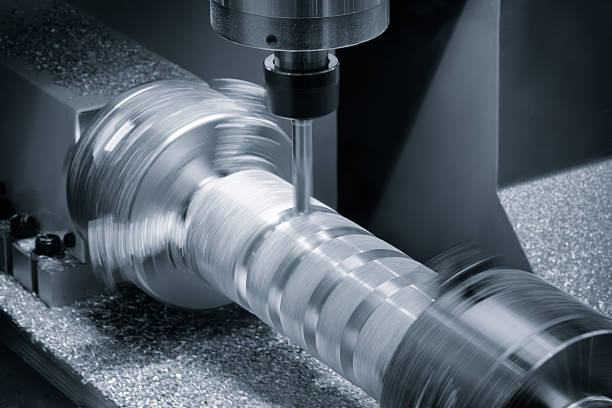
In the modern industrial landscape, the demand for high-performance materials like Titanium alloys, Inconel, and advanced composites has skyrocketed. These materials are the backbone of aerospace, medical implants, and energy sectors due to their extreme heat resistance and strength-to-weight ratios. However, for the average workshop, these materials are often labeled “uncuttable.” They exert massive cutting forces, generate localized heat that can melt tool tips, and cause rapid work-hardening that destroys bits in seconds.
To address these challenges, industrial CNC lathes have evolved into high-precision digital platforms. By integrating smart spindles with ultra-high torque, performance continues to advance. Meanwhile, advanced MQL systems further expand machining capabilities. Together, these technologies push the limits of what manufacturers can achieve. This article examines how internal cooling, spindle intelligence, and micro-lubrication work in synergy.
1. The Challenge of “Hard-to-Machine” Materials
When a CNC lathe for industrial metal encounters high-temperature alloys like Inconel 718 or Titanium Grade 5, the physics of the cut changes. Unlike mild steel, which forms clean chips that carry heat away, these alloys have low thermal conductivity.
The Thermal Concentration Trap
In these materials, nearly 80% of the cutting heat stays at the tool–workpiece interface. As a result, intense localized heat causes plastic deformation at the cutting edge. Moreover, titanium’s high chemical reactivity makes it bond to the tool surface. Consequently, built-up edges form and often trigger sudden tool failure. Therefore, the machine needs both mechanical strength and thermal control intelligence.
2. The Smart Spindle: The Heart of Extreme Machining
The spindle is no longer just a motor that spins a chuck; it is an intelligent sensor-driven unit designed for extreme stability. For high-toughness alloys, the CNC lathe for industrial metal requires a spindle that offers a “Dual-Power” profile: high torque at low RPMs for roughing and high stability at high RPMs for finishing.
High-Torque Motorized Spindles
Modern CNC lathes utilize built-in motorized spindles that eliminate belt vibrations. By using high-pole-count motors, these spindles maintain peak torque even at lower speeds. This is essential for Inconel, where slow, heavy cuts are necessary to prevent work-hardening.
-
Active Vibration Damping: Smart spindles incorporate displacement sensors that detect “chatter” in real-time. The system automatically adjusts the feed rate or spindle speed to stay within the “stability lobe,” ensuring a mirror-like surface finish even on hardened surfaces.
-
Thermal Displacement Compensation: As the spindle runs, it inevitably generates heat. Smart spindles use liquid-cooling jackets and real-time software compensation to ensure the spindle nose doesn’t move more than a few microns, maintaining 24-hour precision.
3. High-Pressure Internal Cooling: Precision Thermal Extraction
Traditional “flood” coolant—where a nozzle simply sprays liquid onto the part—is often useless in high-speed CNC turning of tough alloys. The centrifugal force of the spinning chuck creates a “wind barrier” that prevents the coolant from ever reaching the actual cutting zone.
The Through-Spindle Solution
To break this barrier, a high-performance CNC lathe for industrial metal utilizes high-pressure (70 bar to 100 bar) through-spindle cooling.
-
Vapor Barrier Penetration: The high-pressure jet blasts through the steam pocket formed at the tool tip, applying coolant directly to the point of friction.
-
Hydraulic Chip Breaking: In high-ductility materials like Stainless Steel, chips often become “long and stringy,” wrapping around the tool. The high-pressure jet acts as a hydraulic chisel, snapping the chips into small, manageable “6-shaped” pieces that are easily flushed away.
-
Lubricity at the Source: By delivering fluid through the tool holder, the system reduces the friction coefficient at the rake face, extending tool life by up to 300% compared to external flooding.
4. MQL and Oil-Mist: The “Green” Efficiency Revolution
While high-pressure cooling is vital for heat removal, Minimum Quantity Lubrication (MQL) is the future of sustainable, high-efficiency machining. MQL replaces thousands of liters of coolant with a precise “micro-mist” of biodegradable oil.
How MQL Solves the “Thermal Shock” Problem
For certain ceramic tools or carbide inserts, constant flooding can cause “thermal cracking” due to rapid heating and cooling cycles. MQL utilizes a high-velocity air stream mixed with oil droplets to provide:
-
Aerosol Penetration: The microscopic oil droplets have enough kinetic energy to coat the tool-chip interface.
-
Evaporative Cooling: The expanding air at the nozzle provides a cooling effect without the thermal shock of a liquid drenching.
-
Near-Dry Machining: Since the oil is consumed in the cut, the parts and the CNC lathe for industrial metal remain dry. This eliminates the cost of recycling coolant and protects the environment.
5. Optimizing Tool Paths for Tough Alloys
The hardware of a CNC lathe for industrial metal is only half the battle; the “strategy” of the cut determines the outcome.
-
Trochoidal Turning: By using circular tool paths, the machine ensures the tool is never “buried” in the material. This keeps the “engagement angle” constant, allowing for much higher cutting speeds.
-
Constant Surface Speed (CSS): As the tool moves toward the center of a part, the smart spindle increases RPM to maintain a constant speed at the tool tip. This prevents the “burnishing” effect that often occurs as the diameter decreases.
6. The ROI of Extreme Machining Capability
Investing in a CNC lathe for industrial metal equipped with smart spindles and advanced lubrication isn’t just about technical bragging rights; it’s about the bottom line.
-
Reduced Secondary Operations: When a machine can handle hardened alloys with high precision, the need for secondary grinding or polishing is eliminated.
-
Lower Tooling Costs: Even though these machines represent a higher initial investment, the massive extension in tool life—especially for expensive ceramic or PCD inserts—quickly pays for the equipment.
-
Market Expansion: With the ability to cut “uncuttable” materials, a workshop can move away from low-margin general machining and enter high-stakes industries like aerospace and defense.
7. Conclusion: Redefining the Industrial Limit
The definition of machinable materials continues to evolve with advancing technology. By integrating smart spindles, internal cooling, and MQL, modern CNC lathes redefine titanium processing.
As a result, titanium and Inconel shift from difficult materials to standard production options. Meanwhile, precise tool-tip environment control enables stable and repeatable cutting conditions.
Consequently, manufacturers achieve high speed, extreme precision, and extended tool life. Looking ahead, success favors smarter systems rather than simply larger machines.