In the world of precision, time is the ultimate currency. Every shop manager faces a tough question today. Should you stick with reliable 3-axis setups? Or is it time to invest in high-end CNC machining services? The 5-axis trend is moving fast. However, you need to know if the cost matches the value. At CHANSIN, we help you balance the books between speed and precision.
1. The Complexity Barrier: When 5-Axis is Non-Negotiable
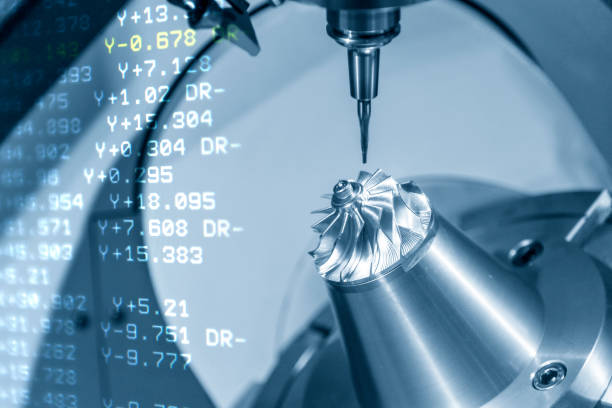
Some designs simply defy the laws of 3-axis motion. Think about a high-efficiency turbine impeller. These parts feature deep, twisting blades and thin undercuts. A 3-axis machine cannot reach these hidden “blind spots.”
Consequently, the tool would surely collide with the workpiece. On the other hand, 5-axis machines tilt and rotate simultaneously. This allows the cutter to approach from any angle. Therefore, complex geometries become possible in a single run. For aerospace and medical parts, 5-axis is the only choice. It turns “impossible” blueprints into physical reality.
2. The Hidden Cost of “Simple” Setups: The 3-Axis Trap
Many buyers choose 3-axis to save money upfront. However, they often ignore the “Setup Trap.” A complex mold might require five separate 3-axis setups. Each setup involves manual labor and potential human error.
Furthermore, every time you move the part, you lose accuracy. Cumulative errors can ruin a high-precision mold. In contrast, 5-axis uses a “one-and-done” approach. You clamp the part once and finish it. As a result, you eliminate the risk of repositioning errors. You save hours of labor and reduce scrap rates.
3. Calculating the ROI: Let’s Talk About the Real Budget
Does 5-axis cost more per hour? Usually, the answer is yes. But you must look at the “Total Cost per Part.” 3-axis machining often requires expensive custom jigs and fixtures.
Moreover, you spend significant time on manual alignment between operations. High-end CNC machining services skip these costly steps. Since the machine moves the part, you don’t need fancy fixtures. Therefore, the total production cycle shrinks by 30% to 50%. Even with a higher hourly rate, the final bill is often lower. Time saved is profit earned.
4. Surface Quality: The Secret of Tool Geometry
Surface finish is the silent hero of mold making. On a 3-axis machine, you often use long, thin ball-nose cutters. These tools vibrate easily and leave visible marks.
However, a 5-axis allows the tool to stay closer to the workpiece. By tilting the head, we use shorter, more rigid cutters. This improves cutting stability significantly. Consequently, you get a “mirror-like” finish directly from the machine. You reduce the need for manual polishing by 80%. This preserves the sharp edges of your precision molds perfectly.
5. The CHANSIN Advantage: Future-Proof Your Production
At CHANSIN, we believe in the power of the “Fifth Axis.” We don’t just sell machine time; we sell competitive edges. We analyze your blueprints to find the most efficient path.
Sometimes, 3-axis is still the smarter, cheaper choice. We will tell you that honestly. But when complexity rises, we unleash our 5-axis arsenal. We ensure your parts meet global standards for aerospace and medical use. Therefore, you gain a partner who understands the “Science of Speed.” We help you win more bids with faster lead times.
Conclusion: Choosing the Right Weapon for the Job
The 5-axis machine is a powerful weapon for modern industry. It is not a luxury; it is a necessity for complex parts. Stop fighting with multiple setups and manual errors.
Choose high-end CNC machining services to elevate your brand. Let CHANSIN handle the math and the motion for you. We turn your complex designs into flawless metal components. Contact our engineering team for a free feasibility audit today. Experience the difference that precision motion makes for your business.