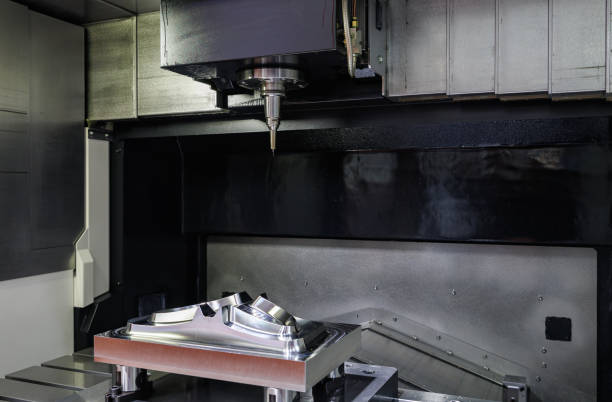
Manufacturing large aerospace structures, automotive molds, and heavy industrial dies requires extreme physical stability. For this reason, machine shops rely on heavy-duty gantry machining centers to handle massive metal workpieces. These expansive systems use dual-drive motors on their parallel linear axes to move heavy crossbeams smoothly.
However, moving a heavy structural beam with two separate motors introduces a classic mechanical conflict. Slight load variations or minor friction differences can cause the two sides to move out of sync. Even a tiny misalignment can warp your machine frame and ruin your finished parts. This technical guide explains how advanced control systems eliminate this movement error to maintain perfect accuracy.
1. The Three-Tier Control Architecture for Perfect Synchronization
To keep a massive crossbeam perfectly aligned, the CNC controller must monitor and adjust both drive motors simultaneously. Modern machinery handles this complex task by syncing three critical control loops:
                      [Master CNC Controller Command]
                                     │
       ┌─────────────────────────────┼─────────────────────────────┐
       ▼                             ▼                             ▼
 [Position Loop Sync]         [Speed Loop Sync]            [Current Loop Sync]
 Compares optical encoders    Matches motor velocities     Balances torque loads
 to keep alignment straight.  to prevent lag issues.       to reduce uneven component wear.
Position Loop Synchronization
The primary defensive line relies on absolute optical linear scales mounted directly on both sides of the machine bed. The master controller constantly reads these high-precision position indicators. If one side lags by even a single micron, the system instantly adjusts the trailing motor to correct the alignment.
Speed Loop Synchronization
Matching positions requires keeping the rotational velocity of both servo motors identical. The digital control drive samples the velocity feedback loop thousands of times per second. This rapid polling ensures that both ends of the crossbeam accelerate and decelerate at the same rate, preventing structural vibrations.
Current Loop Synchronization
Even when traveling at identical speeds, the two motors can encounter uneven physical loads due to changing tool locations. The controller solves this by adjusting the electrical current sent to each motor to balance the torque load. This active balancing prevents one motor from pulling the other, ensuring smooth, stable movement.
2. The Severe Structural Consequences of Misalignment
Ignoring minor movement errors in heavy machinery quickly leads to severe mechanical breakdowns and costly production failures.
Minor Crossbeam Twist ──> Uneven Rail Friction ──> ❌ Visible Part Gouging & Rapid Guide Wear
When a crossbeam twists slightly out of alignment, the cutting tool path shifts away from its intended coordinate line. Consequently, visible steps and rough chatter marks appear across your finished metal surfaces, forcing you to scrap expensive workpieces.
Furthermore, this twisting puts immense stress on the linear guide blocks, causing them to bind and wear down rapidly. Over time, the continuous twisting force can warp the main iron castings of the machine bed, permanently ruining its structural accuracy.
3. Eliminating Mechanical Play: Double Motor Anti-Backlash Technology
Physical play or clearance within the drive gears represents a major cause of alignment issues in large machinery.
                   Dual-Motor Anti-Backlash Dynamics:
   ┌──────────────────────────────────────────────────────────────────┐
   │ Motor A: Drives forward firmly against the rack tooth face.     │
   ├──────────────────────────────────────────────────────────────────┤
   │ Motor B: Pulls backward slightly to eliminate any gear play.     │
   └──────────────────────────────────────────────────────────────────┘
To solve this issue, precision axes combine heavy-duty helical gear racks with an advanced double motor anti-backlash system. Instead of using a single gear to drive the axis, this setup uses two separate pinions meshing with the same gear rack.
When the machine moves, the master motor drives the main load forward while the slave motor applies a controlled opposing force in the opposite direction. This opposing tension traps the rack teeth tightly between the two gears, eliminating mechanical play during sudden direction changes.
Conclusion: Invest in High-Precision CNC Infrastructure
Achieving long-term manufacturing success requires selecting machine tools that maintain absolute accuracy under heavy structural loads.
Stop risking your shop’s productivity and part quality on unoptimized machinery that twists and chatters during heavy cuts. Upgrading your production floor to our advanced gantry machining centers gives your team the rigid stability and zero-backlash precision needed to win premium contracts. We engineer every machine component to ensure maximum runtime and perfect accuracy over years of service.
Contact the CHANSIN technical engineering team today to review your machine blueprints and upgrade your manufacturing capabilities.