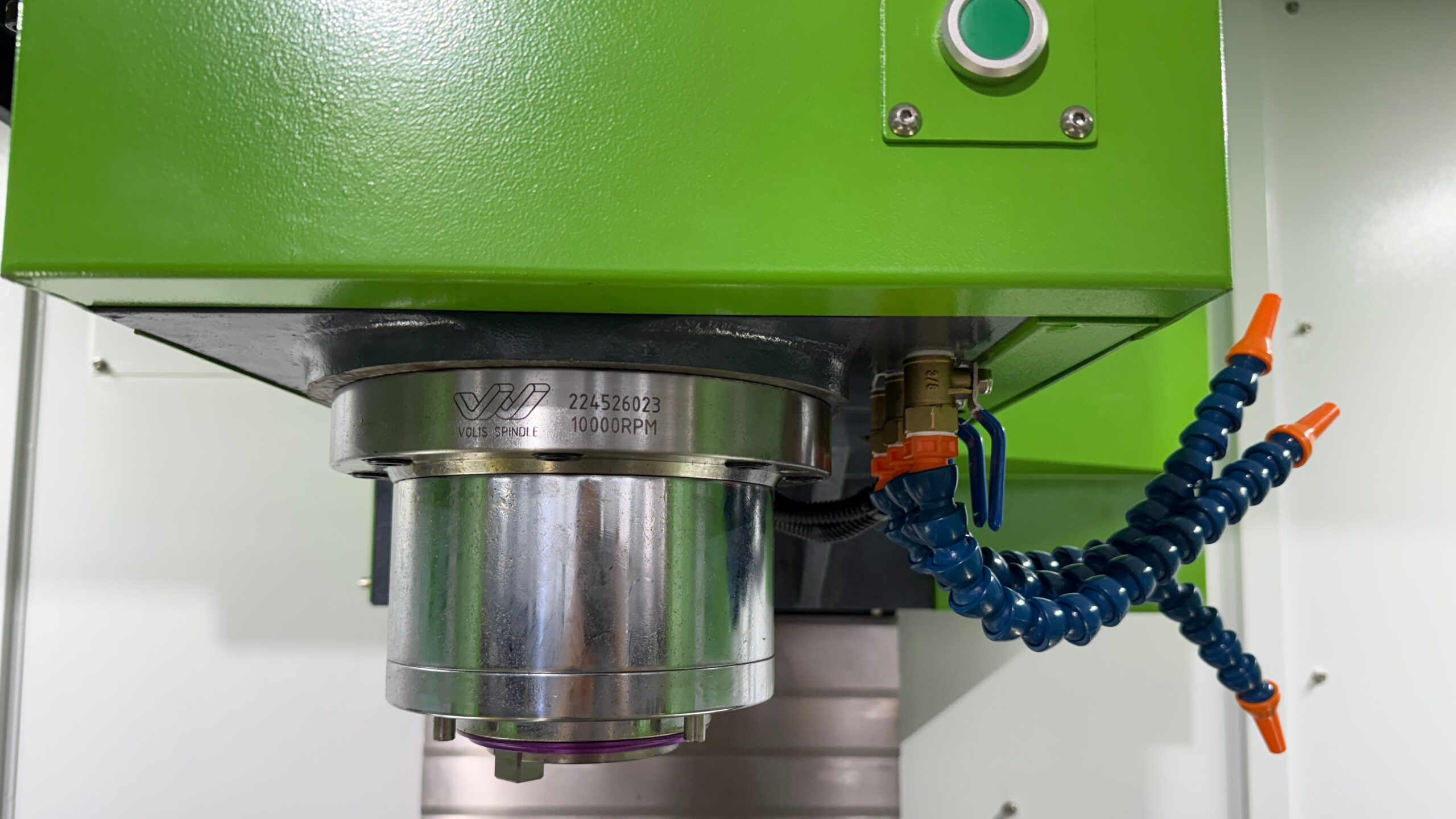
A VMC quote often offers two spindles: a belt drive spindle at 10,000 rpm and a direct-coupled spindle at 12,000 rpm. It's easy to read that as a speed choice, but the speed is only the visible part.
In both designs a separate motor turns the spindle. What differs is the link between them: a belt running over two pulleys, or a coupling on the same axis. That link decides how much torque reaches the tool at low speed, what caps the top speed, where extra vibration comes from and what needs servicing.
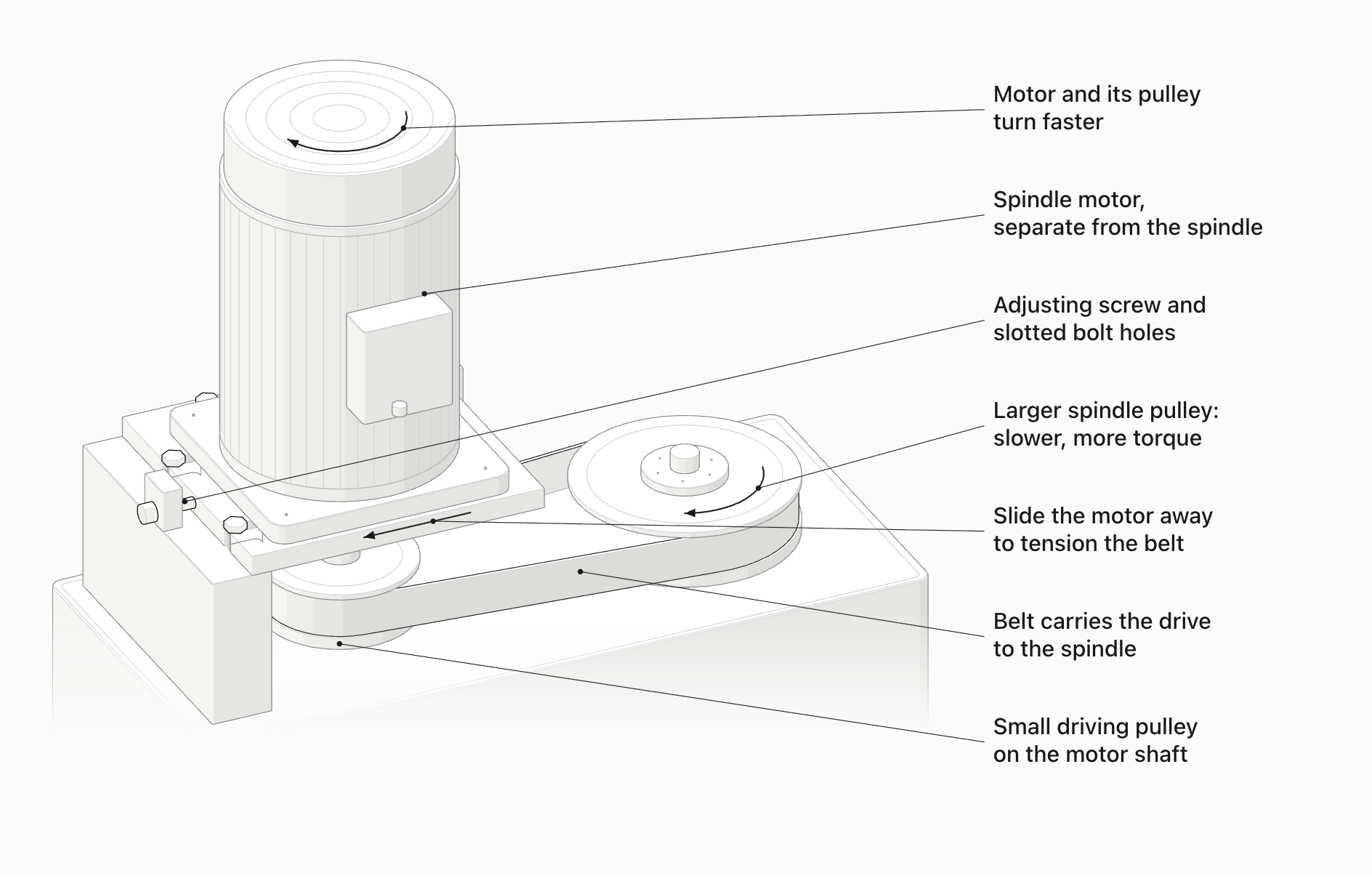
How a belt drive spindle carries the motor's power
The motor sits beside the spindle and turns a pulley. A toothed belt carries the drive to a second pulley on the spindle shaft. With two pulleys the same size, the spindle turns at motor speed.
Make the spindle pulley larger and the spindle turns slower than the motor, with more torque. The ratio, i, is the effective diameter of the spindle pulley divided by that of the motor pulley. Above 1 it's a reduction; at 1 the spindle runs at motor speed; below 1 the spindle runs faster than the motor, with less torque.
At a given motor speed and load, spindle speed is roughly motor speed ÷ i, and spindle torque roughly motor torque × i × drive efficiency. The belt's capacity, the motor's own limits and its continuous rating still cap what reaches the tool.
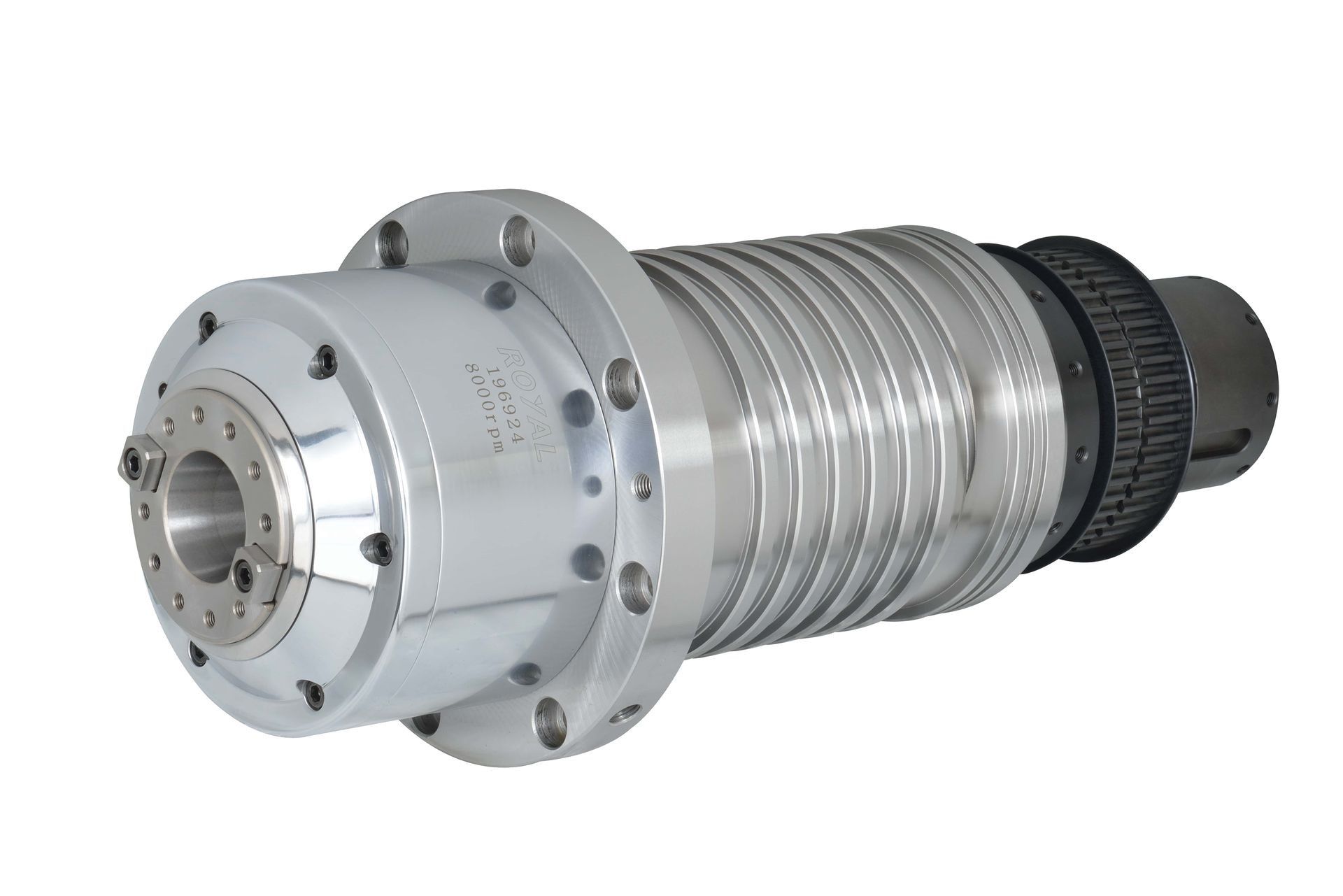
How a direct-coupled spindle carries it
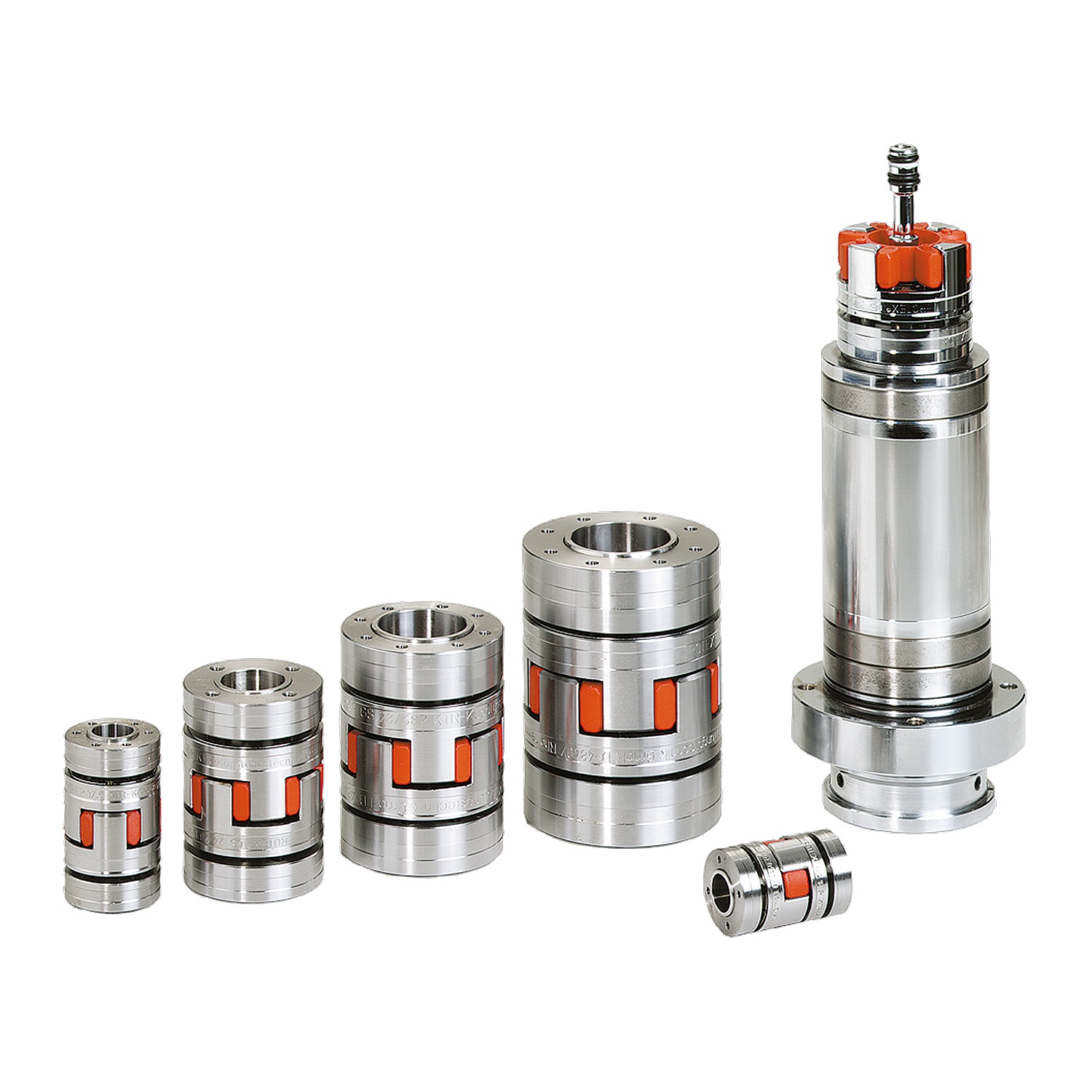
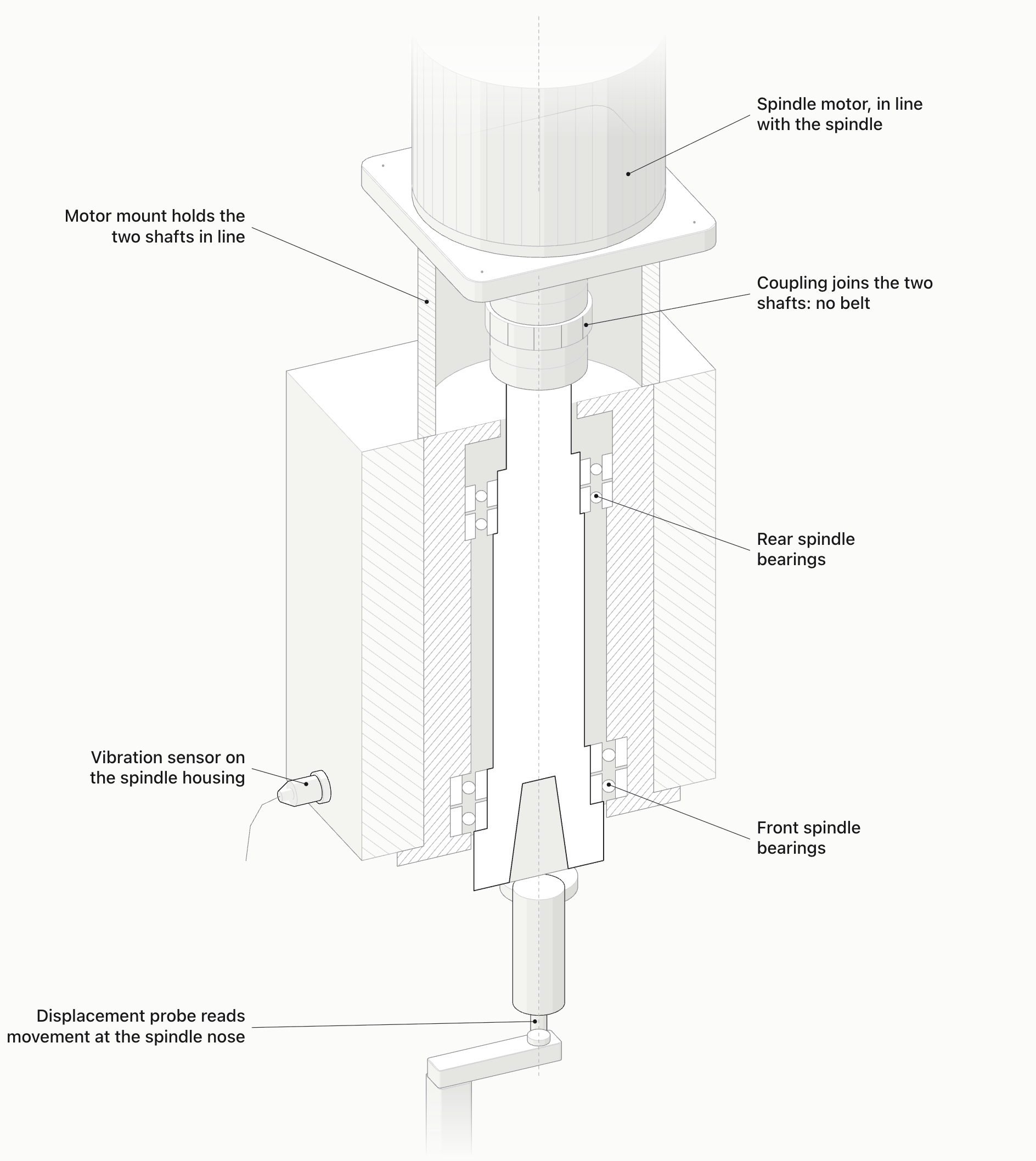
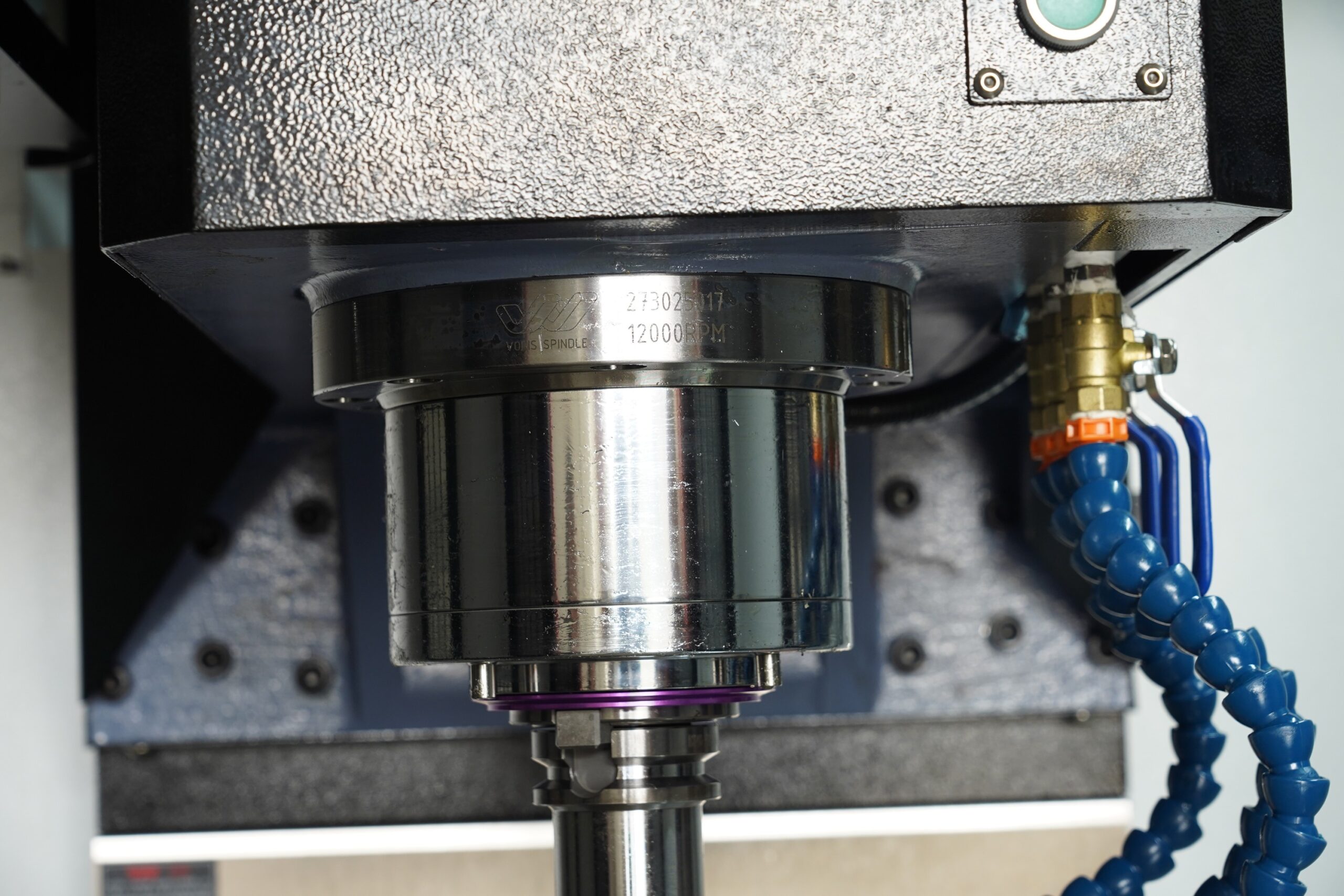
In a direct-coupled spindle, the motor is mounted in line with the spindle and a coupling joins the two shafts. The ratio is fixed at 1:1: the spindle turns at motor speed and gets motor torque, less a small coupling loss.
A motorized spindle is a third design, with the motor built into the spindle itself. Our motorized vs mechanical spindle guide covers that one.
What changes between a belt drive spindle and a direct-coupled spindle
Top speed comes first. On a direct-coupled spindle it's the motor's top speed, within what the spindle bearings are rated for. On a belt drive, the motor's top speed is divided by the ratio, so a reduction lowers it. That's one reason a belt option can carry a lower rating. The rating on a given machine still comes from its motor, bearings and ratio together, so compare the figures for the actual models, not the drive names.
Torque at low speed works the other way. A reduction multiplies motor torque at the spindle, which helps a large face mill or a big drill turning a few hundred rpm. A direct-coupled spindle gets no multiplication, so its low-speed torque is whatever the motor gives at that speed. Whether a belt option has a reduction, and how large, shows on its specification and torque curve, not in the name.
For either option, ask for the continuous and short-time torque curves measured at the spindle, at the speeds you actually cut, and check them against your largest tools. A trial cut at those speeds settles what the curves leave open.
Vibration, heat and service: belt drive spindle and direct coupling
The belt, its tension and two pulleys add sources of vibration. A coupling removes them but brings its own condition to watch: alignment between the motor and spindle shafts. Balance, bearing condition and cooling matter in both. ISO/TR 17243-2 covers housing vibration for direct- and belt-driven spindles on rolling bearings, between 600 and 30,000 rpm, so one method measures either.
If you're comparing two machines, use the same cut on both: same tool, holder, stick-out and load, with the sensor at the same point on the housing.
Both designs grow as they warm up. For the part, what counts is how far the spindle nose moves, not the temperature on the housing. ISO 230-3 sets out a test for thermal distortion caused by spindle rotation; ask for the result on the configuration you'd buy, under the same warm-up and running schedule.
Service differs too. A belt drive adds belt inspection, tension checks and, eventually, a new belt, so ask what has to come off to reach it. On a direct-coupled spindle, the coupling's alignment matters once the motor or spindle has been taken out; check what the service procedure for the model you buy asks for when it goes back together. Either design can need bearing or spindle service.
Belt drive spindle vs direct-coupled spindle at a glance
| Belt drive spindle | Direct-coupled spindle | |
|---|---|---|
| Link from the motor | Belt over two pulleys | Coupling on one axis |
| Spindle speed | Motor speed ÷ ratio i (above 1, below 1 or 1:1) | Motor speed (1:1) |
| Torque at the spindle | Motor torque × i × efficiency | Motor torque, less a small coupling loss |
| Added vibration sources | Belt, belt tension, pulleys | Coupling alignment |
| Routine service | Belt checks, tensioning, replacement | Alignment per the service manual after removal |
| What to check | Spindle torque curves at your cutting speeds; speed held through the cut | Spindle torque curves at your cutting speeds; speed held through the cut |
Which parts suit a belt drive spindle, and which suit direct coupling
Small cutters in aluminum need high rpm to reach their cutting speed. At an assumed 300 m/min, a 6 mm end mill needs about 15,900 rpm, so even 12,000 rpm leaves it short, and 10,000 rpm more so.
On repeat work with small cutters, the higher top speed of the direct-coupled option can shorten each pass, if the spindle holds that speed in the cut, the feed rises with it, and the cutter and holder are rated for it.
Large face mills, big drills and taps in steel turn slowly and need torque. There, a belt drive spindle with a reduction may put more torque on the tool; compare the torque curves at the speeds those cuts run.
To weigh the two on a quote, time the saving on a trial cut and multiply by your yearly volume. If a trial saved 12 seconds per part over 6,000 parts a year, that's 20 hours, and those hours only count if there's work to fill them. If there isn't, count them as zero, and price maintenance and power separately from your own figures.
How we configure the spindle on our VMCs
Our CS-V855, CS-V11, CS-V13, CS-V16, CS-V20 and CS-V25 vertical machining centers are built with either a 10,000 rpm belt-drive spindle or a 12,000 rpm direct-coupled spindle, and the CS-V6 has the 12,000 rpm direct-coupled spindle. For small-cutter aluminum work, we'd look at your cutter sizes and target speeds first; for heavy low-speed cuts, at the torque those cuts need. Then we'd recommend the drive that fits the mix.
Send the part drawing or dimensions, cutter sizes and speeds, a timed cycle and your yearly volume through our product inquiry page. We'll review the load and time figures, recommend a spindle configuration, estimate the cycle time and prepare a quote.
Sources
- Gates, Light Power and Precision Drive Design Manual: speed ratio, torque and installation tension
- ISO/TR 17243-2:2017, machine tool spindles, vibration of direct- and belt-driven spindles with rolling bearings
- ISO 230-3:2020, determination of thermal effects
- NSK, bearing preload, stiffness and heat generation
- Haas AD0061, in-line spindle replacement: a 40-taper spider coupling example of coupling alignment
The 300 m/min cutting speed, the 12-second saving and the yearly volume are illustrative. Recalculate with your own trial data.