Selecting CNC lathe turning centers has become increasingly complex as modern machining demands grow. Many buyers focus on price, size, or brand reputation, yet these obvious factors rarely predict real performance. Manufacturers now operate under tighter tolerances, shorter lead times, and higher automation expectations. Therefore, choosing the right machine requires deeper attention to specifications that rarely appear in superficial comparisons. When buyers understand these hidden parameters, they gain clear advantages in productivity, part quality, and long-term reliability.
This article explores these crucial but often overlooked specifications. It explains why they matter, how they influence machining results, and how each factor affects long-term investment value. As the machining industry advances, these details determine which CNC lathe turning centers deliver sustainable output and which fail under real-world pressure. By understanding these dimensions, buyers can move beyond marketing claims and choose equipment that supports stable growth.
1. Machine Bed Structure and Vibration Control
Most buyers start with spindle speed and tool capacity. However, the fundamental stability of CNC lathe turning centers begins with the machine bed. The bed structure determines how the machine handles vibration, load, and dynamic force during cutting. If the bed lacks rigidity, accuracy declines even with advanced control systems.
High-quality machines use cast iron beds with thermal-balanced structures. They feature ribbed reinforcement to reduce micro-vibration. Even small vibrations alter tool paths, so precision suffers. Moreover, vibration reduces tool life, increases scrap rates, and damages spindle bearings over time. Therefore, buyers should always examine the bed weight, casting quality, and internal rib design.
Although many machines promote high speed, only a stable bed construction ensures usable speed. As machining complexity grows, the ability to maintain precision under pressure determines long-term performance. Therefore, investing in a rigid bed is essential for high-mix production environments.
2. True Spindle Power vs. Rated Spindle Power
Spindle power defines cutting capability, yet many manufacturers advertise peak power rather than sustained power. Buyers often overlook this distinction. Sustained power represents the real capability during long cutting cycles. When the spindle cannot maintain steady torque, the machine produces inconsistent surfaces and struggles with harder materials.
CNC lathe turning centers with high torque at low RPM support heavy cuts, thread cutting, and tough alloys. Machines that rely on inflated peak power numbers perform well only in short bursts. As production grows, sustained torque becomes more important than momentary strength.
Furthermore, buyers must consider spindle construction. Larger bearings, oil-cooled housings, and precision balancing reduce heat and vibration. Lower heat improves accuracy because thermal expansion affects spindle alignment. When buyers compare machines, they should request torque curves, not simple power ratings. This detail is often missing from basic catalogs, yet it reveals real machining strength.
3. Turret Indexing Mechanism and Repeatability
Turret design plays a major role in cycle time and accuracy. Many buyers focus on the number of tool stations, but the hidden factor is turret indexing precision. A fast index is valuable only when it repeats positions with tight consistency.
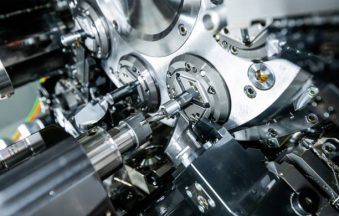
Hydraulic turrets offer a strong clamping force but slower indexing. Servo turrets deliver faster, more precise motion and higher repeatability. As shops automate, repeatability becomes more important than simple speed. Precise turret alignment ensures that each tool starts cutting from the correct position, which improves part consistency and reduces setup adjustments.
Another overlooked factor is live tooling stability. As more CNC lathe turning centers include milling functions, the ability to maintain accuracy during off-center cutting becomes critical. Buyers should inspect the live tooling power, speed, and cooling mechanisms. Without proper cooling, live tools experience premature wear and reduce overall machining efficiency.
4. Guideways: Box Ways vs. Linear Ways
Guideway design is one of the most misunderstood aspects of CNC machinery. Buyers often choose machines based on outdated assumptions, such as believing that box ways always outperform linear ways. The truth is more nuanced.
Box ways offer superior damping and load support, making them ideal for heavy cutting. They deliver excellent rigidity and stability. However, they generate more friction and heat, which increases energy consumption and requires more lubrication.
Linear ways offer higher speed, smoother travel, and lower friction. They suit high-volume turning of smaller parts and fast tool changes. Yet linear ways handle heavy loads less effectively and can lose rigidity under aggressive cuts.
Modern CNC lathe turning centers sometimes combine both designs to balance speed and strength. Buyers must match the guideway type with real production needs. High-speed shops benefit from linear ways, while manufacturers handling tough materials need box-way rigidity. This decision influences machine lifespan, accuracy retention, and maintenance cost.
5. Thermal Compensation and Heat Management
Thermal expansion represents one of the largest sources of machining error. Even a small temperature rise shifts tool positions and affects surface quality. Although buyers frequently check spindle cooling, they overlook full-machine thermal management.
Advanced CNC lathe turning centers integrate thermal mapping across the machine frame. They measure heat distribution and apply compensation automatically. Machines without compensation drift during long runs, causing dimensional inconsistency. As production shifts toward continuous cycles, thermal stability is essential for predictable output.
Another hidden element is ballscrew cooling. When ballscrews overheat, backlash increases and precision falls. Cooling systems reduce heat buildup and extend component life. Although these features increase upfront cost, they significantly improve reliability in demanding environments. Buyers seeking consistent tolerances must treat thermal control as a core specification, not a luxury.
6. CNC Controller Processing Speed and Servo Response
Many buyers select controllers based on brand familiarity. Yet controller performance varies widely, and the hidden differences affect real machining outcomes. The processing speed of the CNC controller determines how fast it interprets tool paths. Slow processing produces delayed motion and inconsistent cutting.
Servo response speed also affects accuracy. When servo systems react quickly, the machine maintains smooth acceleration and deceleration during high-speed machining. This precision becomes critical when producing complex parts with tight tolerances.
Moreover, modern CNC lathe turning centers benefit from advanced interpolation functions. These functions ensure that curved surfaces remain smooth and accurate. Buyers should also evaluate memory capacity and program file handling. Larger memory supports multi-axis machining and long programs without slowing down.
Although controllers appear similar at first glance, small differences in hardware significantly influence machine productivity and part quality.
7. Chip Management and Coolant System Efficiency
Chip management rarely appears as a major selling point, yet poor chip flow disrupts machining more than buyers expect. Accumulated chips cause heat buildup, tool wear, surface scratches, and coolant contamination. When shops run long cycles, chip evacuation becomes essential.
High-quality CNC lathe turning centers include efficient conveyors, high-flow coolant pumps, and carefully designed enclosure geometry. These systems move chips away from the cutting area and maintain coolant clarity. Stable coolant flow also improves tool life and enhances surface finish.
Coolant filtration is another overlooked factor. Fine filtration extends coolant life and reduces pump load. When buyers evaluate machines, they should inspect filtration rating, pump pressure, and flow volume. Although these details may seem minor, they directly contribute to uptime and consistent production.
Putting It All Together: Why Hidden Specs Matter
When buyers focus only on headline specifications, they risk selecting machines that cannot support long-term production. Real performance comes from the synergy between structure, power, precision, and stability. Every overlooked detail eventually reveals itself as scrap, downtime, or slow throughput.
CNC lathe turning centers have evolved into sophisticated platforms that integrate mechanical engineering, electronics, and thermal management. Each hidden specification shapes the machine’s ability to deliver reliable accuracy under changing workloads. When buyers understand these details, they make decisions that match production goals, budget requirements, and material demands.
As competition intensifies, shops must adopt machines that enhance productivity and maintain consistency. The hidden specifications discussed here represent the true foundation of machining performance. By evaluating these dimensions carefully, buyers secure long-term value and strengthen their operational capability.
Conclusion
Choosing the right CNC lathe turning center requires much more than comparing spindle speeds or table sizes. Buyers must evaluate machine bed rigidity, sustained spindle torque, turret repeatability, guideway design, thermal control, controller speed, and coolant efficiency. These hidden factors influence accuracy, durability, and cost efficiency far more than surface-level specifications.
As machining demands grow, successful manufacturers rely on equipment that performs consistently under pressure. Understanding these overlooked details allows buyers to identify machines that support real productivity. When companies invest with clarity, they gain machines that deliver stable performance and long-term reliability.