Industrial buyers face rising pressure as production demands grow more complex. Every year, manufacturers seek greater accuracy, faster throughput, and stronger performance from CNC systems. As a result, many teams must decide between a CNC gantry machining center and a vertical machining center. The choice seems simple on the surface. However, bigger differences influence long-term output, cost control, and production reliability. Therefore, buyers must understand how each system behaves under specific workloads. They also need clarity on structure, rigidity, and application limits. Only then can they choose equipment that aligns with their factory’s future growth.
1. Structural Logic Shapes Performance Expectations
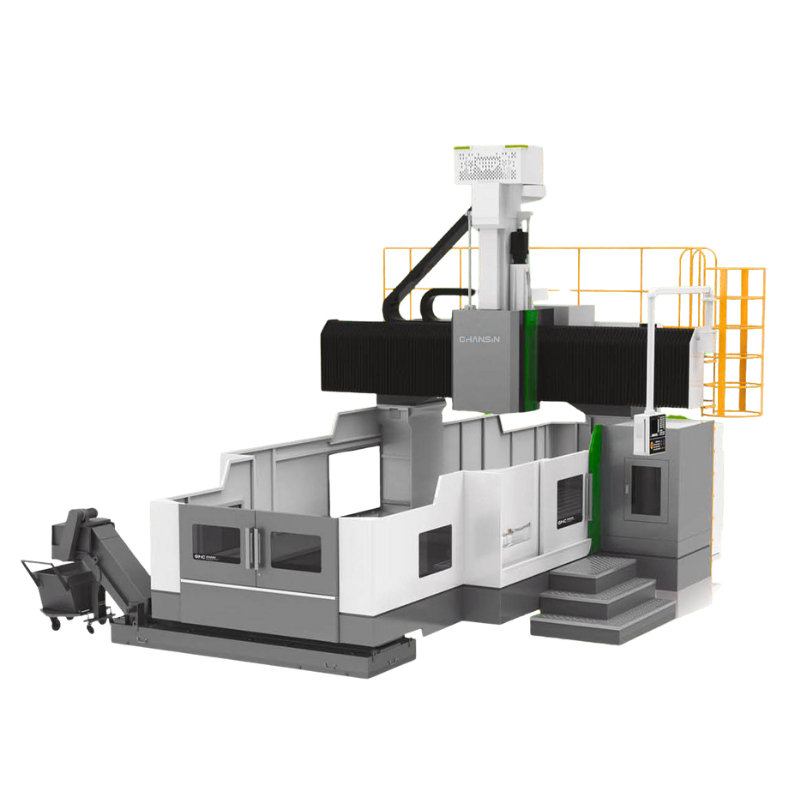
The first major distinction concerns structure. Structure influences rigidity, stability, workpiece size, and long-term accuracy. A CNC gantry machining center uses a bridge-type frame. The crossbeam runs over two columns. This creates a stable load path. The tool moves with strong support along both sides. Because of this architecture, a gantry machine controls vibration better during heavy cutting. Meanwhile, a vertical machining center places the spindle above the table. The spindle moves primarily along the Z-axis. The workpiece stays on the table and receives the cutting force from one vertical direction. This design creates flexibility for small or medium parts. Yet the single-column layout does not match the rigidity of a gantry frame.
Although both machines achieve precision, their stability behaves differently during load changes. When workshops cut large metal blocks or wide plates, vibration resistance improves accuracy. In these situations, a CNC gantry machining center offers superior results. It distributes force across a wider frame. Therefore, deflection decreases during heavy tool engagement. In contrast, a vertical machining center suits lighter structural demands. Its compact form supports quick tool paths and fast cycle times for smaller parts.
2. Workpiece Dimensions Directly Impact Equipment Choice
Workpiece size remains one of the strongest decision factors. Gantry machines support large parts because the table does not limit the vertical frame. Manufacturers load wide plates, long molds, or thick metal blocks with fewer constraints. In industries like aerospace or wind power, parts often exceed the limits of vertical machines. Therefore, CNC gantry machining centers become essential. Its open structure allows flexible loading from multiple directions. It also handles significant unit weight without losing stability.
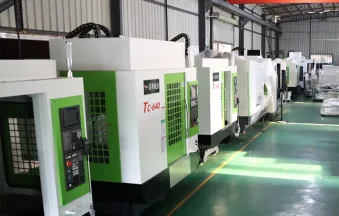
Vertical machining centers still lead in compact component production. Their design promotes quick loading and efficient repositioning. Many electronics manufacturers rely on VMC systems because small parts require speed rather than structural mass capacity. Because vertical systems occupy less floor space, workshops can install multiple units for parallel production. This approach increases throughput without expanding facility size.
Therefore, factories must analyze their part size distribution before selecting a system. When parts exceed moderate dimensions or require extended tool reach, gantry machines deliver more predictable performance. When small parts dominate production, vertical centers provide an efficient and practical solution.

3. Cutting Power and Material Strategies Reveal Deep Differences
The next major distinction concerns material strategy. Different industries use different metals. Heavy materials such as steel, cast iron, or titanium need powerful engagement. These metals generate large cutting forces. As a result, the machine must balance torque, rigidity, and dynamic control. Because CNC gantry machining centers have strong structural integrity, they maintain accuracy when the spindle meets resistance. Its dual-column frame keeps the spindle stable even during deep cuts.
Vertical machining centers perform well with aluminum, copper, engineering plastics, and similar materials. They also manage steel, but only within moderate cutting depths. Their lightweight structure favors speed rather than extreme force. When tool paths involve complex but shallow profiles, VMC systems provide a cleaner performance curve. They complete high-speed machining tasks while maintaining smooth acceleration.
Buyers must match machine characteristics to material trends. If a factory handles large steel molds, dies, or thick structural components, a gantry system aligns with long-term durability. If the focus shifts toward small aluminum housings or precision mechanical parts, vertical machines maintain efficiency without extra investment.
4. Accuracy Behavior Changes Under Thermal and Dynamic Stress
Accuracy remains a core concern for industrial procurement teams. However, accuracy depends on more than spindle specifications. It changes with temperature, vibration, and dynamic motion. Gantry machines maintain accuracy during prolonged cutting because the frame disperses heat across a large surface. As the temperature increases, the expansion remains balanced and slow. This protects tolerance stability over long cycles.
Vertical machining centers heat up faster because the structure is tightly packed. Heat builds around the spindle area. This speeds thermal drift. Manufacturers counter this with compensation systems, but physical expansion still influences accuracy during long production runs. Therefore, VMC systems suit shorter machining cycles that require frequent tool changes and intermittent operation.
The dynamic accuracy of CNC gantry machining centers also improves surface finish during high-load machining. The tool path stays stable even under heavy chip load. Meanwhile, vertical centers excel in high-speed finishing of smaller parts. Their lighter slides move quickly with minimal inertia. This improves micro-features and fine details.
Because accuracy behaves differently across load conditions, buyers must base their decision on operating patterns. Long cycle times favor gantry machines. Fast repetitive cycles favor vertical systems.
5. Automation and Auxiliary System Integration Vary Significantly
Modern factories rely on automation to improve throughput. Both machine types support automation, but integration behaves differently. Gantry machines work well with automatic tool changers, long worktables, and robotic loading systems. Their wide structure allows flexible placement of automation arms. In mold workshops, gantry machines pair well with pallet systems because operators load and unload large plates with minimal manual handling.
Vertical machining centers support automation, too. Many industries use robotic cells with VMC units. Their compact shape fits well in tight manufacturing lines. They also integrate rotary tables for multi-face machining. Because their layout is simple, automation becomes cost-effective for smaller parts.
When buyers plan future automation upgrades, they must consider space, part size, and desired throughput. Gantry systems support heavy automation for large workpieces. Vertical systems support compact automation for high-volume production lines.
 6. Cost Structure Drives Long-Term Investment Strategy
Investment planning plays a critical role in procurement decisions. Gantry machines cost more because they require a larger frame, stronger components, and wider motion systems. Their scale also increases installation and maintenance expenses. However, their value lies in capability. They manage work that smaller machines cannot. They also extend service life during heavy cutting.
Vertical machining centers cost less and deliver fast returns for small-part production. Their maintenance remains simple, and their spare parts cost less. When factories operate high-volume production lines, multiple VMC units provide a flexible and scalable approach.
Therefore, buyers must examine long-term production goals. If future products trend toward larger, heavier, and more complex components, CNC gantry machining centers become a strategic investment. If products remain small and diverse, vertical machines provide a stable and cost-effective path.
7. Application Trends Reveal the Most Suitable Scenarios
Each machine type aligns with specific industries. Gantry machining centers dominate aerospace, energy, mold making, marine, and heavy machinery. These industries need large-scale cutting and long-stroke performance. Gantry machines manage this with ease.
Vertical machining centers dominate electronics, medical devices, automotive subcomponents, and consumer hardware. These parts need speed, detail, and predictable machining in smaller envelopes.
This pattern also affects workflow. Gantry machines often serve as core units in large workshops. Vertical machines form production cells with multiple parallel units. Therefore, buyers must choose a configuration that aligns with factory workflow, staffing, and product structure.
Conclusion: Understanding True Needs Leads to Smarter CNC Procurement
Selecting between CNC gantry machining centers and vertical machining centers requires deep analysis rather than simple comparison. Structure, workpiece size, cutting load, accuracy behavior, automation potential, and cost planning all influence the correct choice. Buyers must examine their industry, their long-term production roadmap, and the physical limits of each machine type. When these factors align, the investment produces stable performance, lower long-term cost, and strong product quality.
A gantry machine drives heavy-duty capability and long-stroke accuracy. A vertical machine drives agile production and efficient small-part machining. Both excel when matched with the right application. Therefore, industrial buyers must approach their selection with clear expectations, strong planning, and a strategic mindset. With this understanding, they can choose equipment that supports future expansion and ensures stable performance across many production cycles.