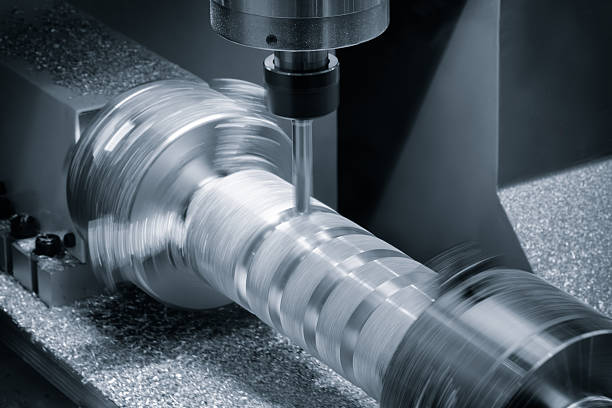
Choosing the right equipment is the foundation of profitable manufacturing. Many shop owners struggle to decide between different CNC configurations. However, the wrong choice leads to wasted time and lower precision. Consequently, understanding the strengths of a cnc lathe tool milling machine is vital. This guide provides a clear comparison to help your decision. We help you match your specific part geometry to the perfect machine.
1. The Specialists: Lathes and Milling Machines
Understanding how different machines shape materials is essential for selecting the right manufacturing process. While traditional equipment often specializes in specific movements and geometries, modern CNC systems refine these capabilities with greater precision and efficiency. Among them, CNC lathes and milling machines stand out as two fundamental solutions—each designed for distinct applications.
The CNC Lathe: Mastering Rotational Precision
A CNC lathe operates by rotating the workpiece against a fixed cutting tool, allowing it to shape materials with exceptional accuracy. As a result, it becomes the ideal solution for producing rotational components such as shafts, disks, and bushings with perfectly circular profiles. In addition, modern lathes deliver extremely tight cylindrical tolerances, ensuring consistency across high-volume production. Therefore, whenever your part design centers on round or axisymmetric geometry, a CNC lathe provides the most efficient and precise approach.
The Milling Machine: Shaping Surfaces with Versatility
In contrast, a milling machine rotates the cutting tool while keeping the workpiece stationary. Because of this configuration, it excels at machining flat surfaces, slots, grooves, and deep cavities with high accuracy. Moreover, it is particularly well-suited for prismatic components such as engine blocks, brackets, and structural parts. At the same time, it can efficiently process complex hole patterns across large surface areas. Consequently, for rectangular, angular, or irregular geometries, milling machines remain the industry-standard choice.
2. The Hybrid: The Power of Turn-Mill Multitasking
Modern manufacturing demands efficiency, precision, and seamless integration—and a CNC lathe tool milling machine delivers exactly that by combining turning and milling capabilities into a single, powerful unit.
Complete Complex Parts in a Single Setup
Equipped with a high-performance spindle for turning and live tooling for milling, this machine allows you to carry out multiple operations in one continuous process. As a result, you can achieve true “one-hit” machining without transferring the workpiece between different machines. This not only simplifies your workflow but also minimizes alignment errors and setup time.
Moreover, the system handles intricate geometries—such as impellers and camshafts—with remarkable ease and accuracy. Consequently, you significantly reduce work-in-progress time while improving overall production efficiency. In turn, manufacturers can streamline operations, lower costs, and maintain consistent, high-quality output across complex machining tasks.
3. Selection Matrix: How to Choose Your Machine?
Use this quick reference table to align your project with the right technology.
| Feature | CNC Lathe | Tool Milling Machine | Turn-Mill Center |
| Part Shape | Cylindrical / Round | Flat / Box / Square | Complex / Hybrid |
| Typical Parts | Shafts, Bolts, Pins | Brackets, Housings | Impellers, Valves |
| Key Motion | Part Rotates | Tool Rotates | Both Move |
| Best For | High-Volume Turning | Precision Surface Work | Multi-Process Tasks |
Consequently, your choice depends on the final shape of your component. If your part has both turned and milled features, choose the hybrid. Furthermore, consider the labor costs of moving parts between machines. Therefore, the cnc lathe tool milling machine often offers the highest ROI.
4. Decision Factors: Accuracy and Batch Size
Beyond shape, you must consider the logistics of your production run.
-
High Accuracy: Turn-mill centers eliminate errors caused by manual re-clamping.
-
Large Batches: Specialized lathes are often faster for simple round parts.
-
Small Batches: Milling machines offer great flexibility for custom prototypes.
Consequently, you must weigh the setup time against the total volume. A cnc lathe tool milling machine saves time on complex, low-volume orders. Furthermore, it ensures perfect alignment between the turned and milled features. Therefore, it is a strategic investment for modern, high-mix shops.
Conclusion: Aligning Technology with Your Production
The right CNC machine turns technical challenges into market advantages.
Stop losing money by using the wrong tool for your specific parts. Instead, embrace the efficiency of a tailored cnc lathe tool milling machine strategy. Consequently, your production line will become leaner and much more accurate. Experience the boost in quality that the correct equipment provides today. Start your journey toward optimized CNC manufacturing excellence right now. Your parts deserve the precision that only the right machine can deliver.