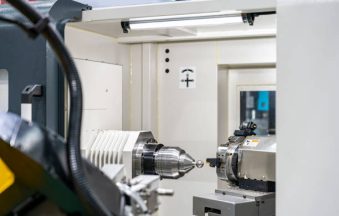
In the world of high-precision manufacturing, where the difference between success and failure is measured in microns, the Swiss-type CNC Lathes stand as the ultimate conductor. It is not merely a machine; it is a mechanical “symphony orchestra.” While traditional lathes function like a solo instrument, the Swiss-type lathe integrates multiple axes of motion into a choreographed performance, executing complex geometries with a level of synchronicity that seems to defy the laws of mechanical physics.
The most advanced iterations of this technology now feature 13-axis synchronous cutting capabilities. This allows for the simultaneous engagement of main spindles, sub-spindles, and multiple live tool posts. For industries such as medical device manufacturing and aerospace, where parts are small, complex, and high-value, this multi-axis integration represents the pinnacle of production efficiency. This article explores the fluid mechanics and structural logic behind the Swiss-type lathe, illustrating how 13 axes work in harmony to transform raw bar stock into finished, complex components in a single setup.
1. The Core Philosophy: Process Integration as an Art Form
Traditional manufacturing often requires a part to travel through multiple machines—a lathe for turning, a milling center for features, and perhaps a dedicated drilling station. Each move introduces a “setup error,” where the minute misalignment of the part in a new fixture accumulates into a defective product.
The Swiss-type lathe eliminates this risk through Process Integration. By utilizing a sliding headstock and a guide bushing, the machine supports the material right at the point of cutting. However, the true breakthrough lies in its 13-axis control. This system allows the machine to act as a multi-functional hub, executing turning, milling, cross-drilling, tapping, and eccentric machining simultaneously. This integration condenses the productivity of an entire factory floor into a single, high-speed machine.
2. Anatomy of the Symphony: Deconstructing the 13 Axes
To understand how 13 axes can operate at once, one must visualize the machine as a multi-dimensional workspace. Unlike a standard 2-axis lathe (X and Z), the Swiss-type orchestra utilizes a sophisticated array of moving parts.
The Spindle Dual-Act (Main and Sub)
The 13-axis system relies on a dual-spindle architecture. The main spindle performs primary machining operations. The sub-spindle captures the part for secondary processing. Both spindles synchronize this transfer with precise timing. As front machining ends, the sub-spindle engages on its own axes. This process enables simultaneous machining on both workpiece ends.
The Power Tool Posts (Live Tooling)
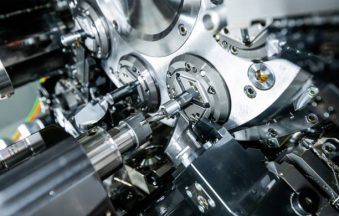
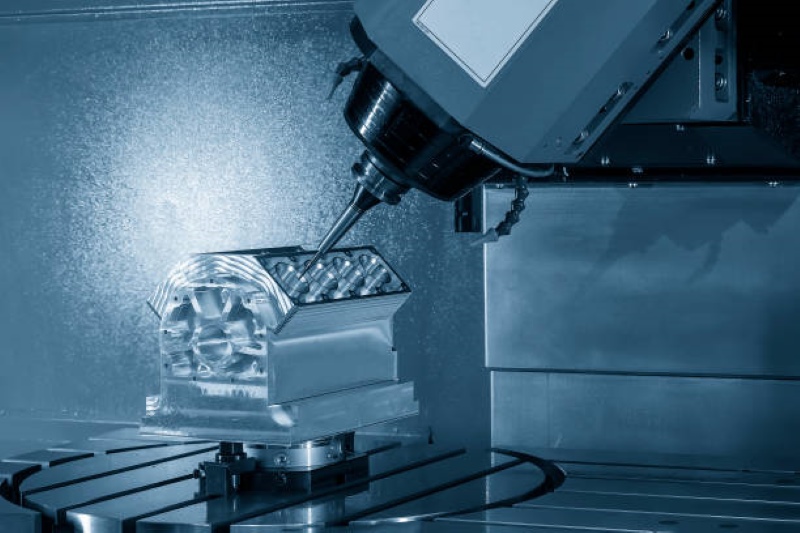
The “soloists” of this orchestra are the live tool posts. Equipped with their own motors, these tools can mill flats, drill angled holes, and even perform complex 3D surfacing while the spindle rotates at a controlled speed (C-axis). With multiple tool stations positioned around the guide bushing, the machine can engage three or even four tools on the workpiece at the same time.
3. The “Conductor” in the Cabinet: CNC System Logic
The “conductor” of this 13-axis symphony is the high-speed CNC controller. Managing 13 axes of motion requires a processing speed that can calculate tool paths in nanoseconds.
Synchronous Motion Control
The CNC system manages Superimposed Motion. For example, while the main spindle moves in the Z-axis to feed the material, the tool post might be moving in X, Y, and Z to create a helical groove. Simultaneously, the sub-spindle might be performing a back-drilling operation on the previous part. The controller ensures that these movements never collide, maintaining a clearance of mere tenths of a millimeter between high-speed rotating tools.
Adaptive Feed Correction
In a 13-axis environment, thermal expansion or tool wear can disrupt the harmony. Advanced CNC systems utilize real-time feedback from the spindles and tool posts to adjust the feed rates and coordinates dynamically. This ensures that the first part of the day is identical to the thousandth, regardless of the complexity of the “score” being played.
4. Case Study: The Medical Bone Screw
Nothing demonstrates the power of 13-axis synchronicity better than the production of a complex medical bone screw. These parts require aggressive threading, hex-head milling, and delicate cannulation (a hole through the center).
The Overture: Simultaneous Turning and Milling
As the bar stock emerges from the guide bushing, the main spindle begins the high-precision turning of the screw’s outer diameter. Simultaneously, a live tool post equipped with a milling cutter begins creating the specialized thread profile. Because the material is supported by the guide bushing, the 13-axis system can apply high cutting forces without the part bending or vibrating.
The Bridge: The Handshake
As the front-end features are completed, the sub-spindle moves forward on its independent axes. It synchronized its rotation speed exactly with the main spindle. The sub-spindle clamps onto the finished head of the screw while the main spindle continues to rotate. A cutoff tool then severs the part.
The Finale: Back-End Perfection
While the main spindle immediately begins the next part, the sub-spindle retreats to the back-tool station. Here, independent axes allow for the drilling of the cannulation hole and the deburring of the back edge. Two parts are being worked on at once, utilizing different sets of axes in a continuous, rhythmic cycle.
5. Why 13 Axes? The Commercial Imperative
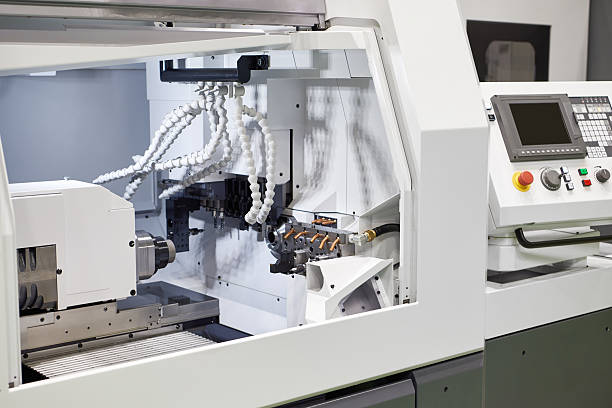
The move toward 13-axis synchronization is driven by the demand for “One-Hit Machining.” In a global market, the ability to produce a finished part from bar stock in a single cycle offers massive competitive advantages.
-
Zero-Setup Error: By never releasing the part until it is finished, the machine maintains perfect concentricity and axial alignment.
-
Reduced Cycle Time: Synchronous cutting can reduce production time by 30% to 50% compared to sequential machining.
-
Labor Efficiency: One operator can manage a fleet of 13-axis machines, as the complexity is handled by the CNC “conductor” rather than manual intervention.
-
Surface Finish Excellence: The constant support of the guide bushing, combined with the precision of multi-axis live tools, produces a “mirror finish” that eliminates the need for secondary polishing.
6. Structural Stability: The Stage for the Symphony
A 13-axis machine creates immense dynamic forces. To keep the “orchestra” in tune, the machine’s “stage”—its bed and frame—must be exceptionally rigid.
Advanced Swiss-type lathes utilize Mineral Casting or Mehanite Cast Iron beds. These materials possess superior vibration-damping properties. When 13 axes are moving, and multiple tools are cutting at 10,000 RPM, the frame must absorb the energy to prevent “chatter” marks on the part. Furthermore, high-precision linear guideways and ball screws ensure that the mechanical response to the CNC’s command is instantaneous and accurate to the sub-micron level.
7. Conclusion: The Future of Micro-Precision
The 13-axis Swiss-type lathes are the pinnacle of the “Machine Tool Orchestra.” It represents a shift away from individual mechanical tasks toward a philosophy of holistic, synchronous creation. By deconstructing the complex interplay between spindles, Y-axes, and live tool posts, we see that the true power of the machine lies in its ability to multitask with surgical precision.
For manufacturers aiming to conquer the challenges of the medical, aerospace, and high-end electronics industries, mastering this symphony is the only path forward. The 13-axis system does more than just cut metal; it condenses time, eliminates error, and produces the “unmachinable.” In the hands of a skilled programmer, this machine tool orchestra plays the music of modern industry—a melody of efficiency, precision, and limitless possibility.