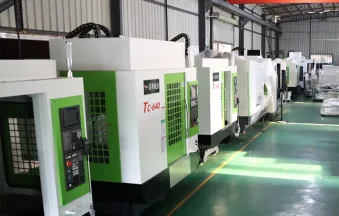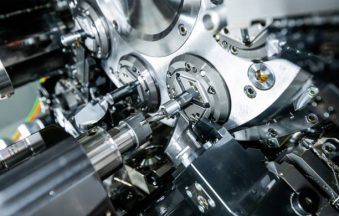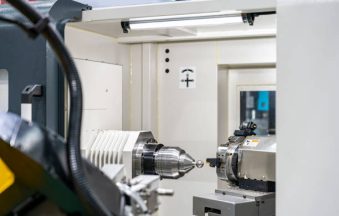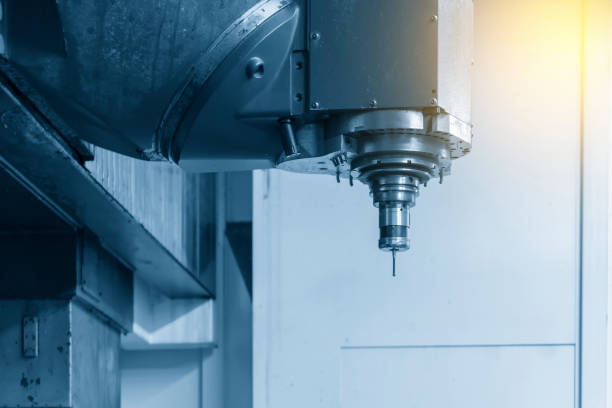
Subtractive manufacturing often gets a bad rap for being wasteful. Critics highlight metal shavings as evidence of inefficiency. Yet, modern resource efficiency redefines this view significantly.
For heavy-duty industries, Gantry Machining Centers offer a “Green Manufacturing” solution.
By carving components from solid forgeries, it ensures “monolithic integrity.” This eliminates casting defects, assembly joints, and energy-intensive failures. Gantry machining turns raw steel into high-performance components, saving energy. In the end, it saves more resources than are lost in the chips.
1. The Monolithic Advantage: Beyond the Surface of “Waste.”
When a Gantry Machining Center mills a complex structural frame from a 10-ton steel ingot, the volume of removed material can be significant. Yet, this “reduction” is a deliberate investment in structural perfection.
Eliminating the Risks of Casting and Welding
Traditional alternatives, such as sand casting or welding multiple plates together, carry inherent “resource traps”:
-
Casting Defects: Cast parts are prone to internal porosity and inclusions. Discovering a void after 50 hours of finishing work results in a 100% loss of the part—a massive waste of energy.
-
Welding Fatigue: Welded joints are the “weakest links.” They require additional material (gussets and reinforcements) to compensate for heat-affected zones, adding “dead weight” that the component must carry forever.
Structural Purity
By machining from a solid, forged ingot, the component retains the uniform grain structure of the metal. A gantry center can realize complex geometries—such as internal ribbing and varying wall thicknesses—that provide maximum strength with minimum mass. This “Subtractive Path” is, in reality, a “Weight Optimization Path.”
2. Life-Cycle Energy Efficiency: The “Lightweight” Dividend
The true measure of a “green” component is not how it is made, but how it performs over 20 years of service. This is where gantry-machined parts excel.
The Compounding Savings of Reliability
Integrated components produced on a Gantry Machining Center possess higher dimensional stability. In aerospace, maritime, or heavy transport, every kilogram of weight saved through integrated design translates into thousands of liters of fuel saved over the equipment’s lifespan.
-
Zero Cumulative Error: In multi-part assemblies, tolerances stack up (cumulative error). To ensure fitment, engineers often “over-design” parts, leading to excessive resource consumption.
-
One-Time Precision: A gantry center machines all critical surfaces in a single setup. This absolute alignment reduces friction in moving parts and prevents premature wear, drastically extending the replacement cycle of the machinery.
3. The Gantry Architecture: A Foundation for Deep Savings
To transform a massive steel block into a “lean” component, the machine tool itself must be a masterpiece of stability and efficiency.
High-Torque, High-Efficiency Metal Removal
The dual-column structure of a gantry center provides the rigid “box” required for high-speed, high-depth cuts.
-
Vibration Damping: Superior damping materials in the gantry bed prevent “chatter.” This ensures that cutting tools last longer (reducing tool-waste) and that surface finishes are achieved in fewer passes (reducing electrical energy consumption).
-
Thermal Stability: Advanced gantry centers utilize symmetric thermal design. As the machine works, heat is distributed evenly, preventing “geometry drift.” This ensures that the first cut and the last cut are identical, eliminating the waste of “out-of-tolerance” scrap.
4. Circular Economy: The Value of High-Quality Swarf
While 3D printing (additive) claims zero waste, the reality of high-end alloys is different. The “waste” produced by Gantry Machining Centers are actually a high-value resource in the circular economy.
-
100% Recyclable Chips: Unlike contaminated casting slag or complex composite waste, clean metal chips from a CNC gantry center are easily collected, melted, and returned to the supply chain with minimal energy loss.
-
Material Traceability: Because the part is machined from a certified solid ingot, the chemical composition of the scrap is perfectly known, making it a “premium” feedstock for the next generation of high-strength alloys.
5. Strategy: Why “One-Shot” Forming is the Future of Green Industry
For enterprises looking to reduce their carbon footprint, the “Gantry Subtractive Mode” offers a strategic shortcut to sustainability.
-
Reduced Supply Chain Complexity: Instead of managing 50 different suppliers for bolts, plates, and welding rods, a manufacturer manages one ingot and one gantry center. This reduces the “Logistics Carbon” of the project.
-
Simplified Inspection: A single monolithic part requires one ultrasonic scan and one CMM report. The reduction in “Process Energy” for quality assurance is a hidden but significant saving.
-
End-of-Life Deconstruction: When a machine is eventually decommissioned, a monolithic component is easier to recycle than a “Frankenstein” assembly of different grades of steel and welding fillers.
6. Conclusion: The Wisdom of Subtraction
The “Deep Saving” of gantry machining lies in its ability to trade a few hours of intensive milling for a lifetime of structural perfection. By using Gantry Machining Centers to carve away the unnecessary, we are left with a component that is lighter, stronger, and more reliable than any assembled alternative.
Subtractive manufacturing, when executed with the precision and scale of gantry technology, is not an act of waste—it is an act of purification. It is the shortest path between raw resources and functional excellence. In the grand equation of global sustainability, the metal chips on the floor are a small price to pay for a world built on parts that never fail and never weigh more than they must.