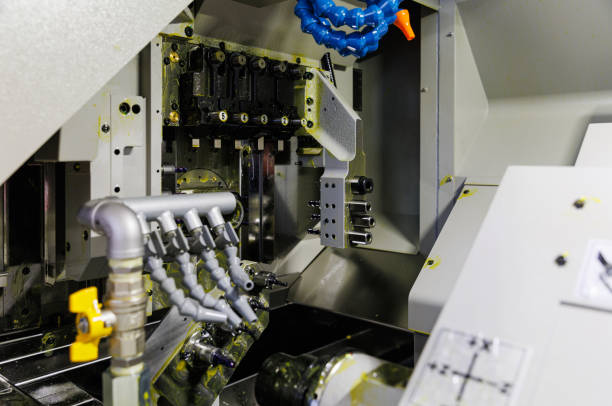
Selecting the right guideway system is a pivotal decision for any machining operation. The guide system determines the precision, speed, and load capacity of the machine. Consequently, choosing between box ways (hard ways) and linear rails affects your final part quality. Modern Fanuc CNC lathe configurations offer both options to meet diverse manufacturing needs. This guide explores the mechanical differences and ideal applications for each rail type. We help you optimize your workshop performance by selecting the perfect machine structure.
1. Hard Ways (Box Ways): The Heavy-Duty Powerhouse
When machining demands maximum rigidity and heavy-duty performance, box ways stand out as a proven solution. Unlike lighter guide systems, box ways feature broad, flat sliding surfaces that integrate directly into the machine bed, creating a solid and stable foundation.
The Benefit of Superior Rigidity
Box ways provide a massive contact area between the carriage and the bed. Consequently, this structure offers incredible vibration damping during intense metal removal. Furthermore, the sliding friction absorbs the shock of interrupted or heavy-duty cutting. This makes it the primary choice for machining large, hardened steel components. Therefore, a box-way Fanuc CNC lathe excels in deep-cut operations.
2. Linear Rails: The High-Speed Precision Expert
In contrast, linear rails prioritize speed, efficiency, and high-precision motion. By using ball or roller bearings, they enable smooth, low-friction movement that supports modern high-speed machining requirements.
Achieving Maximum Velocity and Accuracy
Linear guide systems allow machines to achieve rapid traverse speeds of 30 meters per minute or more. As a result, they significantly reduce non-cutting time and improve overall production efficiency. Furthermore, the low-friction design minimizes heat generation during high-speed finishing, which helps maintain dimensional accuracy. Consequently, these systems excel in producing intricate components, especially when working with non-ferrous materials such as aluminum. Therefore, linear rails are the preferred solution for high-volume, high-precision industries, including electronics and medical manufacturing.
3. Comparison Matrix for Guideway Selection
| Feature | Hard Ways (Box Ways) | Linear Rails (Rolling) |
| Rapid Feed Rate | Moderate (12-18 m/min) | High (30+ m/min) |
| Cutting Load | Extremely High | Moderate to High |
| Vibration Damping | Excellent | Good |
| Service Life | Very Long (If Lubricated) | Long (Easily Replaceable) |
Consequently, your specific material and part geometry dictate the best machine setup. Hard ways offer the stability required for massive industrial shafts and gears. Furthermore, linear rails provide the agility needed for complex, small-diameter parts. Therefore, understanding your core workload is the first step in purchasing a Fanuc CNC lathe.
4. Strategic Advice for Workshop Planning
The right rail type ensures the longevity of your machine and tools.
-
For Mold and Die Work: Use hard ways to handle high-torque roughing cycles.
-
For Aerospace Components: Choose linear rails for superior surface finishes on aluminum.
-
For Automotive Parts: Balance speed and strength based on the specific part mass.
Consequently, you avoid premature wear on your guideways and drive motors. A high-quality Fanuc CNC lathe with the correct rails improves your tool life. Furthermore, it ensures that your finished parts meet strict dimensional tolerances every time. Therefore, always match your rail configuration to your most frequent cutting tasks.
Conclusion: Precision Engineering for Every Cut
The foundation of a great lathe is the system that guides its motion.
Stop compromising your output by using the wrong machine structure for your material. Instead, embrace the specialized strengths of either hard ways or linear rail technology. Consequently, your workshop will achieve higher efficiency and better part quality. Experience the reliability of a Fanuc CNC lathe engineered for your specific needs. Start your journey toward high-precision turning with the right guideway system today. Your shop floor deserves a machine that can handle the pressure.