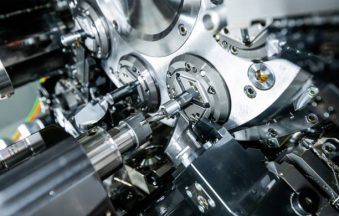
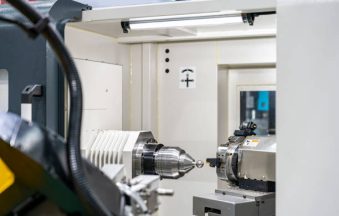
In precision manufacturing, tight-tolerance parts demand absolute accuracy and repeatability. Even minimal deviations during setup can lead to rejected components, increased costs, and delayed delivery. To overcome these challenges, multi-axis turning has emerged as a critical solution. By integrating advanced motion control, simultaneous multi-plane cutting, and automated clamping systems, multi-axis turning significantly reduces setup errors while improving repeatability. CNC equipment, particularly precision CNC machining centers, plays a vital role in achieving consistent quality for complex parts.
The Challenges of Tight-Tolerance Turning
Tight-tolerance components, such as aerospace fittings, medical implants, and automotive precision shafts, require high dimensional accuracy. Traditional single-axis or dual-axis turning often struggles to maintain the required precision, especially when machining multiple features across different surfaces. Multiple setups are frequently necessary, which introduces human error, misalignment, and variable clamping forces. Each setup increases the probability of cumulative deviation, reducing overall repeatability.
Moreover, materials commonly used in precision industries, including titanium, stainless steel, and high-strength aluminum alloys, exacerbate these challenges. Their inherent hardness and low thermal conductivity demand stable cutting conditions and consistent tool engagement. Without precise machine control and minimized setup errors, these materials can deform, leading to unacceptable part variations.
Multi-Axis Turning: Core Advantages
Multi-axis turning offers several advantages over conventional methods. First, it allows simultaneous machining on multiple planes, eliminating the need for repeated part repositioning. This reduces cumulative alignment errors and improves dimensional repeatability. Second, multi-axis machines incorporate integrated live tooling, enabling both turning and milling operations in a single setup. Third, advanced CNC controls monitor spindle load, cutting force, and tool wear in real time, automatically compensating for deviations.
By combining these capabilities, multi-axis turning ensures that each part meets strict dimensional requirements consistently. This capability is particularly critical for high-volume production, where slight deviations can compound across batches, impacting overall quality.
Reducing Setup Errors Through Single-Setup Machining
One of the most significant contributors to error in precision parts is multiple setups. Every time a part is repositioned, the alignment may vary slightly, leading to tolerance drift. Multi-axis turning machines allow operators to perform all necessary operations in a single setup. By rotating and tilting the workpiece dynamically, these machines access every surface without removal.
This single-setup approach eliminates the cumulative errors associated with manual repositioning. Furthermore, it reduces handling damage, as operators no longer repeatedly remove and re-clamp delicate parts. Consequently, tight-tolerance dimensions are maintained consistently, and production efficiency improves.
The Role of Precision CNC Machining Centers
Modern precision CNC machining centers integrate multi-axis turning capabilities with automated tool management and advanced software control. These centers offer high-resolution servo motors, rigid structural frames, and thermal compensation systems, all of which enhance stability and repeatability.
Rigid machine construction prevents deflection under heavy cutting forces, ensuring that even long or complex parts maintain precise geometry. Thermal compensation monitors and corrects temperature-induced expansion in real time, preventing dimensional drift. Additionally, high-speed servo systems enable smooth interpolation across axes, supporting complex contouring with micron-level precision.

Live Tooling Enhances Multi-Surface Access
Live tooling refers to powered tools integrated into the machine spindle or turret, allowing simultaneous turning and milling. Multi-axis turning centers with live tooling reduce the need for secondary operations or separate milling setups. For example, drilling, threading, and slotting can occur while the part rotates, preserving alignment and reducing errors.
By completing multiple operations in a single clamping cycle, live tooling minimizes cumulative inaccuracies. Moreover, operators can achieve higher throughput, as the machine handles multiple machining steps without manual intervention. This integration of operations strengthens repeatability across production runs.
Automated Workholding Systems for Stability
Proper workholding is essential in tight-tolerance machining. Multi-axis turning centers often employ automated clamps, hydraulic chucks, or rotational fixtures that provide consistent clamping force. Unlike manual setups, automated systems eliminate variability introduced by human error, ensuring that every part remains secure during cutting.
Stable workholding reduces vibration, prevents part deformation, and allows heavier cuts. Furthermore, automated fixtures support quick part changeover, increasing production flexibility while maintaining accuracy. The combination of multi-axis motion and automated clamping guarantees that tight tolerances are consistently achieved.
Digital Compensation and Feedback Control
Modern multi-axis turning relies heavily on digital control systems. These systems collect feedback from encoders, spindle sensors, and tool monitors to dynamically adjust machine operations. For instance, if thermal expansion affects the part, the control system compensates for slight dimensional changes. Similarly, tool wear is tracked to maintain consistent cutting conditions.
These digital compensations enhance repeatability, especially for materials prone to thermal distortion. CNC software can also simulate complex tool paths before actual machining, predicting potential errors and adjusting parameters proactively. Consequently, manufacturers reduce scrap rates while improving first-pass yield.
Minimizing Tolerance Stacking
Tolerance stacking occurs when slight deviations accumulate across multiple operations or features. Multi-axis turning directly addresses this problem by consolidating operations into a single setup. Since the part does not require removal between operations, the positional relationship between features remains stable.
Furthermore, advanced CNC software calculates optimal tool paths and cutting sequences to minimize stress on the part. This combination of single-setup machining and intelligent tool path planning prevents tolerance accumulation, ensuring that each feature aligns perfectly with others.
Application Examples in Aerospace and Automotive
In aerospace, turbine shafts, landing gear components, and precision housings often require multi-face machining. Multi-axis turning ensures that bores, slots, and complex contours are machined accurately in one setup. This precision reduces inspection requirements and minimizes the need for post-processing.
Similarly, the automotive industry relies on multi-axis turning for crankshafts, camshafts, and gear components. Tight tolerances are critical for performance, durability, and assembly fit. Multi-axis machines provide the consistent repeatability necessary to meet these rigorous specifications. By reducing setup errors, manufacturers maintain high quality while meeting production deadlines.

Increasing Production Efficiency
Multi-axis turning does more than improve precision—it also enhances efficiency. By consolidating operations, the cycle time per part decreases. Reduced setup time and fewer secondary operations translate directly into faster throughput.
Additionally, advanced CNC monitoring allows operators to optimize cutting parameters dynamically. Machines adjust feed rates, spindle speeds, and tool paths for maximal efficiency without compromising quality. This approach ensures that production remains both fast and precise, satisfying both operational and economic goals.
Maintaining High Tool Life
Consistent tool engagement and proper cutting conditions improve tool life. Multi-axis turning reduces stress on individual tools by distributing load across axes and optimizing tool paths. Live tooling allows smaller tools to perform precise tasks without excessive wear.
In high-volume production, extended tool life reduces downtime for replacement and recalibration. This advantage is particularly significant in industries with expensive tooling materials or complex geometries. Precision CNC machining centers enhance this effect through real-time monitoring and automated adjustments, ensuring optimal tool usage throughout production cycles.
Conclusion
Multi-axis turning represents a fundamental shift in tight-tolerance machining. By minimizing setup errors, consolidating operations, and integrating advanced digital controls, it guarantees repeatable precision across complex parts. Automated workholding, live tooling, and intelligent CNC systems ensure stability, reduce cumulative errors, and maintain quality.
For industries such as aerospace, automotive, and medical manufacturing, the benefits are profound: higher yield, reduced scrap, and consistent adherence to strict tolerances. Precision CNC machining centers remain at the forefront of these capabilities, enabling manufacturers to produce complex parts efficiently and reliably. By embracing multi-axis turning, companies secure a competitive advantage through accuracy, repeatability, and operational efficiency.