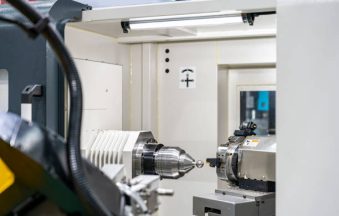
High-speed CNC turning has become a core capability in modern manufacturing. As industries demand tighter tolerances, faster cycle times, and higher productivity, CNC turning machines are increasingly pushed to operate at higher spindle speeds, greater feed rates, and longer continuous runtimes. While these advances significantly improve output efficiency, they also introduce a critical challenge: thermal deformation.
Thermal deformation directly affects machining accuracy, surface finish, and dimensional stability. In high-speed CNC turning, even micron-level thermal displacement can cause measurable deviations in part geometry. For manufacturers relying on precision components—whether in automotive, aerospace, medical devices, or electronics—controlling thermal behavior is no longer optional. It is a decisive factor in machine tool performance.
From a CNC equipment supplier’s perspective, preventing thermal deformation requires a system-level approach. Machine structure design, spindle technology, thermal management, control algorithms, and real-world operating conditions must all work together. This article explores how thermal deformation occurs in high-speed CNC turning and how advanced CNC machine design and intelligent control strategies can effectively minimize its impact.
Understanding Thermal Deformation in High-Speed CNC Turning
Thermal deformation refers to dimensional changes in machine components caused by temperature variations during operation. In CNC turning, heat primarily originates from three sources: cutting heat at the tool–workpiece interface, internal heat generated by the spindle and drive systems, and ambient temperature fluctuations.
At high spindle speeds, friction, electrical losses, and bearing rotation generate continuous heat. Simultaneously, aggressive cutting parameters increase tool-chip friction, transferring heat into the tool holder, turret, and machine structure. Over time, these heat sources create temperature gradients across the machine, causing uneven expansion.
Because CNC turning relies on precise relative positioning between the spindle axis, tool tip, and workpiece, even slight thermal expansion can shift tool paths. As a result, part diameters may drift, taper errors can appear, and repeatability may degrade during long production runs.
More importantly, thermal deformation does not occur uniformly. Localized heating causes asymmetric expansion, which is far more damaging to accuracy than uniform temperature rise. Therefore, effective thermal control focuses on minimizing gradients, stabilizing temperature distribution, and compensating for unavoidable thermal effects.

Why Thermal Stability Is Critical in High-Speed CNC Turning
High-speed CNC turning amplifies thermal effects for several reasons. First, higher rotational speeds increase bearing friction and motor losses. Second, shorter cycle times often mean higher material removal rates, which elevate cutting heat. Third, modern production environments demand long periods of unattended machining, allowing heat to accumulate over time.
If thermal deformation remains unmanaged, manufacturers face several operational risks. Dimensional drift leads to scrap or rework, increasing production costs. Inconsistent accuracy reduces process capability indices, making it difficult to meet customer specifications. Tool life may also decrease due to unstable cutting conditions caused by thermal misalignment.
From a machine tool supplier’s viewpoint, thermal stability directly impacts perceived machine quality. A CNC lathe that performs well in short test cuts but loses accuracy during continuous operation fails to meet industrial expectations. Therefore, designing CNC turning machines with inherent thermal stability is essential for long-term customer satisfaction and brand credibility.
Machine Structure Design for Thermal Control
A stable machine structure forms the foundation of thermal deformation prevention. In high-speed CNC turning machines, structural materials, symmetry, and layout significantly influence thermal behavior.
Modern CNC lathes increasingly use high-rigidity cast iron or mineral composite beds. These materials offer not only mechanical stiffness but also superior thermal damping properties. High thermal mass slows temperature changes, reducing rapid expansion and contraction. Mineral composites, in particular, exhibit low thermal conductivity, which helps limit heat transfer between components.
Structural symmetry also plays a vital role. When designers arrange heat-generating components symmetrically around the machine’s centerline, thermal expansion occurs more evenly. This design approach minimizes directional distortion of the spindle axis relative to the tool turret.
Additionally, separating heat sources from precision reference components improves thermal stability. For example, placing drive motors, hydraulic units, and electrical cabinets away from the spindle headstock reduces localized heating near critical alignment zones. Well-designed airflow channels further assist in maintaining uniform temperature distribution across the machine structure.
Spindle System Design and Thermal Management
The spindle system represents one of the most significant contributors to thermal deformation in high-speed CNC turning. As spindle speeds increase, bearing friction and motor losses generate substantial heat. Therefore, advanced spindle design is essential for thermal stability.
High-speed CNC turning machines typically use precision angular contact bearings or hybrid ceramic bearings. Ceramic rolling elements generate less friction and lower heat compared to traditional steel bearings. As a result, they help maintain stable spindle temperatures during prolonged high-speed operation.
Spindle cooling systems further enhance thermal control. Liquid cooling jackets surrounding the spindle housing actively remove heat, preventing excessive temperature rise. By maintaining a stable spindle temperature, these systems minimize axial and radial expansion that would otherwise shift the tool center point.
Equally important is the integration of spindle motors. Built-in motor spindles reduce mechanical transmission losses and improve efficiency. When combined with closed-loop cooling circuits, integrated spindles offer superior thermal balance compared to belt-driven designs, especially in high-speed CNC turning applications.
Tool Turret and Tool Holder Thermal Considerations
While the spindle often receives the most attention, the tool turret and tool holders also influence thermal deformation. During high-speed CNC turning, cutting heat travels through the tool shank into the turret body. Over time, this heat can cause turret expansion, altering tool position relative to the spindle axis.
High-quality CNC turning machines address this issue through optimized turret materials and internal cooling channels. Using thermally stable alloys and precision-ground contact surfaces reduces heat accumulation and improves repeatability during tool indexing.
Furthermore, short, rigid tool holders minimize heat conduction paths and reduce thermal leverage effects. By maintaining consistent tool overhang lengths and using standardized interfaces, CNC turning machines achieve more predictable thermal behavior under varying cutting conditions.
Intelligent Cooling Systems for High-Speed CNC Turning
Cooling plays a central role in thermal deformation prevention. However, effective cooling requires more than simply lowering temperatures. The goal is to maintain thermal equilibrium and avoid uneven cooling that could introduce new distortions.
In advanced CNC turning machines, intelligent cooling systems regulate coolant flow based on real-time temperature data. Sensors monitor spindle housing, motor windings, and structural components, allowing the control system to adjust cooling intensity dynamically.
Oil-based cooling circuits offer advantages over air cooling in high-speed CNC turning. Oil provides consistent thermal conductivity and avoids condensation issues that may arise with aggressive air cooling. Moreover, closed-loop oil chillers maintain precise temperature control, often within ±0.1°C, ensuring stable machine geometry throughout extended production runs.
By integrating cooling control into the CNC system, manufacturers ensure that thermal management adapts automatically to changing operating conditions, reducing the need for manual intervention.
CNC Control and Thermal Compensation Strategies
Even with optimized mechanical design and cooling, some thermal deformation remains inevitable. Therefore, modern high-speed CNC turning machines rely on intelligent control strategies to compensate for residual thermal effects.
Thermal compensation systems use temperature sensors placed at strategic locations within the machine. These sensors feed real-time data into the CNC controller, which calculates expected thermal displacement based on calibrated models. The controller then adjusts axis positions dynamically, maintaining consistent tool-to-workpiece alignment.
Advanced CNC systems incorporate machine learning algorithms that refine compensation accuracy over time. By analyzing historical temperature and positioning data, the system improves prediction models, leading to more precise compensation during long production cycles.
Importantly, thermal compensation works best when combined with a stable mechanical design. Compensation cannot fully correct unpredictable or asymmetric deformation. Therefore, CNC turning machines must first minimize thermal distortion at the source before relying on software correction.
Environmental Control and Shop Floor Integration
Thermal stability in high-speed CNC turning does not depend solely on machine design. The surrounding environment also influences temperature behavior. Fluctuations in ambient temperature can introduce slow but significant dimensional changes in machine structures.
Professional CNC equipment suppliers recommend stable workshop conditions for high-speed turning operations. Controlled ambient temperatures, proper ventilation, and isolation from heat-generating equipment improve overall thermal consistency.
Additionally, allowing machines to reach thermal equilibrium before precision machining improves repeatability. Warm-up cycles at operating spindle speeds help stabilize internal temperatures, reducing drift during production.
By designing CNC machines that integrate seamlessly into controlled manufacturing environments, suppliers help users achieve consistent accuracy with minimal process variability.
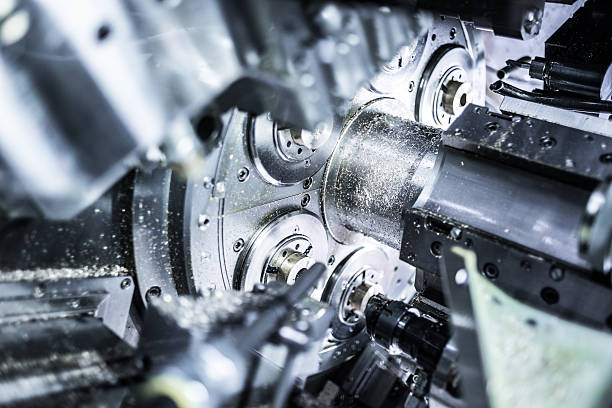
Product-Oriented Design Philosophy in High-Speed CNC Turning Machines
From a product perspective, preventing thermal deformation reflects a broader design philosophy focused on reliability and long-term performance. High-speed CNC turning machines must deliver not only initial accuracy but also sustained precision under real-world production conditions.
This philosophy drives continuous innovation in materials, spindle technology, cooling systems, and CNC control integration. Rather than treating thermal control as an add-on feature, advanced CNC machines embed thermal stability into every design decision.
For end users, this translates into predictable machining results, reduced scrap rates, and higher confidence in unattended operation. For CNC equipment suppliers, it reinforces brand positioning as a provider of high-performance, production-ready solutions rather than experimental high-speed platforms.
Long-Term Benefits of Thermal Deformation Prevention
Investing in thermal stability yields measurable long-term benefits. Stable high-speed CNC turning machines maintain tighter tolerances over extended production runs, improving part quality consistency. Tool life increases because stable geometry reduces uneven cutting forces and vibration.
Maintenance requirements also decrease. When thermal expansion remains controlled, mechanical components experience less stress, extending service intervals and reducing downtime. Over the machine’s lifecycle, these advantages significantly lower the total cost of ownership.
Moreover, as industries move toward digital manufacturing and lights-out production, thermal stability becomes a prerequisite rather than a competitive advantage. CNC turning machines must operate autonomously for long periods while maintaining micron-level accuracy, making thermal deformation control essential.
Conclusion
Preventing thermal deformation in high-speed CNC turning represents one of the most critical challenges in modern machine tool design. As spindle speeds increase and production demands intensify, thermal effects can no longer be managed through experience alone. They require deliberate engineering, intelligent control, and integrated system design.
By focusing on stable machine structures, advanced spindle systems, intelligent cooling, and real-time thermal compensation, high-speed CNC turning machines achieve consistent accuracy under demanding conditions. From a product standpoint, thermal stability defines machine quality, reliability, and long-term value.
For manufacturers investing in high-speed CNC turning technology, understanding how machines manage thermal deformation provides deeper insight into performance differences between platforms. Ultimately, machines designed with thermal control at their core enable higher productivity, better quality, and greater confidence in precision machining—exactly what modern manufacturing requires.