Understanding Design Principles That Enhance Stability and Precision
High-rigidity VMC CNC machines form the backbone of modern manufacturing. These machines handle demanding tasks across automotive, aerospace, and industrial sectors. Engineers emphasize rigidity because stiffness directly influences precision, surface quality, and long-term reliability. By studying structural design, material selection, and mechanical dynamics, one can understand why high-rigidity VMC CNC machines outperform conventional systems.
The Importance of Rigidity in CNC Machining
Rigidity ensures minimal deflection under load. In high-speed milling or heavy cutting, machine components face significant forces. Low rigidity leads to vibrations, chatter, and dimensional inaccuracies. Consequently, designers focus on creating structures that resist bending and torsion. High-rigidity VMC CNC machines maintain accuracy even under extreme operating conditions. The result is consistent part quality, longer tool life, and reduced rework.
Moreover, rigidity improves spindle stability. When the spindle rotates at high RPM, even minor deflection can degrade surface finish. Structural stiffness limits spindle movement, ensuring predictable cutting forces. As a result, high-rigidity VMC CNC machines offer superior repeatability, which is essential for precision industries.
Structural Engineering: How Frames Resist Deformation
The machine frame serves as the foundation. Engineers often use box-type or monolithic castings. These designs distribute stress uniformly and prevent warping. Materials like Meehanite cast iron offer excellent damping and thermal stability. By combining mass and geometry, frames absorb cutting vibrations effectively.
Additionally, ribbed reinforcements enhance stiffness. Strategically placed ribs increase section modulus without adding excessive weight. Designers optimize rib layout using finite element analysis (FEA) to ensure maximum strength where cutting forces concentrate. High-rigidity VMC CNC machines thus achieve a balance between stability and operational efficiency.
Column and Guideway Design for Precision Motion
The column supports the vertical movement of the spindle and head. It must resist lateral and torsional deflection under cutting loads. Engineers prefer solid castings with preloaded guideways. Linear guide rails often use hardened steel with precise geometry. These components reduce friction and maintain positional accuracy.
Guideways determine smooth motion and cutting quality. High-rigidity VMC CNC machines incorporate linear roller or box-way guideways. Box-way designs combine stiffness with load-bearing capacity. Roller guides offer minimal friction for rapid positioning. Engineers select guideway types based on machining applications, ensuring an optimal balance between speed, rigidity, and durability.

Spindle Engineering and Vibration Control
The spindle is the heart of VMC CNC machines. High-speed rotation generates dynamic forces that impact tool performance. Engineers design spindles with high torsional rigidity to minimize deflection. Precision bearings and balanced rotors reduce vibration and heat generation. These measures are critical in maintaining tool accuracy and surface quality.
Dynamic damping systems further enhance stability. Some high-rigidity VMC CNC machines incorporate vibration absorbers or tuned mass dampers. These systems attenuate chatter frequencies during heavy cuts. By controlling oscillations, spindles deliver clean, accurate cuts consistently.
Ball Screws and Drive Systems
Ball screws convert rotary motion into linear motion with high efficiency. Precision ground screws with preloaded nuts minimize backlash. In high-rigidity VMC CNC machines, ball screw supports are reinforced to prevent bending. Drive systems must transmit torque without inducing mechanical deformation. Engineers integrate direct-drive motors or high-torque servo systems to maintain precise positioning.
Moreover, preloading ball screws reduces vibrations caused by fluctuating cutting forces. This ensures smooth acceleration, deceleration, and positioning. A rigid drive system directly influences machining repeatability and overall performance.
Thermal Stability and Material Selection
Thermal expansion affects precision. During long cuts, heat accumulates in the spindle, motor, and frame. High-rigidity VMC CNC machines use materials with low thermal expansion coefficients. Cast iron, steel composites, and special alloys minimize dimensional changes. Engineers also design coolant circulation paths to remove heat efficiently. Temperature-controlled environments prevent deviations during prolonged operations.
Furthermore, thermal stability allows machines to operate reliably across seasons and factory conditions. Combined with rigid structures, these measures support high precision and reduce calibration frequency.
Advanced Damping and Noise Reduction
Machining generates vibrations and acoustic energy. Excessive noise indicates energy loss and possible deflection. Engineers incorporate damping mechanisms in frames, columns, and guideways. High-rigidity VMC CNC machines reduce chatter and noise by integrating material damping and structural isolation.
Damping systems also protect electronics and sensitive sensors. Reduced vibration improves sensor reliability, enabling accurate tool monitoring, collision detection, and feedback control.
 Precision Control Electronics and Feedback Loops
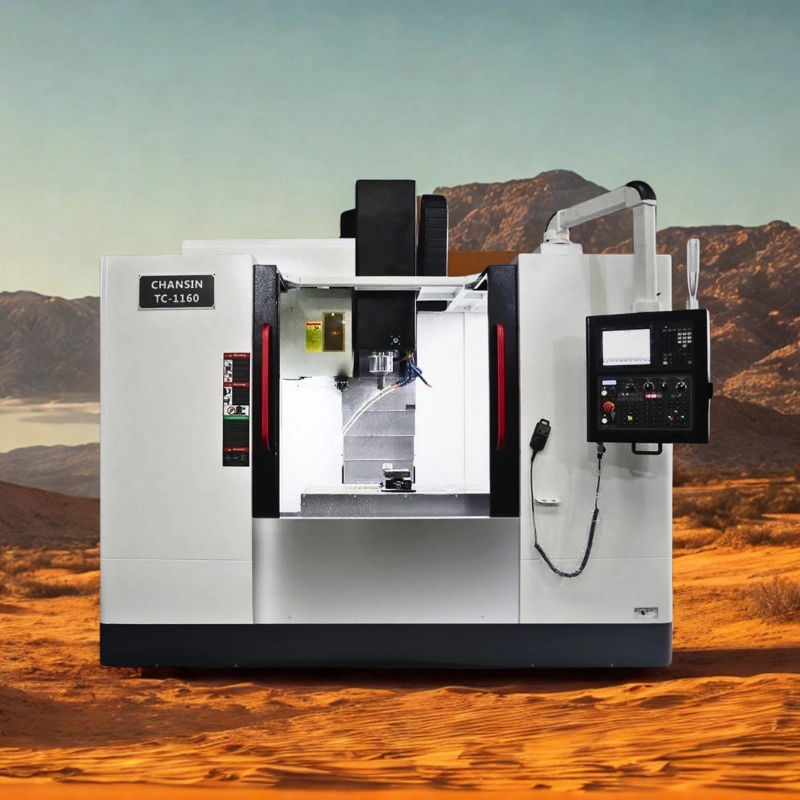
Rigid structures alone do not ensure accuracy. High-rigidity VMC CNC machines pair mechanical stiffness with advanced control systems. Feedback loops from encoders and linear scales provide real-time position verification. CNC controllers adjust motor output to correct minor deviations. This integration ensures each axis moves according to precisely programmed paths, further enhancing part quality.
Predictive algorithms compensate for load-induced deflection. As cutting forces vary, the system maintains a consistent trajectory. Thus, VMC CNC machines achieve both mechanical and electronic accuracy, creating a synergistic performance advantage.
Ease of Maintenance and Longevity
Structural design also considers accessibility. Reinforced frames and guideways require lubrication, cleaning, and inspection. High-rigidity VMC CNC machines incorporate features that simplify maintenance without compromising stiffness. Modular components allow replacement of worn parts while maintaining structural integrity.
Longevity results from careful engineering and quality materials. The combination of rigid frames, precise spindles, and stable drive systems ensures machines remain reliable over decades. For manufacturers, this reduces downtime and maintenance costs while supporting high production quality.
Applications Across Industries
High-rigidity VMC CNC machines excel in diverse sectors. Aerospace components demand tight tolerances, which rigid frames provide. Automotive parts require high-speed cutting with minimal vibration. Tooling and mold-making benefit from stable spindle motion and accurate repeatability. Industrial machinery production relies on machines that handle heavy cuts without deflection. In each case, the combination of rigidity, precise drives, and thermal management ensures superior outcomes.
Conclusion: Why Rigidity Defines Performance
High-rigidity VMC CNC machines achieve unmatched precision, stability, and reliability. Structural stiffness prevents deflection and vibration, while optimized guideways, spindles, and ball screws ensure smooth motion. Thermal stability, damping, and smart control systems complement mechanical design. These features collectively define professional-grade machining performance. For industries requiring precision, speed, and durability, high-rigidity VMC CNC machines remain indispensable.