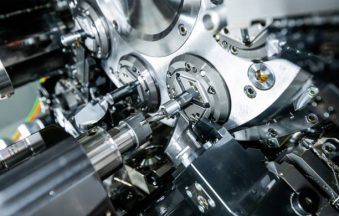
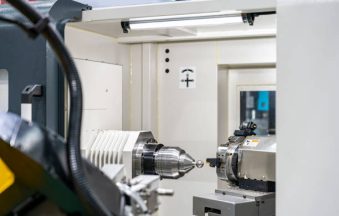
Complex small parts shape many modern industries. Manufacturers across medical, aerospace, electronics, and automotive segments demand precise components with tight tolerances. They also require consistent repeatability under high production loads. As expectations increase, traditional CNC lathes struggle to meet finer dimensional requirements. However, CNC Swiss lathe machines continue to deliver superior accuracy and efficiency for miniature and intricate parts. Their unique mechanical structure and advanced control systems support stable, predictable, and high-volume machining. Because of this combination, CNC Swiss-type lathes have become essential in high-demand manufacturing environments.
A Historical Foundation That Shapes Modern Performance
Swiss-type lathes originated in the watchmaking industry. Early workshops needed machines that cut slender parts without deflection. The solution introduced the sliding headstock and guide bushing system. This configuration created unmatched axial support. As industries evolved, the design adapted to digital control, servo systems, and automated tooling. Therefore, modern CNC Swiss lathe machines blend centuries of mechanical insight with recent innovations. This long evolution shapes their precision and reliability today. Manufacturers trust these machines because they remain stable under extremely demanding conditions.
The Sliding Headstock Advantage
The sliding headstock mechanism defines the identity of every CNC Swiss-type lathe. Unlike conventional lathes, the workpiece moves toward fixed tools. The guide bushing holds the material close to the cutting point. This arrangement minimizes deflection and vibration. As a result, the tool performs clean cuts even on long, thin, or tiny components. Because the support comes from the bushing, the machine can process very small diameters. Many industries rely on this advantage to maintain structural accuracy across extended production cycles.
The mechanism also promotes consistent tolerance control. When the workpiece stays firmly supported, thermal expansion becomes more predictable. This allows engineers to maintain dimensional integrity even during long-run manufacturing. Consequently, the sliding headstock is central to the superior repeatability that CNC Swiss lathe machines guarantee.
Stability Through the Guide Bushing System
The guide bushing provides continuous support. It holds the workpiece within millimeters of the tool. This limited distance reduces bending forces and prevents micro-vibrations. Even difficult materials like titanium, stainless steel, or cobalt-chrome remain stable during cutting. Because of this support, Swiss-type lathes achieve ultra-tight tolerances that often reach micrometer-level accuracy.
Furthermore, the bushing system helps maintain surface quality. When vibration decreases, the tool cuts smoothly. Grooves, burrs, or dimensional distortions appear less often. This reduces secondary operations and lowers production costs. Industries that require perfect aesthetics, such as medical device manufacturers, value this quality deeply. Consequently, guide bushings play a major role in the system’s overall commercial value.

Multi-Axis Capability for Complex Geometry
Modern CNC Swiss lathe machines handle complex geometries with ease. Multi-axis configurations enable simultaneous operations. Cross drilling, milling, engraving, knurling, and thread whirling occur in one cycle. This reduces part handling and eliminates multiple machine setups. Because tools engage the workpiece from many angles, intricate features become easy to manufacture. The result is higher efficiency, fewer errors, and lower total cost.
Additionally, multi-axis movement supports sophisticated design demands. Engineers can create hybrid geometries that combine turning and milling structures. They can also integrate slots, flats, or angled features directly on the lathe. This ability shortens production time and enhances the accuracy of every feature. Therefore, multi-axis machining is essential for modern part designs.
Improved Throughput with Overlapping Operations
Swiss-type CNC lathes excel at overlapping operations. The main spindle and sub-spindle work together. While the main spindle completes one section, the sub-spindle finishes the back end. This synchronized motion reduces idle time and boosts productivity. Manufacturers achieve shorter cycle times without sacrificing precision.
Because operations overlap, the machine performs continuous cutting. This stability supports long-term production of thousands of parts. High-volume industries benefit greatly from this efficiency. The technology ensures rapid output while maintaining quality standards across every piece.
Precision at High Speeds
Speed alone cannot define output quality. The real test comes from accuracy during rapid movement. CNC Swiss lathe machines maintain precision even during aggressive cutting conditions. Rigid machine structures, advanced servo motors, and optimized control algorithms help achieve this performance. Because of these features, Swiss-type lathes produce consistent results at high speeds.
Fast production remains valuable in competitive supply chains. However, speed must not create waste. Swiss-type machines deliver both velocity and stability. This balance allows manufacturers to scale production without compromising tolerances or surface finishes.
Superior Performance with Difficult Materials
Industries often choose materials that withstand heat, stress, and corrosion. These materials include titanium alloys, Inconel, brass, aluminum, stainless steel, and cobalt-chrome. While durable, they remain challenging to machine. Traditional CNC machines struggle with hardness and workpiece deflection. Swiss-type lathes overcome these limitations.
The guide bushing keeps the material stable. Tool deflection drops significantly. Heat generation becomes easier to control. As a result, the machine cuts difficult metals with greater ease. Tool wear reduces, and accuracy remains consistent. Because challenging materials shape many advanced applications, Swiss-type lathes continue to dominate these sectors.
Perfect Fit for Miniature Medical and Dental Parts
The medical industry demands extreme accuracy. Components must meet strict standards. CNC Swiss lathe machines deliver the necessary precision every time. They create bone screws, dental implants, laparoscopic instruments, cannulas, connectors, and other micro parts.
These parts include threads, fine grooves, and tiny internal channels. The sliding headstock ensures dimensional accuracy. Advanced tooling ensures clean finishing without harmful burrs. Because patient safety depends on component quality, the industry relies on Swiss-type machines without hesitation.
Strength in the Electronics and Connector Industry
Electronic connectors continue to shrink. Smartphones, wearables, and sensors rely on tiny metal parts. Swiss-type CNC lathes produce terminals, pins, micro-shafts, fasteners, and conductive components with excellent repeatability.
High-speed production supports the fast-paced electronics market. Tight tolerances ensure stable electrical performance. Because performance depends on consistency, Swiss-type machines meet the industry’s expectations precisely.
Automotive and Aerospace: Reliability for Critical Parts
Automotive and aerospace manufacturers require stable quality. Many components demand perfect concentricity and structural integrity. CNC Swiss lathe machines provide this assurance. They produce braking pins, fuel system parts, control rods, small shafts, bushings, and custom fasteners with confidence.
Because these industries operate under strict regulations, manufacturers depend on predictable accuracy. Swiss-type machines ensure stable output even under heavy workloads. Their reliability supports long-term production planning.
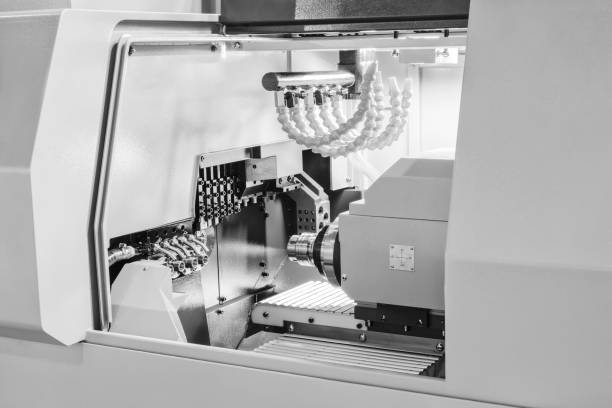
Reducing Secondary Processing
Modern product design pushes for efficiency. Swiss-type CNC lathe machines align with this goal. Their multi-axis capabilities reduce manual finishing. Surface quality often reaches the required standards immediately. Threading, grooving, milling, and drilling occur within one cycle.
This approach saves time. It eliminates extra machines and reduces labor. Manufacturers appreciate this streamlined workflow because it boosts profitability and shortens delivery cycles.
Automation and Modern Control Systems
Automation transforms CNC Swiss lathe machines into high-throughput production assets. Bar feeders maintain a continuous supply. Parts catchers handle finished components. Lubrication systems maintain smooth operation.
Advanced CNC controllers offer real-time compensation. They adjust tool paths, spindle speed, and feed rates automatically. This level of intelligence reduces human error. It increases stability in long production runs. Because accuracy depends on predictability, automation strengthens every output.
Tooling Flexibility for Diverse Designs
Tooling flexibility remains another core benefit. Swiss-type lathes support many tool stations. Manufacturers can load various cutting tools for different operations. Quick tool changes reduce downtime. Tooling versatility supports custom part design and rapid prototyping.
This flexibility empowers engineers. It allows experimentation with new geometries. It ensures smooth transitions from prototype to mass production. Therefore, tooling systems enhance the machine’s long-term value.
Cost Efficiency in Long-Term Production
Although Swiss-type machines require a higher initial investment, they reduce long-term production costs. Faster cycle times, lower scrap rates, minimal secondary operations, and long tool life contribute to overall savings. When part volumes rise, the cost-per-piece drops significantly.
This cost efficiency makes Swiss-type CNC lathes essential for competitive markets. Companies remain profitable even when delivering intricate parts at scale.
Environmental and Resource Benefits
Modern CNC Swiss lathe machines support environmental goals. They use coolant more efficiently. Their precise cutting reduces waste material. Their energy-efficient motors consume less power.
Industries with sustainability goals appreciate these benefits. Reduced waste helps protect resources. Better energy management lowers operational costs. Consequently, Swiss-type lathes align with broader environmental standards.
Conclusion: Why the Industry Chooses CNC Swiss Lathes
CNC Swiss lathe machines remain the best choice for complex small parts.
- Their sliding headstock and guide bushing system ensures unmatched stability.
- Their multi-axis capabilities support intricate geometries.
- Their precision remains consistent at high speeds.
- Their efficiency lowers costs and reduces waste. Because industries demand reliability, these machines deliver results every time.
Swiss-type CNC lathes shape the future of high-precision manufacturing. They support engineers, designers, and operators as they push technological limits. As complexity grows, Swiss-type machines continue to provide accuracy and stability that no alternative can match.