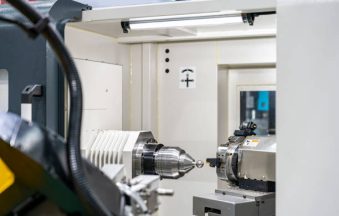
Aerospace manufacturing demands extreme accuracy, repeatable performance, and reliable stability. Every component must meet strict tolerances while also supporting high structural integrity. Because of these requirements, the industry continues to adopt advanced machining technology that ensures stable output with minimal time loss. Among these technologies, CNC horizontal machining centers have become essential for producing complex multi-face parts. These machines allow manufacturers to handle difficult geometries, tight deadlines, and strict quality standards with unmatched efficiency.
Aerospace components rarely come with simple surfaces. Most parts require machining across multiple faces, whether the component is part of a turbine assembly, a structural bracket, or a precision housing. Therefore, manufacturers must rely on equipment that supports accurate multi-sided processing without compromising speed or measurement integrity. As the industry continues to mature, this need grows stronger each year. Consequently, CNC horizontal machining centers now operate at the core of production lines across many aerospace plants.
Horizontal Machining in the Aerospace Era
Aerospace engineering pushes machining technology to new limits. These demands include advanced alloys, complex 3D contours, and tight tolerance stacking. Because vertical machining centers often struggle with chip removal, spindle heat control, and multi-surface access, engineers prefer horizontal platforms. These platforms offer natural advantages in rigidity, chip evacuation, and continuous cycle times. Therefore, aerospace firms adopt horizontal machining as a strategic move rather than a simple equipment choice.
Modern CNC horizontal machining centers support long production cycles with stable spindle performance. They allow engineers to run difficult materials like titanium, Inconel, and aerospace-grade aluminum without losing performance during extended tool engagement. Consequently, the machines reduce downtime and prevent dimensional drift. This capability is essential because aerospace structures often link several precision surfaces that must remain consistent across every production cycle.

Why Multi-Face Parts Require Horizontal Machining
Complex aerospace parts contain several functional surfaces. These surfaces often interact with other assemblies that require perfect alignment. Engineers must ensure that every machined face maintains positional accuracy even after long removal cycles. Because of this, manufacturers rely on horizontal machining platforms that support 4-axis and 5-axis configurations with integrated pallet changers.
Multi-face parts demand stable clamping, uninterrupted cutting, and precise accessibility. CNC horizontal machining centers fulfill these needs through rigid structural frames, advanced rotary tables, and powerful spindle systems. These machines allow efficient machining of several faces without repeated repositioning. As a result, horizontal machining reduces tolerance stacking while improving overall productivity.
Because the cutting load is distributed across a robust horizontal column, the machine supports longer tool engagement with minimal vibration. This stability maintains accuracy across deep pockets and long bores, which appear frequently in aerospace applications. Therefore, horizontal machining protects dimensional quality while reducing the need for secondary finishing.
Rigid Structures Designed for Aerospace Stability
Aerospace manufacturers cannot accept dimensional errors that arise from machine instability. Horizontal machining centers offer a strong mechanical foundation because their column and base frames support symmetrical load paths. This balanced structure ensures that the spindle maintains optimal alignment even under heavy cutting loads. Furthermore, the horizontal layout minimizes thermal deformation because heat dissipates evenly across the machine frame.
Because aerospace materials often resist cutting, the machine must maintain rigidity from the first pass to the final finishing cycle. CNC horizontal machining centers provide this rigidity through thick cast-iron bases, wide guideways, and optimized structural geometry. These design features keep the cutting path stable while reducing the risk of chatter. As a result, the machines support heavy side milling, long-reach boring, and demanding contouring operations.
Chip Control and Thermal Stability Strengthen Precision
Aerospace parts require precise surface quality and dimensional accuracy. However, machining difficult alloys generates heat and large chip volumes. Poor chip evacuation can damage the cutting edge, reduce tooling life, and disrupt the machining path. Horizontal machining centers solve this problem naturally because gravity assists chip flow. As the spindle cuts horizontally, chips fall away from the cutting zone. This process reduces heat concentration and protects the surface from re-cutting.
Thermal stability also plays a critical role in maintaining accuracy. When chips collect around the cutting area, they trap heat and increase material expansion. This leads to dimensional error. CNC horizontal machining centers avoid this issue by directing chips downward into conveyors. Therefore, the part remains cooler, which helps maintain tolerance control during long cycles.
Improved thermal stability supports accurate machining across deep channels and structural pockets. Because many aerospace components require long cycle times, stable temperature management becomes essential. With controlled heat flow, horizontal machining supports repeatable quality across large or complex part batches.
High Productivity Through Pallet Automation
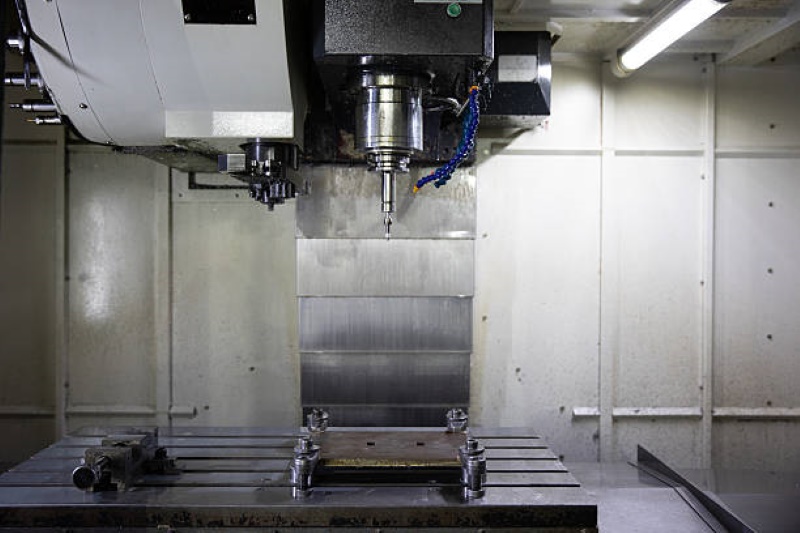
Aerospace production often depends on continuous machining. Therefore, manufacturers must reduce idle time between cycles. CNC horizontal machining centers support pallet automation systems that allow operators to load a second part while the first part continues to machine. This process significantly improves throughput and reduces delays.
Because aerospace parts often require long machining cycles, pallet systems maximize spindle uptime. Consequently, the machine can run for more hours per shift with fewer operator interventions. This approach increases efficiency across prototype development, batch production, and mass manufacturing.
Pallet automation also supports flexible production scheduling. Engineers can load several fixtures and allow the machine to switch between different parts. This flexibility helps aerospace plants handle urgent orders, engineering changes, and mixed production batches without losing efficiency.
Four-Axis and Five-Axis Capabilities for Multi-Face Access
Machining aerospace parts often requires access to surfaces that cannot be reached from a single orientation. Horizontal machining centers integrate rotary tables that allow the part to tilt or rotate. These features support four-axis and five-axis machining strategies that ensure complete access to complex faces.
When engineers rely on multi-axis machining, they reduce fixturing complexity. They also minimize positional errors that occur during manual repositioning. Therefore, horizontal machining allows aerospace manufacturers to maintain better accuracy across every machined face.
Five-axis horizontal machining centers allow continuous contouring across curved aerodynamic surfaces. This ability is essential for turbine blades, compressor parts, and flow control components. Because these surfaces require fine finishing, advanced interpolation, and stable spindle control, ensure consistent results.
Tooling Flexibility Supports Complex Part Requirements
Aerospace manufacturing requires a wide range of cutting tools, including indexable mills, long-reach drills, and multi-step boring tools. CNC horizontal machining centers support large tool magazines that store many tool types. As a result, the machines can complete several multi-step operations without manual tool changes.
This flexibility shortens cycle times and reduces the risk of human error. Because aerospace parts often require several precision operations, automated tool management ensures smooth process flow. Additionally, advanced tool monitoring systems track wear and breakage. Therefore, operators can replace tools before quality defects appear.
Tool flexibility also supports adaptive machining. When the part geometry varies slightly due to casting variation or rough forging deviation, the machine compensates automatically. This capability reduces scrap rates and improves overall production stability.
Material Challenges Demand Horizontal Strength
Aerospace manufacturers use advanced materials that resist cutting. These materials include titanium alloys, hardened steels, and nickel-based superalloys. These materials generate heavy cutting forces that require strong machines.
Horizontal machining centers deliver the structural strength and cooling performance needed for such applications. Their robust spindles maintain torque across large diameter cutters. Their coolant delivery systems reach deep cavities and provide high pressure to protect the cutting edge.
Furthermore, the machine design reduces tool deflection across heavy loads. This stability becomes critical when machining high-stress structural components that must survive extreme conditions. Therefore, horizontal machining remains the preferred choice for producing reliable aerospace parts.
Digital Control Enhances Aerospace Quality
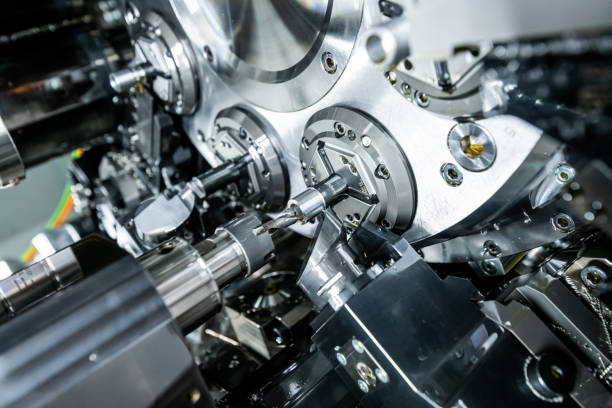
Modern CNC horizontal machining centers integrate advanced control systems that support predictive machining and dynamic compensation. These systems read thermal drift, tool wear, and axis vibration. They adjust the tool path in real time to maintain accuracy across long cycles.
Digital control improves surface quality by regulating feed rate, spindle speed, and acceleration. Because aerospace parts require consistent quality, digital monitoring ensures every dimension aligns with engineering requirements.
Furthermore, horizontal machining centers integrate with plant-wide digital systems. These systems allow engineers to track production data, tool performance, and machine stability. Consequently, the entire production process becomes more transparent and easier to optimize.
Aerospace Applications That Depend on Horizontal Machining
Horizontal machining centers support many aerospace components, including turbine housings, engine mounts, landing gear elements, control brackets, structural ribs, and hydraulic system blocks. These parts require multi-face accuracy and stable measurement control across several complex surfaces.
Because horizontal machining supports deep cavity access and strong material removal, engineers rely on these machines during both roughing and finishing. As aerospace designs become more advanced, the demand for multi-face accuracy increases. Therefore, horizontal machining remains central to aerospace production.
Conclusion
Aerospace production demands accuracy, reliability, and multi-face machining capability. CNC horizontal machining centers meet these demands through strong structural frames, advanced automation systems, and precise digital control. They support efficient chip evacuation, stable thermal management, and flexible tooling strategies. Furthermore, they maintain accuracy across difficult materials and long machining cycles. As aerospace manufacturing continues to grow, the role of horizontal machining centers will strengthen. Their reliability, productivity, and accuracy make them the preferred choice for complex aerospace components. For these reasons, manufacturers continue to rely on horizontal machining to meet the strict demands of modern aerospace engineering.