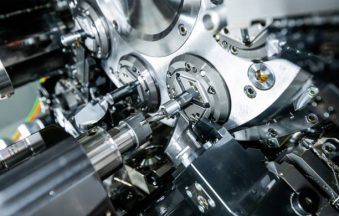
In today’s competitive manufacturing climate, companies face rising expectations for speed, precision, and production flexibility. Modern applications demand parts with intricate shapes, tight tolerances, and multiple integrated features. Because of these growing demands, many manufacturers now depend on advanced machining platforms that allow them to complete complex tasks with fewer steps, fewer setups, and fewer risks. This shift explains why so many companies across aerospace, automotive, medical, and energy sectors now choose CNC multi-axis turning centers for their most demanding parts. As design complexity increases, traditional turning machines no longer support the agility required by modern production. Therefore, multi-axis turning centers have become the core machinery for forward-looking manufacturers.
Although early turning machines focused primarily on cylindrical components, today’s production landscapes involve parts with angled features, milled surfaces, off-center bores, and freeform transitions. Engineers must produce these shapes with consistent accuracy while controlling cycle time and reducing waste. However, conventional equipment cannot always manage these requirements efficiently. By contrast, a CNC multi-axis turning center handles combined turning and milling in one setup. This capability streamlines process flow and supports advanced part geometries that would previously require several machines. As companies push for higher productivity, multi-axis technology becomes not just helpful, but essential.
The New Demands of Complex Manufacturing
Modern products evolve rapidly. Designers introduce more complex features to reduce assembly steps, improve performance, and increase structural efficiency. As these changes accelerate, manufacturers must respond with equipment that adapts quickly. Therefore, machining flexibility plays a central role in production planning. A multi-axis turning center aligns perfectly with this need because it allows machining across several orientations without manual intervention.
When engineers design components with intersecting features or compound angles, traditional turning equipment struggles to maintain consistent quality. Furthermore, every additional fixture step introduces risk. Even slight misalignment can cause dimensional drift, which affects final product performance. Since many industries now require stable tolerance control, this challenge becomes more significant. A CNC multi-axis turning center reduces these risks because it allows the tool to approach the part from several directions while keeping the workpiece clamped securely.
Why Multi-Axis Turning Becomes the Preferred Choice
Although three-axis turning machines remain common in many workshops, their structural limits become noticeable when handling parts with advanced shapes. Because they rely on linear tool movement alone, complex angles require time-consuming repositioning. Furthermore, multiple setups extend cycle time and increase production cost. These issues can disrupt the demanding production schedules common in competitive industries. Therefore, manufacturers increasingly adopt CNC multi-axis turning centers to maintain operational efficiency.
A multi-axis platform integrates live tooling, sub-spindles, Y-axis travel, and synchronized motion control. These features support advanced machining strategies that reduce cycle time while improving overall process integrity. Because the machine completes several operations in one cycle, operators spend less time handling the part. Consequently, the production line becomes safer, faster, and more consistent. This shift explains why modern manufacturers now emphasize multi-axis machining capabilities when selecting new equipment.

One-Setup Machining Enhances Accuracy and Reliability
Accurate machining depends heavily on the ability to reduce repositioning. Every time a part is removed and re-fixtured, alignment changes slightly. These micro-deviations accumulate, which introduces tolerance stacking. When producing simple parts, this effect may remain manageable. However, complex parts with several external and internal features cannot tolerate this instability. Multi-axis turning centers solve this problem by completing several machining steps in one clamping. As a result, the part remains stable from the first cut to the final operation.
This capability becomes extremely valuable when machining components that include milled surfaces, drilled angles, or partial spherical features. Because the tool can reach these surfaces without repositioning the workpiece, the machine preserves geometric integrity with minimal variation. Consequently, quality consistency improves across every batch. Furthermore, one-setup machining reduces the chance of surface damage or handling errors. These advantages allow engineers to meet tight deadlines with dependable quality, which strengthens competitiveness.
Integrated Milling Capability Improves Design Freedom
Many modern components integrate mixed geometries that combine cylindrical and prismatic features. Designers select these shapes to improve efficiency or reduce assembly stages. Traditional turning machines cannot handle these features easily. Therefore, the introduction of live milling capability within multi-axis turning centers becomes crucial. With integrated spindle milling, the machine transitions smoothly between turning and milling without manual setup changes.
This capability transforms the production process. Engineers can generate keyways, pockets, slots, flanges, angled flats, and custom contours with seamless precision. Because the machine controls both rotational and linear motion in real time, surface transitions remain smooth and accurate. This integrated approach expands design possibilities and encourages more advanced engineering solutions. As industries seek to optimize part integration, this capability becomes increasingly valuable.
Multi-Axis Motion Reduces Tooling Complexity
Traditional machining often requires specialized fixtures or custom tools to achieve compound angles. These tools raise production costs and extend lead times. Furthermore, they increase the risk of vibration and reduce tool life. In contrast, CNC multi-axis turning centers use their kinematic structure to achieve these angles naturally. Instead of relying on complex fixtures, the machine rotates, tilts, or offsets the workpiece or tool. This reduces the need for custom equipment and lowers tooling overhead.
Furthermore, multi-axis motion ensures that the cutting tool engages the material at optimal angles. This reduces tool wear and improves chip evacuation. Consequently, the machine supports longer production cycles without sacrificing accuracy. In high-volume environments, this stability produces significant cost savings. As manufacturers continue to focus on efficiency, this reduction in tooling dependency becomes a compelling reason to adopt multi-axis turning solutions.
Cycle Time Reduction Supports Competitive Production
Speed remains a central concern in modern manufacturing. Customers demand shorter delivery times while expecting higher accuracy and more integrated features. Therefore, manufacturers must adopt equipment that supports lean production. A CNC multi-axis turning center aligns with this objective because it significantly reduces cycle time. By eliminating the need for multiple setups and reducing non-cutting movement, the machine spends more time in active production.
Moreover, live tooling and synchronized axis movement allow several operations to occur in one continuous cycle. For example, while one spindle machines a feature, another spindle may prepare the next surface. This parallelism increases overall output while reducing idle time. Combined with automated tool changers and advanced motion planning, multi-axis technology ensures stable productivity across long shifts. As a result, companies gain the ability to handle larger workloads without expanding floor space or hiring additional personnel.
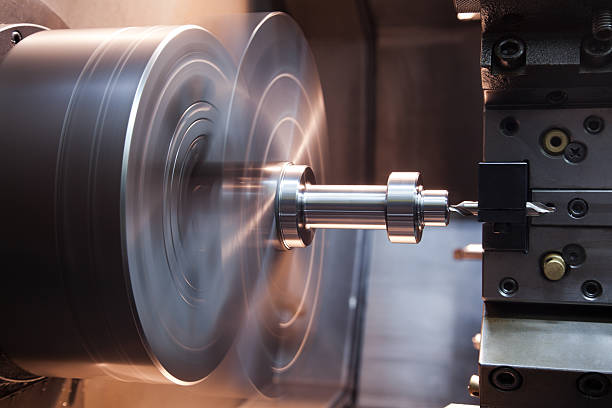
Automation Enhances Manufacturing Performance
Modern manufacturing increasingly relies on automation to maintain consistent output. CNC multi-axis turning centers integrate seamlessly with automation systems such as robotic loaders, bar feeders, and automated measurement devices. Because the machine can complete complex parts in one cycle, automation becomes more efficient. Robots can load raw blanks and remove finished parts without multiple intervention stages.
This streamlined approach improves safety because operators spend less time near moving parts. Furthermore, automation reduces handling errors, which improves quality. As companies pursue smart factory initiatives, multi-axis turning centers become foundational equipment. They support monitoring systems, digital feedback loops, and machine learning applications. Through these tools, engineers can adjust machining parameters in real time, predict tool wear, and optimize cycle time. Consequently, companies achieve higher efficiency while reducing operational risk.
Material Challenges Strengthen the Case for Multi-Axis Turning
Many industries now adopt advanced materials that challenge machining operations. Titanium, heat-resistant alloys, stainless steels, and composite-related metal structures require stable cutting performance. Because these materials generate high cutting forces, machines must maintain rigidity and thermal stability. A CNC multi-axis turning center handles these demands effectively. Its structural design includes reinforced slides, optimized bearings, and strong spindle systems.
Multi-axis motion enhances material removal efficiency because the machine maintains ideal cutting angles across the tool path. Consequently, heat distributes evenly, which protects tool life and preserves surface quality. Furthermore, multi-axis turning centers often include high-pressure coolant systems that support deep drilling and chip evacuation. These advantages allow manufacturers to maintain productivity when machining difficult materials, which strengthens the business case for multi-axis technology.
Digital Control Systems Improve Stability and Precision
Modern CNC control systems play a critical role in multi-axis machining. These systems coordinate axis movements, manage tool compensation, and adjust feed rates in real time. As designs grow more complex, control accuracy becomes increasingly important. Multi-axis turning centers integrate advanced control algorithms that predict machine behavior and compensate for dynamic changes.
These control systems monitor vibration, spindle load, thermal changes, and tool wear. When the system detects potential deviation, it adjusts parameter values immediately. This intelligent compensation enhances dimensional accuracy while protecting tool life. Because modern manufacturing requires stable quality across large batches, digital control systems become essential. Furthermore, these systems connect with plant-wide networks to provide live data. Engineers use this data to improve planning, forecast maintenance needs, and reduce operational downtime.
Improved Surface Quality Strengthens Product Reliability
High-quality surface finishes reduce friction, increase part durability, and improve general performance. Industries such as aerospace, medical device production, and high-performance automotive manufacturing rely on precise surface characteristics. Multi-axis turning centers produce these surfaces efficiently because they allow optimized tool orientation and controlled chip formation. As the tool follows complex contours, the machine adjusts the cutting angle to maintain uniform engagement.
Consequently, surface quality remains stable across different machining directions. This improvement reduces the need for secondary finishing. Furthermore, the machine handles transitions between turning and milling operations without introducing surface mismatch. This continuity ensures that every surface meets the required performance criteria. Therefore, product reliability strengthens, which increases customer confidence and reduces long-term costs.
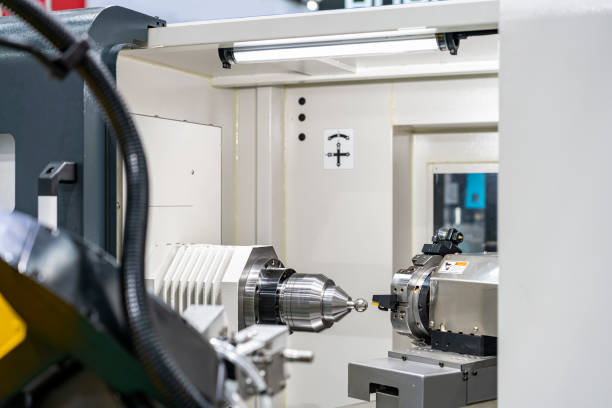
Industry Adoption Across Several Sectors
Many industries now adopt multi-axis turning technology as a standard requirement. Aerospace manufacturers depend on multi-axis capability to produce structural components, engine parts, and high-strength fasteners. Automotive companies use these machines for precision shafts, gear-related components, and integrated housing structures. Medical device manufacturers rely on multi-axis turning for implants, surgical components, and micro-scale parts. Energy companies use them for valve components, pipeline fittings, and high-pressure system hardware.
The rising adoption across multiple sectors demonstrates the value of this technology. Because each industry requires precise, efficient, and flexible production methods, multi-axis turning centers align with global trends. As performance expectations rise, the need for advanced machining capability becomes more urgent. Consequently, multi-axis turning becomes not just a competitive advantage but a strategic necessity.
Conclusion
Modern manufacturing relies on speed, accuracy, and flexibility. As component complexity increases, traditional turning equipment cannot meet these demands. Therefore, companies across many industries now adopt CNC multi-axis turning centers as core production solutions. These machines support one-setup machining, integrated milling, advanced multi-axis motion, and strong automation compatibility. They reduce cycle time, improve surface quality, and strengthen tolerance control. Furthermore, they handle difficult materials while supporting digital monitoring systems. Because of these advantages, multi-axis technology represents the future of efficient, adaptive, and high-value machining. As global competition intensifies, manufacturers will continue to switch to multi-axis turning centers to meet the increasing complexity of modern products.