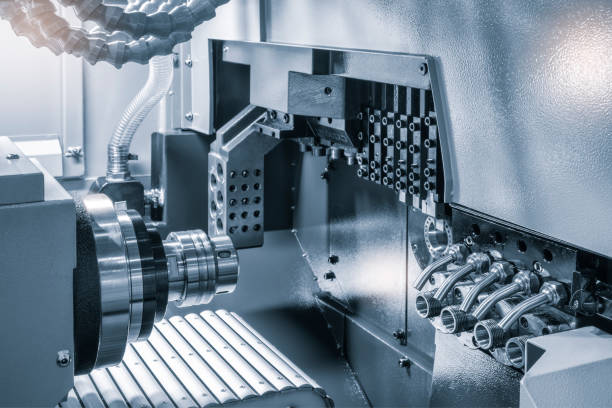
In today’s competitive manufacturing landscape, speed alone is no longer enough—true success comes from combining speed with flexibility and precision. For decades, factories depended on mechanical cam-driven systems to achieve high-volume output. However, as production demands evolve, a new standard has emerged. CNC turning multi-spindle machines now lead the industry, transforming how manufacturers approach efficiency, accuracy, and scalability. Let’s take a closer look at how this technological shift directly improves your operational performance and profitability.
The Traditional Backbone: Cam-Driven Lathes
For many years, mechanical cams formed the core of automatic lathes. These rotating discs controlled tool movement with fixed timing, enabling fast and repetitive production. While effective for large-scale manufacturing, this system comes with a critical limitation—a lack of flexibility.
Whenever you need to modify a part design, operators must physically replace and recalibrate the cams. As a result, technicians often spend days grinding, adjusting, and installing new components. Consequently, cam-driven machines only remain efficient when producing massive volumes of identical parts, making them less suitable for today’s dynamic production needs.
The Modern Solution: CNC Multi-Spindle Technology
In contrast, CNC turning multi-spindle machines replace rigid mechanical systems with intelligent digital control. Instead of relying on fixed cams, each tool slide and spindle operates through independent servo motors, delivering unmatched adaptability.
- Rapid Changeovers: Operators simply upload a new program, reducing setup time from days to minutes.
- Flexible Adjustments: Engineers can fine-tune dimensions instantly through the control interface.
- Superior Precision: Servo-driven motion achieves micron-level accuracy that mechanical systems cannot replicate.
Moreover, these machines can execute multiple complex operations—such as threading and side milling—simultaneously. As a result, manufacturers gain both the high output of multi-spindle systems and the advanced control of modern CNC software.
Precision as a Competitive Advantage
Beyond speed and flexibility, precision defines long-term success. In cam-driven systems, mechanical wear gradually reduces accuracy, causing deviations in part quality over time. However, CNC multi-spindle machines actively monitor their position through electronic feedback systems.
Whenever the system detects even the smallest deviation, it automatically corrects the error in real time. Consequently, every part—from the first to the millionth—maintains consistent, high-precision quality. This level of reliability strengthens your reputation and reduces costly defects.
Efficiency That Drives Profitability
From a cost perspective, traditional cam machines often hide inefficiencies in the form of downtime and labor-intensive adjustments. By switching to CNC technology, you dramatically reduce setup times and minimize manual intervention.
As a result, you can handle smaller, more diverse production runs without sacrificing profitability. Furthermore, streamlined processes reduce the likelihood of human error, improving overall production stability and lowering operational costs.
A Strategic Upgrade for Forward-Thinking Manufacturers
Ultimately, your technology determines your production limits. Relying on outdated cam systems restricts your ability to compete in a fast-evolving global market. In contrast, investing in CNC turning multi-spindle machines empowers your factory with speed, precision, and flexibility.
By upgrading your production line, you transform complex, time-consuming processes into streamlined, high-efficiency operations. The result is a smarter, more agile manufacturing system—one that positions your business for long-term growth and success.