Gray cast iron has a reputation as an easy material, and at the tool it often is. The graphite breaks the chips short, so you won’t be untangling bird’s nests from the spindle.
The trouble shows up around the machine instead: abrasive fines in the coolant and on the guards, a casting skin that’s harder in some places than others, and a cutter that slams in and out every time it crosses a cored hole.
So plan the machine around four things: steady support through interrupted cuts, spindle capacity at the speed you’ll actually run, a way to get the fines out, and guarding and coolant that suit whether you cut dry or wet. A higher maximum rpm alone doesn’t answer any of them.
Keep the casting supported through every interruption
Sandvik Coromant names the main problems when milling gray iron as abrasive flank wear, thermal cracks in the insert, and frittering on the exit side of the part, where the edge of the casting breaks away as the cutter leaves. Unstable support adds vibration, and vibration makes edge damage worse. On a casting, stability depends a lot on how the part sits.
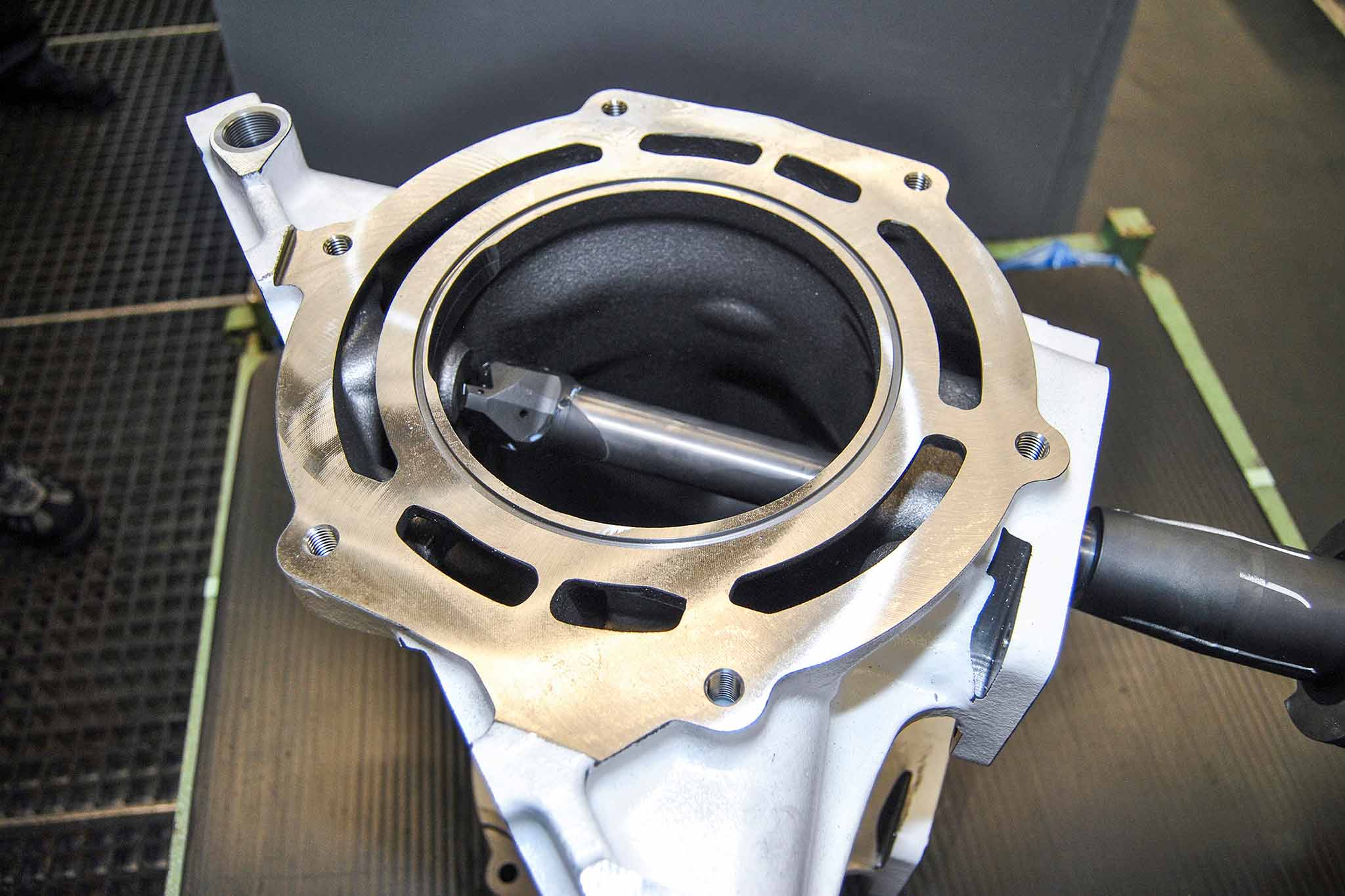
A face mill crossing cored windows keeps entering and leaving the material. Look at where the casting rests, where the clamps push, and how far the cutter hangs out of the spindle. A heavy machine can still chatter if there’s nothing solid under the cut.
Size the spindle for the cut you’ll run
Start from the operations that fill the cycle. Taking the skin off with a face mill is a very different job for the spindle than drilling small holes or finishing a narrow pocket.
For dry roughing of gray iron with ceramic inserts, without cutting fluid, Sandvik gives 800 to 1,000 m/min. On an 80 mm face mill, that works out to roughly 3,200 to 4,000 rpm, well inside a 10,000 rpm spindle. Coated carbide is Sandvik’s first choice for gray iron, and for that you’d use the cutting data of the grade you pick.
Either way, the question isn’t the top speed. It’s how much torque the spindle has left at the speed you’ll run all day.
A catalog’s motor power and top speed are a starting point, not an answer. Ask for the torque and power curves, and check where your roughing pass sits on them, especially if it keeps the spindle loaded for most of the cycle.
Moving chips out and cleaning coolant are two jobs
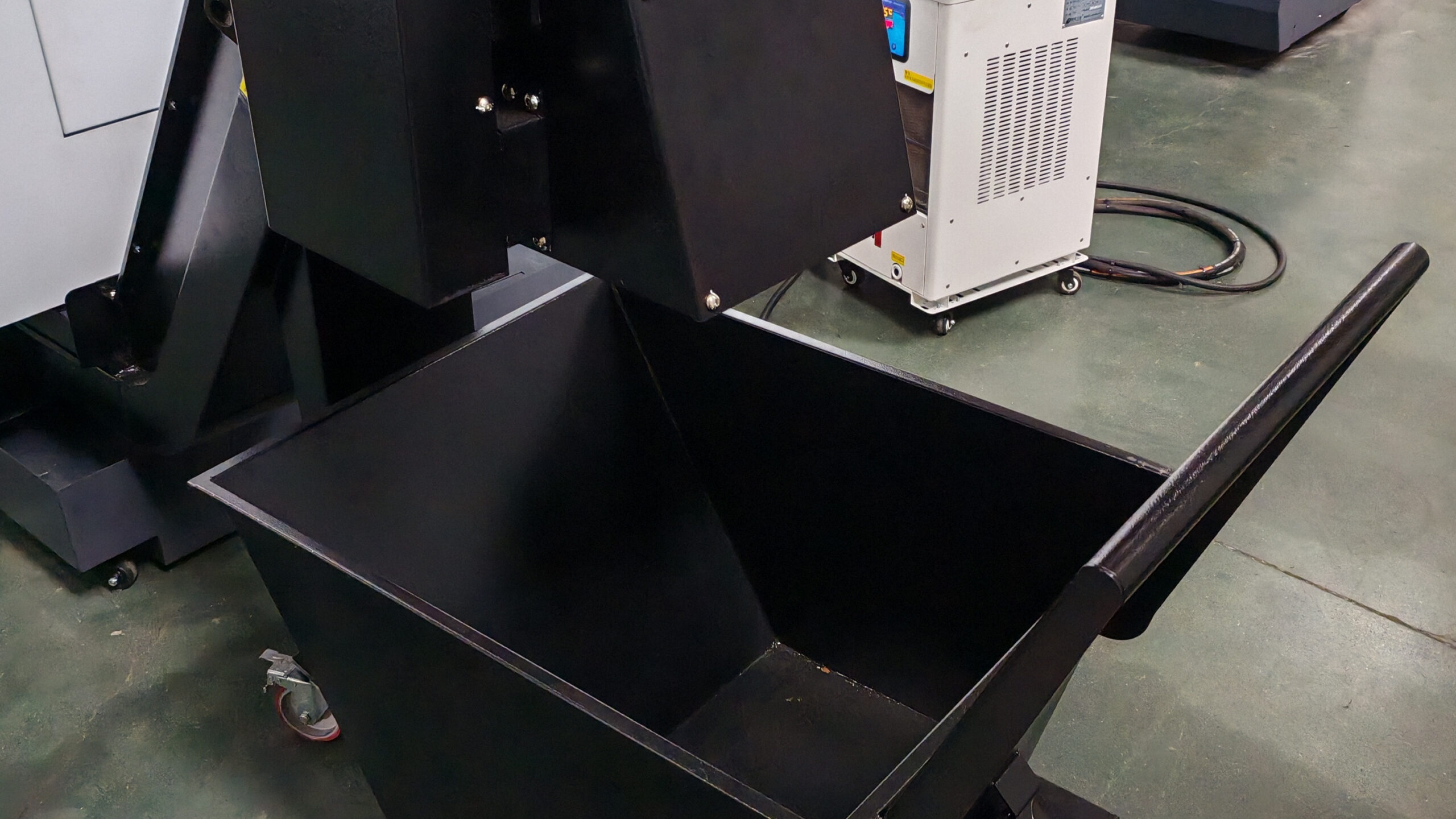
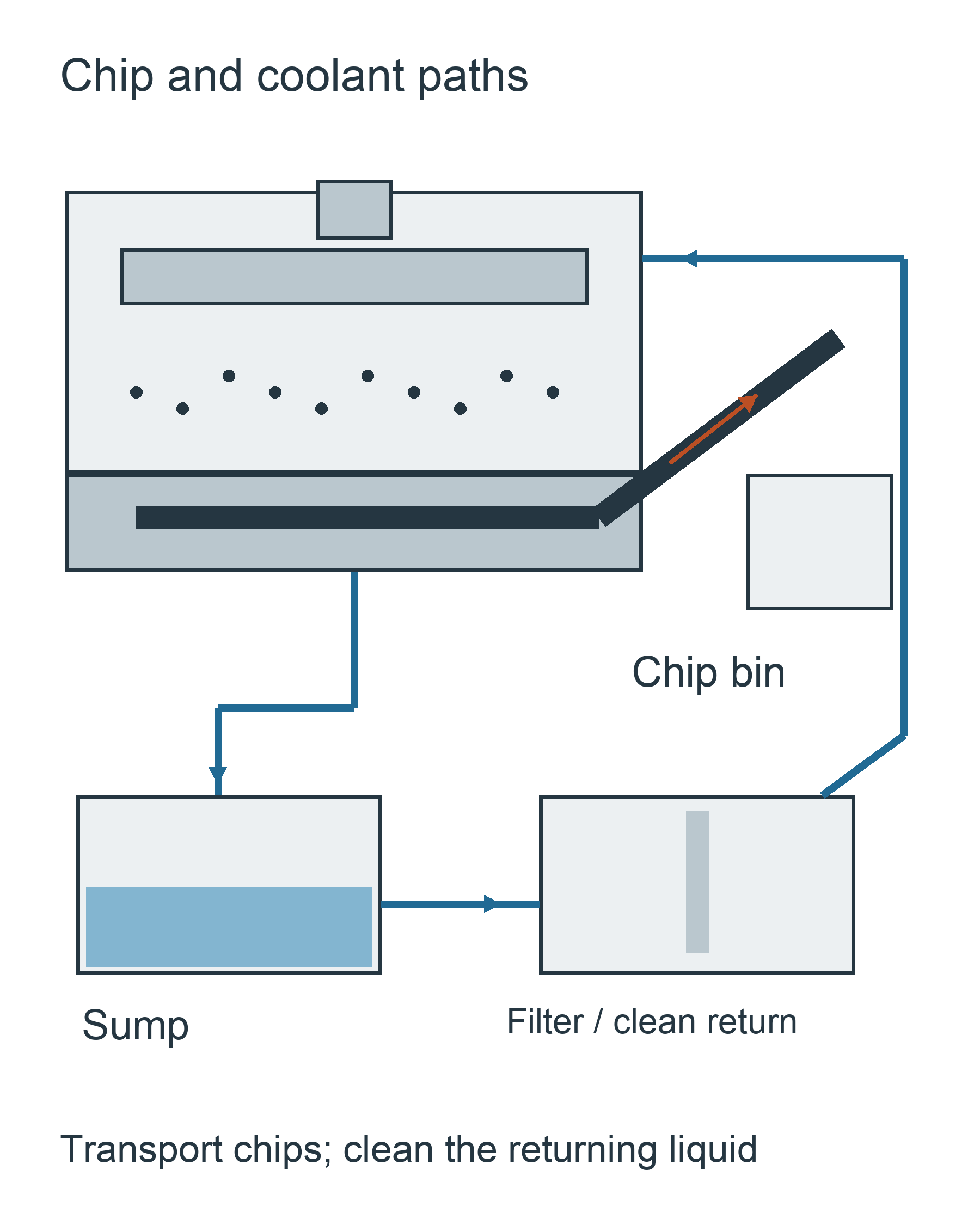
Short chips and fines don’t behave like long curly steel chips. Follow their path from the enclosure floor to the conveyor and on to the bin, then follow the coolant on its way back to the tank. Where do the fines settle? Where do they get pumped back to the nozzles? Those are the spots that need cleanout access in the machine layout.
Mayfran describes drag conveyors as a fit for small chips where coolant cleanliness isn’t critical. That’s a useful line to draw, because carrying chips out and cleaning the coolant that comes back are separate tasks. Decide how clean your coolant needs to be first, then choose the conveyor and filtration together. Hennig makes the same point from the other side: pick the conveyor by the material and the chip form it has to handle.
Dry or wet: decide before you spec the guarding
Sandvik’s advice for roughing gray iron is to run dry, without cutting fluid, to keep thermal cracks down. The edge heats up in the cut and cools between engagements either way; dry cutting avoids the sharper quench that coolant adds. It also means the machine has to deal with dry chips and dust, so specify how the enclosure contains them and, if your process needs extraction, where it connects.
Wet cutting turns the problem into carrying fines in the liquid and cleaning the return. Sandvik itself allows it: if you need fluid to control dust, use grades made for wet milling. Seco documents a cast iron grade that runs wet or dry. Settle the route with your tooling, then specify the collection, filtration and mist handling to match.
Everything here is about gray iron milling. Ductile iron, compacted graphite iron and austempered ductile iron behave differently, so don’t carry this configuration over just because the drawing says “cast iron”.
What to bring to a machine comparison
| Process condition | What the machine needs | Evidence to bring |
|---|---|---|
| Interrupted roughing | Stable support and head | Casting and fixture layout |
| Long heavy cuts | Spindle torque at speed | Torque and power curve |
| Fines in coolant | Transport plus cleaning | Chip sample, cleanliness |
| Dry cutting | Containment, extraction | Enclosure and connection |
When the machine you have is enough
If you’re running small castings with light finishing cuts and good local support, your current machining center may already be doing the job well. Keep that result in the comparison. And if the recurring complaint is cleanout rather than cutting, a better chip and coolant setup will probably fix it faster than a bigger spindle or a heavier bed.
Configuring an L-series machine for the casting
Our L-series machining centers pair linear X and Y guideways with a box-way Z axis for heavier cutting. The L855 has 800 × 550 × 550 mm of travel, a 1000 × 550 mm table and a BT40, 10,000 rpm belt-driven spindle with 7.5 to 11 kW depending on configuration. Size the spindle against your roughing pass, and the support against your casting.
For a gray iron job, settle dry or wet and what the chips and coolant need before the configuration is final. Talk to us about the casting and your operation list, and tell us how your current machine collects fines and how often it needs cleaning out.
FAQ
Is gray cast iron always milled dry?
No. Dry roughing is the common recommendation because it limits thermal cracking, but dust control or wet-capable tooling can make a wet process the better choice. Plan the guarding and coolant return around whichever you pick.
Is a chip conveyor also a coolant filter?
Not necessarily. A conveyor moves chips, while a filter or separator deals with what’s left in the returning coolant. Some systems do both, so ask how much fine material each stage is designed to handle.
Sources and Method
- Sandvik Coromant: Milling different materials, gray cast iron, wear, frittering, cutting speeds and dry or wet roughing
- Sumitomo Electric Technical Review No. 67 (2008), how flake graphite breaks gray iron chips
- Seco: Cast iron machining, wet or dry, a grade application showing the wet or dry choice
- Mayfran: Drag conveyors, small-chip transport and coolant cleanliness
- Hennig: Chip conveyors, choosing by material and chip form
The 80 mm face mill speed range is our own conversion of Sandvik’s cutting speeds. L855 specifications are from our current product parameter sheet.