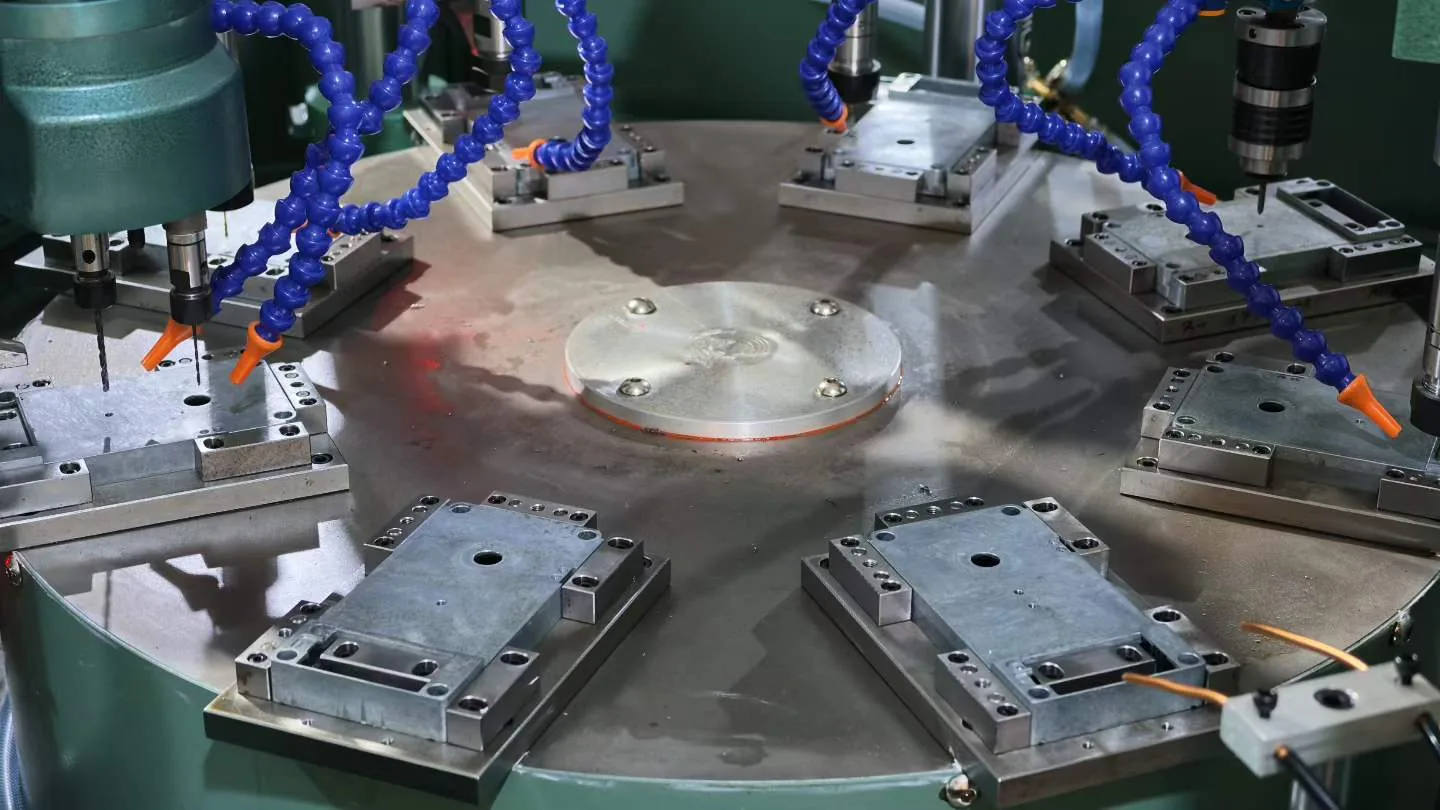
Workholding is often described as “holding the part securely.” That is necessary, but incomplete. A fixture also establishes the manufacturing datum, controls access to features, transmits cutting loads into the setup, influences chip flow, and determines whether the part can be inspected without losing the logic of the process. A machining-center purchase review that starts after the fixture is assumed to be solved is vulnerable to expensive surprises.
This guide provides a practical review method for buyers and process teams. It does not prescribe clamp forces, fixture styles, or accuracy claims; those depend on the actual part, material, operation, tooling, and validated process.
Begin with the functional datum chain
Read the drawing as a chain of relationships. Which surface establishes the primary datum? Which features are controlled from it? Does the stock already contain a stable locating surface, or must one be created in an earlier operation? Which dimension or geometric relationship becomes hard to protect if the part is removed and re-clamped?
Write these answers on the fixture concept. A fixture review becomes far stronger when every locator and clamp can be linked to a drawing requirement. Without that link, the team can easily create a fixture that feels rigid but references the part in a way that complicates inspection or forces repeated datum rebuilding.
The five-part fixture review
| Review area | Questions to ask | Evidence to prepare |
|---|---|---|
| Location | Which surfaces establish primary, secondary, and tertiary location? | Datum sketch and part orientation. |
| Clamping | Where can force be applied without deforming or obstructing features? | Clamp-zone drawing; no unsupported assumptions about force. |
| Tool access | Can cutter and holder reach every required feature? | Tool/holder envelope and collision review. |
| Process flow | When is the part removed, indexed, or transferred? | Operation map and setup count. |
| Verification | Can critical features be checked against the correct datum? | In-process/final inspection plan. |
Location comes before clamping
A stable clamp cannot correct an unclear locating strategy. First establish how the part is seated and restrained in the required directions. Then decide how clamp action maintains that location while leaving machining access. Separating these concepts helps teams avoid a common mistake: using a clamp to perform the locating job without making the reference surfaces explicit.
For parts that require more than one setup, record what changes at each handoff. Is the part re-located from a finished surface? Is an intermediate feature used as a reference? Does inspection confirm that the next setup begins from a valid condition? The answers guide both fixture design and the machine conversation.
Tool access is a three-dimensional problem
Review the complete cutting assembly rather than only the cutter tip. A feature may be reachable in a flat drawing but blocked by a holder, clamp, fixture wall, adjacent feature, or required approach path. Consider entry, machining, withdrawal, and chip evacuation. If a long reach is proposed, treat it as a process question requiring validation, not a general solution.
Make an access map for the part. Use green for unobstructed approach, amber for areas requiring a specific tool/holder or fixture condition, and red for blocked regions. This map is useful in an RFQ because it explains why an axis arrangement, rotary concept, or fixture interface is being discussed.
Plan chips, coolant, and loading at fixture level
Fixtures affect more than geometric access. Recesses may collect chips; a clamp may block coolant from a cutting zone; a locating feature may be difficult to clean before reloading; and a complex fixture may create an awkward or unsafe loading action. Include a simple “reset between parts” review: how the operator removes chips, verifies seating surfaces, loads the next part, and confirms the clamp state.
This does not require a claim about a particular machine option. It requires that the process team recognize these ordinary but consequential actions before a fixture is released.
Verify the fixture against the inspection plan
Inspection should not be an afterthought. For each critical relationship, identify when it is checked, what datum the measurement references, and what decision follows if it is outside the allowed result. If the process depends on in-machine measurement, tool setting, or an external gauge, mark it as a confirmed requirement, an option under evaluation, or an open question. Do not imply capability until the actual system and method are confirmed.
Failure modes to review before approving a concept
- The clamp covers an important face or limits tool withdrawal.
- A feature is machined after the controlling datum has been lost.
- Chips remain on a locating surface and change seating from part to part.
- Inspection references a different datum than the production setup without a clear correlation method.
- The fixture can cut the part but cannot be loaded, cleaned, or maintained realistically.
FAQ
Why is datum planning part of workholding?
The fixture establishes how the part is referenced during machining. If that reference does not protect the functional relationships on the drawing, a secure clamp alone will not make the process robust.
Can a fixture be designed after the machine is chosen?
It can, but the risk is higher. Early fixture review helps identify access, interface, loading, and process-route requirements that may influence the machine selection.
What should be shown in a fixture concept for an RFQ?
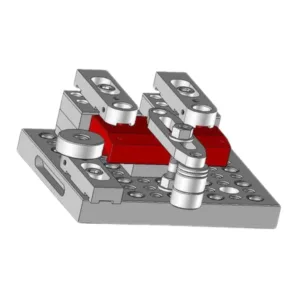
Show the part orientation, datums, locator and clamp zones, features requiring access, expected setup count, and any loading or inspection constraint.
Is a complex fixture always better because it reduces setups?
No. Reduced setups may be valuable, but fixture complexity must be balanced against access, loading, cleaning, verification, maintenance, and the confirmed part mix.
For a machining-center discussion with CHANSIN, provide a representative drawing and your datum/fixture concept. That allows the conversation to focus on real tool access and process flow rather than a generic statement that a part “needs more clamping.”