
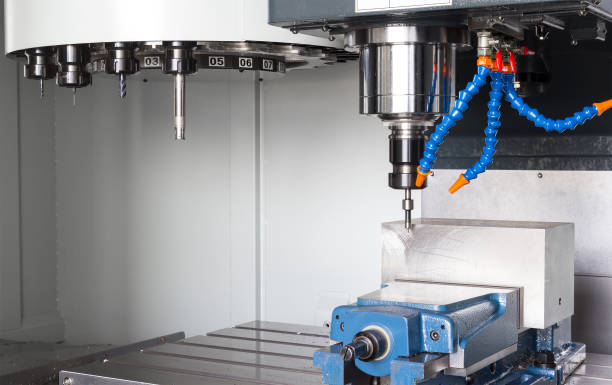
A mini VMC CNC machine for metal can be a practical investment for workshops that machine compact components, produce prototypes, or handle small and medium batches. Its smaller footprint can help businesses manage limited floor space while performing operations such as milling, drilling, tapping, and pocket machining.
However, a compact vertical machining center is not suitable for every metalworking application. Workpiece dimensions, material hardness, cutting forces, tolerance requirements, and production volume all influence whether a mini VMC can deliver the required results.
For machine shop owners, production managers, and equipment buyers, the key question is not simply whether a mini VMC can cut metal. It is whether the machine can complete the required operations reliably, efficiently, and within the target cost per part.
This guide explains which workpieces and production scenarios suit a mini VMC CNC machine, where its capabilities may become limiting, and what buyers should evaluate before investing.
1. What Is a Mini VMC CNC Machine for Metal?
A mini VMC is a compact vertical machining center that uses a vertically oriented spindle and CNC-controlled axes to remove material from a workpiece. Depending on its configuration, it may support milling, drilling, boring, tapping, and contour machining.
Compared with larger machining centers, a mini VMC generally targets a smaller working envelope. However, the term “mini” does not define a universal machine size or performance level. Buyers should evaluate the manufacturer’s actual specifications rather than relying on the product name.
Typical Applications
A mini VMC CNC machine may suit businesses producing:
- Small aluminum brackets and mounting plates
- Compact mechanical housings and covers
- Fixtures, jigs, and tooling components
- Small steel blocks and machined plates
- Prototype parts for product development
- Components with repeated holes, slots, and pockets
The suitability of each application depends on material, part geometry, tooling, machine rigidity, and required tolerances.
Which Industries May Benefit?
| Industry | Example Workpieces | Main Consideration |
|---|---|---|
| General machinery | Brackets, plates, fixtures | Workholding and repeatability |
| Electronics equipment | Compact housings and mounting parts | Fine features and dimensional control |
| Automation | Sensor mounts, small tooling blocks | Hole positioning and repeat production |
| Product development | Prototype components | Setup flexibility and programming time |
| Maintenance workshops | Replacement parts and repair components | Material range and job flexibility |
| Mold and tool rooms | Small mold inserts and tool components | Rigidity, surface finish, and tool access |
These are potential applications rather than guaranteed capabilities. Buyers should validate the intended part using the machine’s specifications and a representative cutting test.
2. Which Workpieces Are Suitable for a Mini VMC?
Workpiece size is one of the first factors to assess, but physical dimensions alone do not determine whether a part fits a machine.
The complete setup must accommodate the workpiece, vise or fixture, clamps, cutting tools, and required tool movements.
Small, Flat, and Prismatic Parts
Mini VMC machines are often a good starting point for compact parts with accessible top surfaces. Examples include mounting plates, aluminum blocks, brackets, and small mechanical components.
These parts may require several standard operations, such as facing, pocketing, drilling, tapping, and contour milling.
A three-axis mini VMC can be particularly useful when most features are accessible from one primary setup. If the part requires machining on several sides, additional setups or a suitable rotary axis may be necessary.
Small Components with Multiple Features
A compact machining center can also support parts with many holes, threaded features, pockets, and slots.
An automatic tool changer may reduce manual tool changes when the machine performs multiple operations. However, tool magazine capacity, tool-change time, spindle performance, and programming efficiency all influence the actual production cycle.
When a Workpiece Is Too Large
A part may physically sit on the worktable but still exceed the machine’s usable machining envelope.
Before purchasing, confirm:
- X-axis travel for the workpiece length
- Y-axis travel for the workpiece width
- Z-axis travel and spindle-to-table clearance
- Worktable dimensions and maximum load
- Space required for fixtures and clamps
- Tool access to every required feature
For example, a long component may require a larger VMC if its entire machining path cannot be completed within the available travel. Repositioning the workpiece may be possible, but repeated clamping can add labor and introduce positioning errors.
The correct choice is based on the complete machining setup, not just the largest dimension on the drawing.
3. Can a Mini VMC Machine Different Metals?
A mini VMC can machine various metals when its spindle, structural rigidity, tooling, and cutting parameters match the material and operation.
However, the ability to cut a material does not automatically mean the machine can process it efficiently at every depth of cut or production rate.
Aluminum and Other Light Alloys
Aluminum components are common candidates for compact CNC machining. Many aluminum applications benefit from relatively high spindle speeds and efficient chip removal.
Typical operations include pocket milling, drilling, contouring, and facing. Buyers should still verify spindle power, speed range, tool compatibility, coolant requirements, and chip evacuation.
Mild Steel and Alloy Steel
Steel machining often requires careful attention to spindle torque, machine rigidity, cutting-tool selection, and vibration control.
A mini VMC may handle small steel parts and moderate cutting operations if its specifications support the required process. Heavy roughing, large cutters, deep cuts, or high material-removal rates may demand a more rigid machine with greater torque and cutting capacity.
Stainless Steel and Harder Materials
Stainless steel can generate substantial heat and cutting forces, depending on the grade and operation. Hardened materials may impose even greater demands on tooling and machine stability.
Before selecting a mini VMC for these applications, buyers should confirm the material grade, hardness, cutting depth, tool diameter, required cycle time, and surface-finish target.
Material Suitability Comparison
| Material or Application | Potential Fit | What to Verify |
|---|---|---|
| Aluminum alloy | Often suitable for compact parts | Spindle speed, power, chip removal |
| Mild steel | Suitable for compatible cutting loads | Torque, rigidity, tooling, cutting parameters |
| Stainless steel | Application-dependent | Cutting stability, coolant, tool life |
| Cast iron | Depends on grade and cutting strategy | Rigidity, dust and chip management, tooling |
| Hardened steel | Requires careful evaluation | Hardness, tool system, spindle and machine capability |
There is no universal material limit for all mini VMC machines. Always evaluate the actual machine model and the intended cutting process.
4. Is a Mini VMC Suitable for Your Production Volume?
Production volume is another major selection factor. A mini VMC may be well suited to flexible, low-volume work, but higher output requirements can expose bottlenecks that are less important during prototyping.
Prototyping and One-Off Parts
For product development and engineering workshops, a mini VMC can provide useful flexibility. Operators can machine different parts without dedicating a large production line to each component.
The main priorities are often programming convenience, setup flexibility, tool availability, and the ability to meet drawing requirements.
Small-Batch and Repeat Production
For recurring batches, a mini VMC may offer a practical balance between equipment investment and production capability.
Efficiency improves when businesses standardize fixtures, tool lists, CNC programs, inspection methods, and setup procedures. A machine that can repeat the same process consistently may be more valuable than one with a higher headline spindle speed.
High-Volume Production
A mini VMC can sometimes support higher-volume work, especially when parts are small and machining cycles are short. However, production capacity depends on the complete process rather than the machine size alone.
Buyers should evaluate loading and unloading time, tool-change time, chip removal, tool life, downtime, operator availability, and inspection requirements.
If the machine becomes a production bottleneck, a higher-capacity VMC, multi-station fixture, pallet system, or automated loading arrangement may be more appropriate.
Match the Machine to the Production Scenario
| Production Scenario | Potential Advantages of a Mini VMC | Main Limitation to Evaluate |
|---|---|---|
| Prototyping | Flexible setups and compact footprint | Programming and first-part setup time |
| One-off repair parts | Useful for varied small components | Material and geometry range |
| Small batches | Repeatable machining with suitable fixtures | Setup time per batch |
| Recurring medium-volume work | Standardized processes can improve consistency | Cycle time and tool-change efficiency |
| Continuous high-volume production | May work for simple, compact parts | Automation, uptime, and throughput |
Instead of classifying a mini VMC by a fixed monthly production threshold, calculate the required output from the actual part cycle time and available machine hours.
5. What Are the Main Capability Limits of a Mini VMC?
Understanding the limitations of a mini VMC CNC machine helps buyers avoid selecting equipment that is too small for their long-term needs.
Limited Working Travel
The available X, Y, and Z travel determines how the tool can move around the workpiece. A compact machine may not accommodate large parts, tall fixtures, or long tools without restricting access.
Even when the part fits, the fixture may reduce usable travel or create interference.
Cutting Force and Structural Rigidity
Machine rigidity influences vibration, dimensional stability, surface finish, and tool life.
A compact machine may be suitable for moderate cutting loads but less appropriate for aggressive roughing or heavy material removal. Buyers should evaluate the machine structure, spindle, guideways, bearings, and specified cutting capabilities.
Tool Magazine and Tooling Constraints
A smaller tool magazine may require manual intervention when a part needs many tools. Tool diameter, length, and weight limits may also restrict the machining process.
Review the complete tool list required for the part, including drills, taps, end mills, boring tools, and any special tooling.
Multi-Side Machining and Complex Geometry
A standard three-axis VMC typically moves the tool along three linear axes. Parts requiring access to multiple faces may need additional setups.
A fourth-axis rotary table or a five-axis configuration can reduce some repositioning requirements, but it also affects cost, available work envelope, programming, and setup complexity.
If multi-face machining is central to the business, compare the cost of extra setups with the cost and capability of a suitable multi-axis machine.
Accuracy and Repeatability
A compact machine is not automatically less accurate than a larger one. Actual results depend on machine design, calibration, thermal conditions, tooling, workholding, cutting forces, and operator practice.
Buyers should distinguish between positioning accuracy, repeatability, and the dimensional accuracy achieved on a finished part.
For critical features, request relevant specifications and validate them through a representative test piece and appropriate inspection method. A catalog accuracy figure alone does not guarantee the same tolerance on every workpiece.
6. How to Evaluate Mini VMC Specifications Before Buying
A structured specification review helps buyers identify whether a mini VMC meets their real production needs.
Key Specifications to Check
| Specification | Why It Matters | Buyer Question |
|---|---|---|
| X/Y/Z travel | Defines the tool’s movement range | Can the machine complete the part with the planned fixture? |
| Table size | Defines the physical workholding area | Can the part and fixture fit safely? |
| Maximum table load | Limits workpiece and fixture weight | Is the combined setup within the rated load? |
| Spindle speed | Influences suitable cutting conditions | Does the speed range match the material and tooling? |
| Spindle power and torque | Affect cutting capacity | Can the spindle handle the intended operation? |
| Spindle taper | Determines toolholder compatibility | Does it match the required tooling system? |
| Tool magazine capacity | Affects tool availability during production | Can the complete process run without frequent manual changes? |
| Positioning and repeatability specifications | Help assess machine motion performance | Are the specifications measured under relevant conditions? |
| Coolant and chip evacuation | Affect cutting stability and maintenance | Can the system handle the material and chip load? |
| CNC controller | Influences programming and operation | Is it compatible with the team’s workflow and support requirements? |
Compare machines using the same part, material, fixture, tool list, and acceptance criteria wherever possible.
Calculate the True Cost per Part
The purchase price is only one part of the investment. Businesses should estimate the total cost of producing acceptable components.
Consider:
- Machine purchase and installation
- Tooling and workholding
- Programming and setup labor
- Cycle time and operator involvement
- Tool wear and consumables
- Maintenance and downtime
- Inspection and scrap costs
A lower-priced machine may be economical for flexible, low-volume production. For high-volume work, a machine with faster cycles or less manual handling may deliver a lower cost per finished part.
The right comparison uses the expected production mix and realistic operating assumptions rather than machine price alone.
7. A Practical Decision Checklist for Metalworking Businesses
Before choosing a mini VMC CNC machine for metal, answer the following questions.
- What parts will you produce? List the main workpieces, materials, dimensions, and most demanding features.
- What is the required output? Estimate parts per shift or month, including setup and inspection time.
- What tolerances must be achieved? Identify critical dimensions and surface-finish requirements.
- What cutting operations are required? Define roughing, finishing, drilling, tapping, and any special processes.
- What fixture and tooling system will you use? Confirm the usable work envelope and tool compatibility.
- What may change in the next few years? Consider whether future products will require longer travel, heavier cutting, or more axes.
- How will the supplier validate the machine? Agree on acceptance tests, service support, training, and documentation.
If the machine can complete the main parts within its rated capacity and achieve the required output, a mini VMC may be a sensible choice. If it repeatedly requires workarounds for part size, cutting load, or cycle time, a larger or differently configured machine deserves consideration.
Frequently Asked Questions
1. Can a mini VMC CNC machine cut steel?
Yes, if the machine’s spindle, rigidity, tooling, and cutting parameters suit the steel grade and required operations. Heavy roughing or demanding materials may require a more capable machine.
2. Is a mini VMC suitable for small-batch production?
It can be. Compact VMCs can suit small batches when workpieces fit the machining envelope and the setup, tooling, and cycle time meet production targets.
3. Can a mini VMC produce precision metal parts?
It may produce precision parts when the machine and complete process meet the required tolerances. Buyers should validate finished-part performance through representative machining and inspection rather than relying only on catalog specifications.
4. What is the biggest limitation of a mini VMC?
There is no single limitation for every model. Common constraints include working travel, table load, spindle torque, structural rigidity, tool capacity, and multi-axis capability. The most important limit is the one that restricts the intended application.
5. Should I choose a mini VMC or a standard-size VMC?
Choose a mini VMC when its usable work envelope, cutting capability, and production capacity meet your requirements. Consider a standard-size VMC when parts are larger, cutting loads are heavier, or future production requires greater flexibility.
Conclusion
A mini VMC CNC machine for metal can be a valuable option for metalworking businesses that produce compact components, prototypes, and small or repeat batches. Its suitability depends on the relationship between workpiece size, material, cutting conditions, accuracy requirements, and production volume.
Before investing, buyers should evaluate the complete machining setup rather than relying on machine size or purchase price alone. Travel, table load, spindle torque, tooling, rigidity, and cycle time all affect real production capability.
The most effective equipment decision is the one that meets current requirements without creating unnecessary capacity costs or limiting foreseeable growth. For CHANSIN customers, matching machine specifications to real parts and production targets is a practical starting point for selecting an appropriate CNC machining solution. Contact CHANSIN to discuss your workpiece requirements and machine selection needs.
