A machinist face-milling 316 plate on a light toolroom mill posted his results: a fresh set of inserts wrecked after two passes. He’d tried everything from 400 to 1,000 rpm with the same outcome, and most of his side work was stainless. One reply skipped the speeds entirely and asked how rigid the setup was.
That’s the right instinct. 316 punishes any cut where the edge rubs instead of slicing, and a machine or setup that flexes makes the edge rub. So before cutters and coatings, it’s worth knowing what this material asks of the machine itself.
What makes 316 hard on a machine
Three habits cause most of the trouble. It work-hardens: the surface the tool just passed over gets harder, so a hesitant or rubbing cut makes the next one worse. It holds heat in the cutting zone, which wears edges fast. And it’s gummy, welding small chips onto the cutting edge as built-up edge.
You can’t add your way out of it either. Mike Cope of Hurco pointed out to SME that the sulfur additives that make some stainless grades easier to cut aren’t allowed in tougher grades such as 304 and 316.
The tooling side agrees on the fix. Sandvik Coromant’s advice in the same article: for roughing, take large depths of cut and feeds at a lower cutting speed, and leave enough stock for finishing so the tool cuts below the hardened layer. All of that only works if the machine can hold a heavy, steady cut.
1. Rigidity and mass under the cut
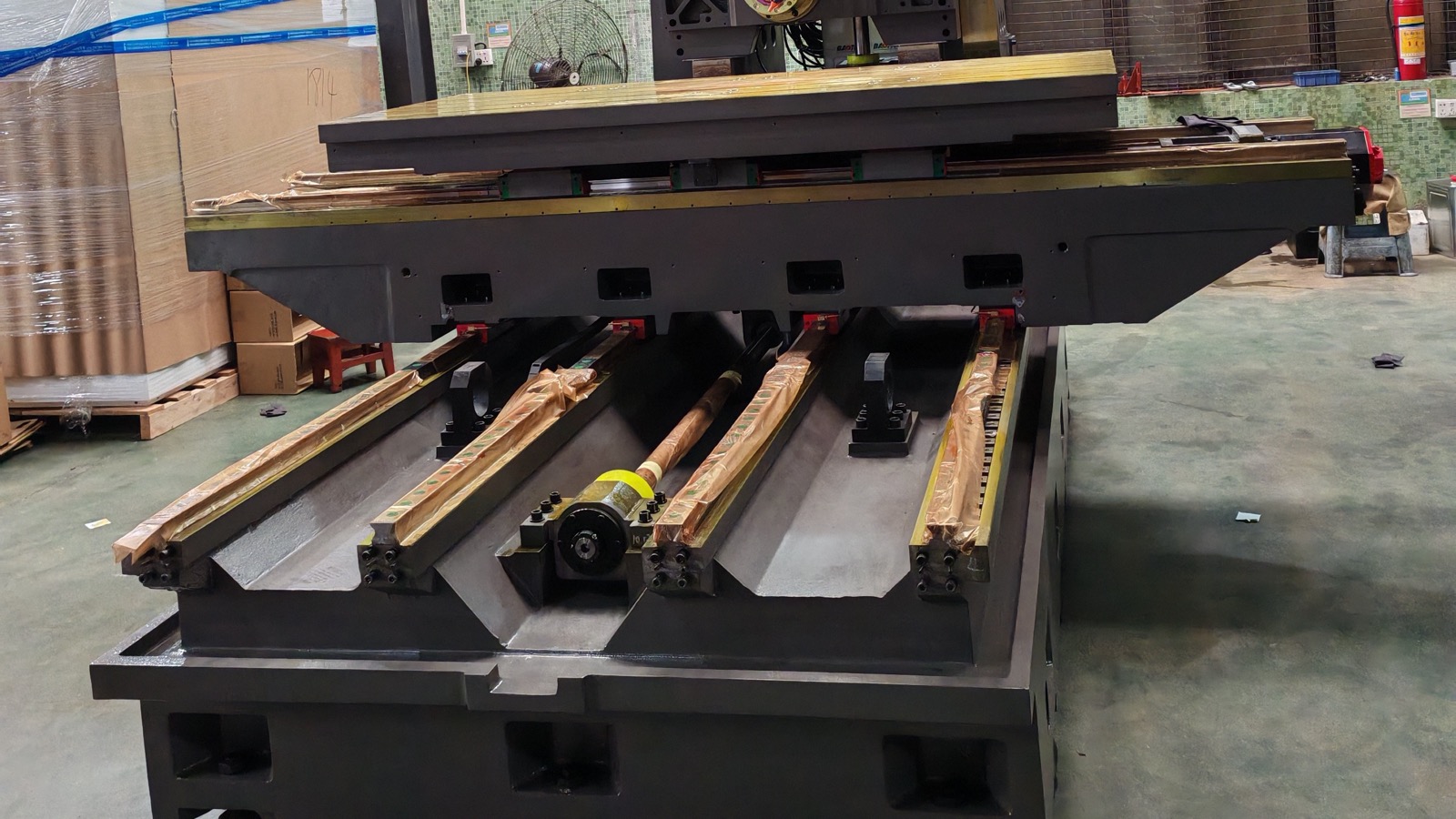
Cope’s list for stainless starts with the structure: heavy, well-built machines on a solid casting, solid ways, and large ballscrews that hold the table still while it cuts. Any flex lets the edge back off and rub, and rubbing is exactly what work-hardens 316.
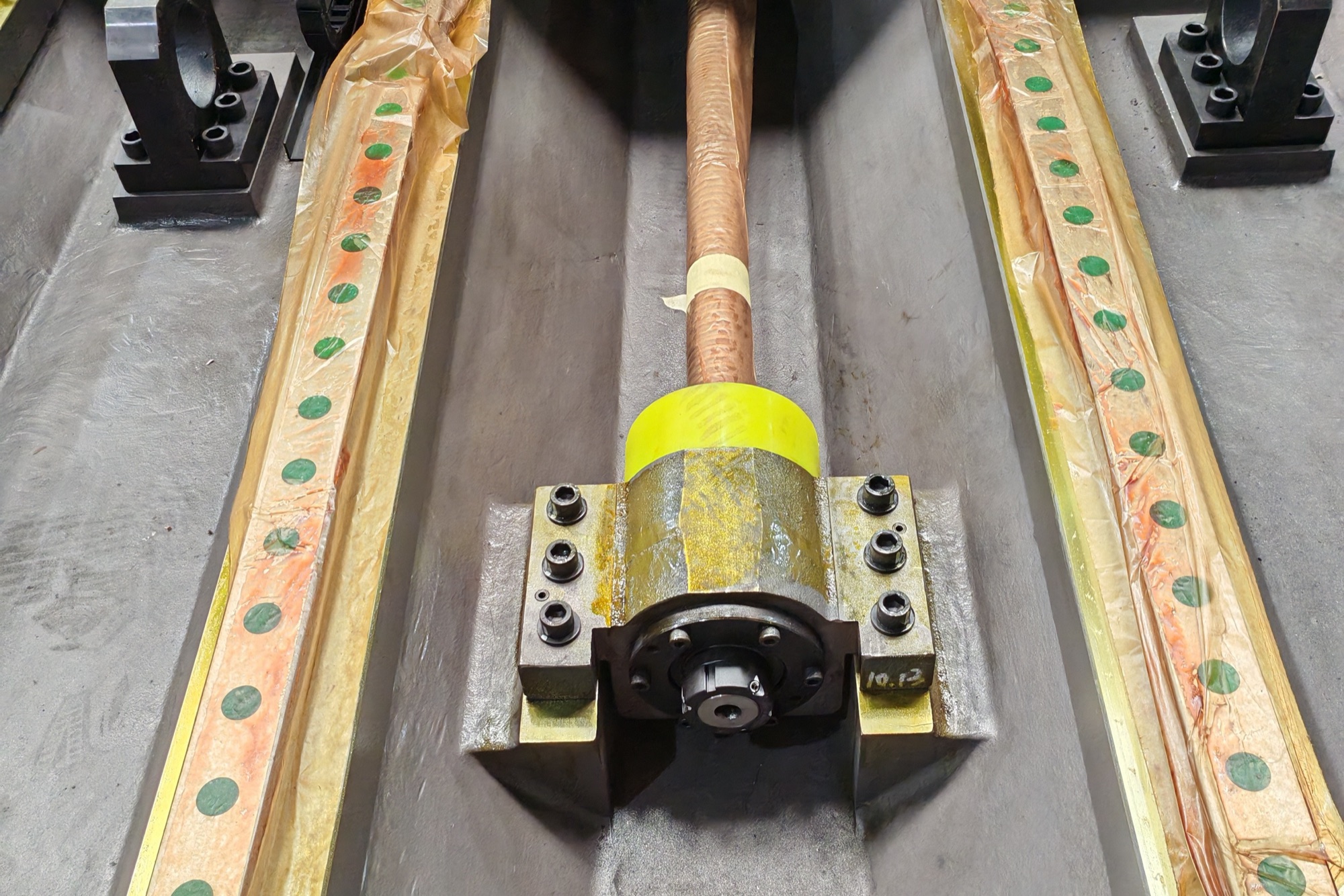
Not everyone frames it as box ways versus linear rails. In the same article, Takumi’s Mark Gilmore noted that roller-type linear rails are replacing box ways in many designs to get rigidity and speed together. Either way, the point is the same: the structure has to be built for steady heavy cuts, not only for fast moves.
2. Torque at low spindle speed
Low cutting speed with a heavy feed means the spindle spends its time at the low end of the rpm range, pulling hard. That’s where a belt-driven spindle earns its place over a high-speed direct-drive one, and where a bigger spindle motor matters more than a higher top speed.
Cope put it plainly: machines with adequate horsepower and ample torque cut stainless better and last longer doing it.
3. Coolant and chips that leave the cut
Heat and recut chips are what kill edges in 316. Coolant delivered through the spindle reaches the edge in drilling and deep pockets, where flood coolant struggles. Stringy stainless chips also need to leave the work zone and the machine, or they get recut and pack around the part.
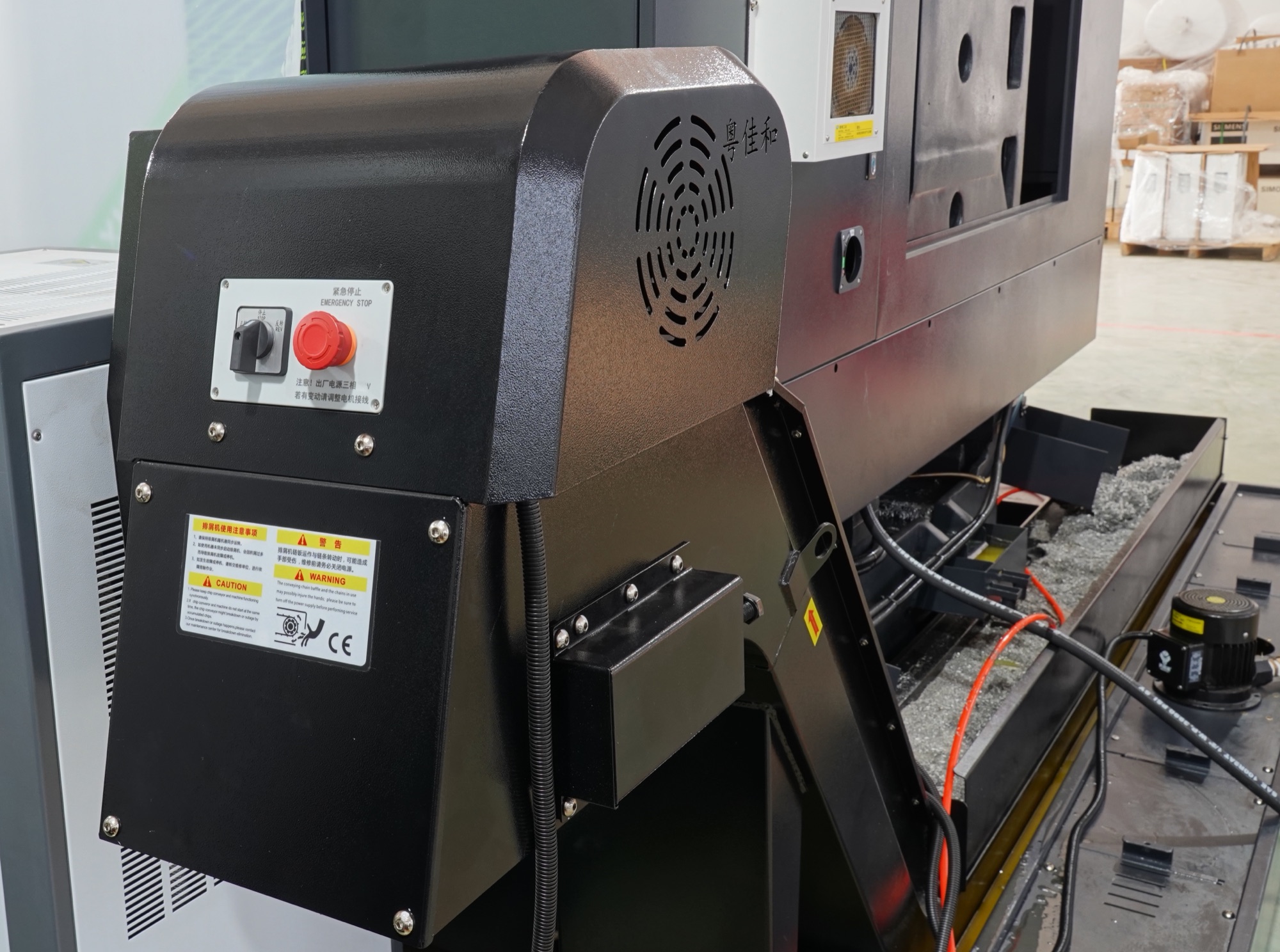
Coolant isn’t always the answer, though. In the same article, a Mitsui Seiki specialist described running some stainless grades dry with an air blast to clear chips, because hot tool coatings can crack under sudden cooling. Test both on your parts.
4. A way to catch a worn edge before it hardens the part
A dull edge doesn’t just cut badly in 316. It rubs, hardens the surface, and makes the next tool’s job harder. Sandvik’s advice is to avoid excessive flank wear for exactly that reason, and Seco’s Scott Lawrence noted that on-machine tool wear checks help prevent work hardening.
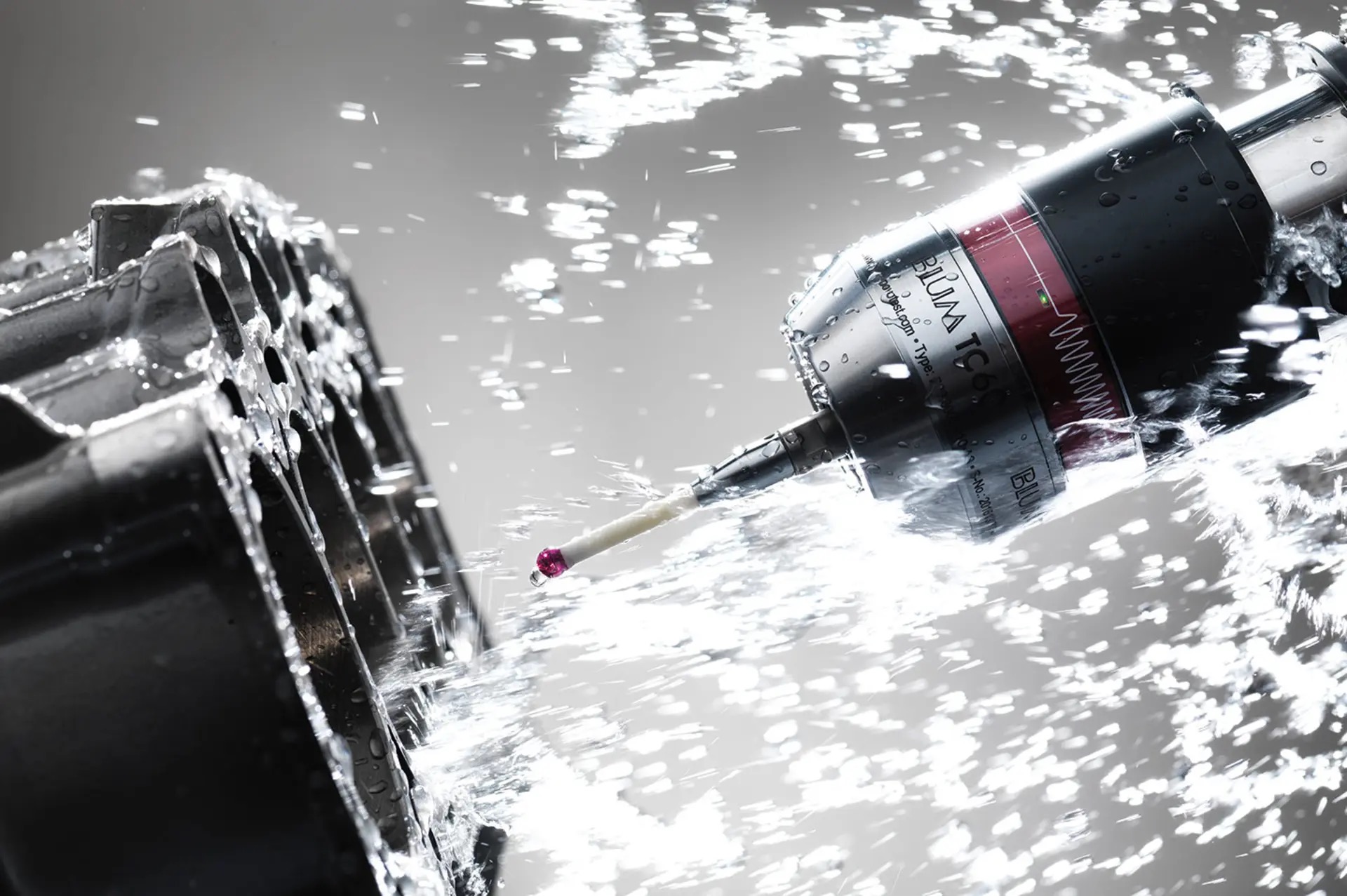
A tool setter can measure tool length and diameter between parts, and a spindle probe can check a finished feature before the next part starts. On a stainless job running for hours, that’s what tells you an edge is going before it costs you a batch.
When you don’t need a heavy machine
If 316 is an occasional job, small parts with light cuts, a lighter machine can do it with sharp tools and the right strategy. Cope said as much: lighter-duty machines can succeed with stainless, but if you cut it often, the right components give better results and a longer machine life. Buy for the work you do every week, not the hardest job you might quote once.
What we’d spec for regular 316 work
- An L-series machining center: linear rails on X and Y with a box way on Z, built for steel, stainless and cast iron
- The heavier machine body option where your parts and cuts are large
- A belt-driven spindle: BT40 at 8,000 or 10,000 rpm for most parts, BT50 for heavy roughing
- Through-spindle coolant, a chip conveyor and an oil mist collector, all available as options
- A tool setter and a workpiece probe, both available as options
Our machining centers can be configured this way. If you’re weighing taper size as well, our comparison of BT40 and BT50 goes into it.
Have a stainless part in mind? Send the drawing with the grade and batch size, and we’ll suggest a configuration for it.
FAQ
Is 304 easier to machine than 316? Usually a little. 316 adds 2 to 3% molybdenum for better corrosion resistance, and it’s generally rated harder to machine. Both work-harden, though, so everything above applies to 304 too.
Does 316L machine differently from 316? Not much. The L means low carbon, which mainly matters for welding and corrosion resistance. Plan the machine and the process the same way.
Sources
- Geoff Giordano, Taking Stainless Steel Machining to the Next Level, SME, January 2020 (quoting Hurco, Takumi, Mitsui Seiki, Sandvik Coromant and Seco Tools)