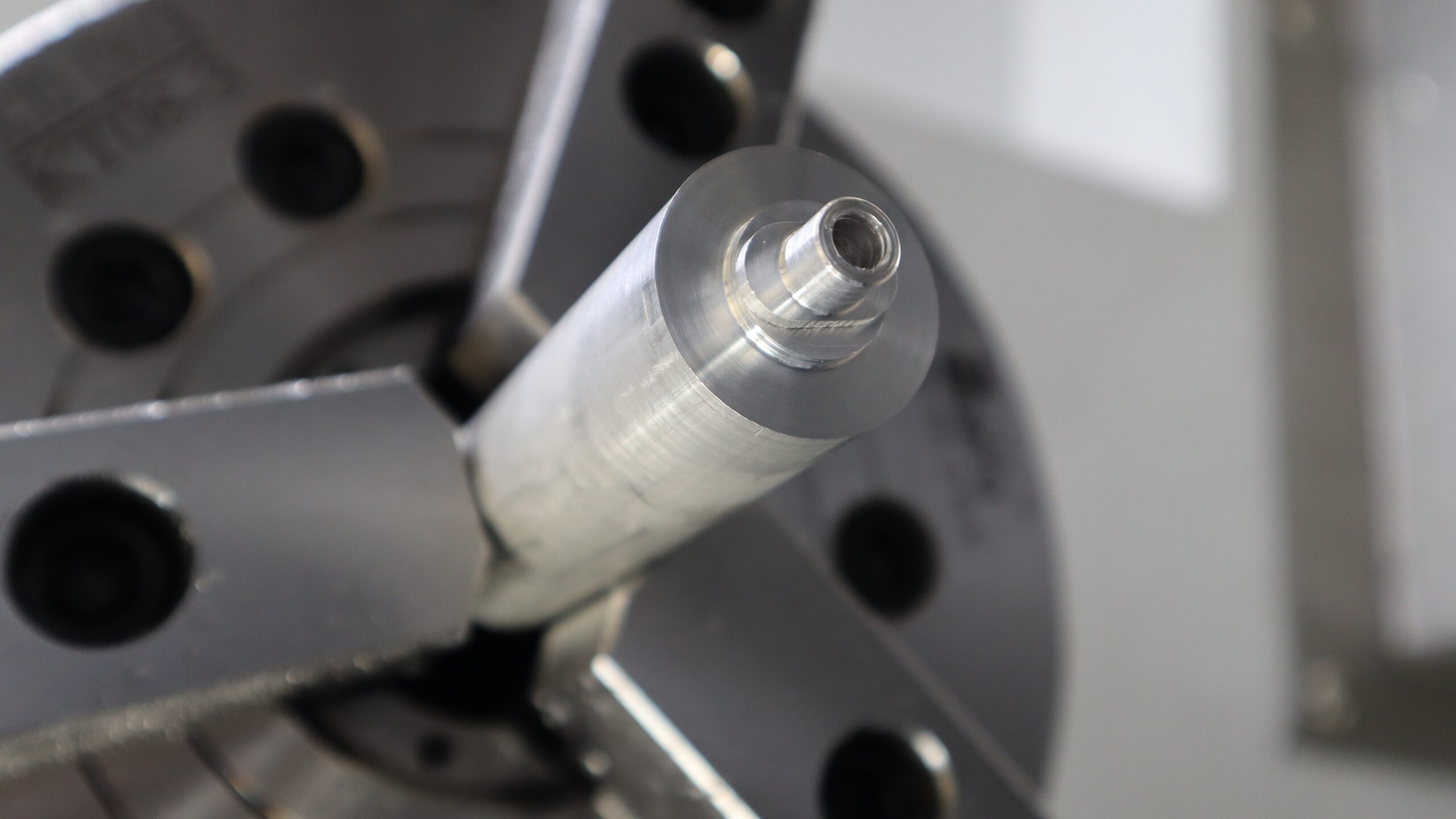
In liquid-cooled server racks, quick disconnect couplings let coolant lines be connected and separated with little fluid loss. For couplings built to the Open Compute Project's UQD specification, it sets the mating features and lists recommended end connections, but it doesn't tell you what size bar to buy for quick disconnect machining or how to hold the part.
When a drawing for a stainless coupling body comes in, start with the blank. Find the largest diameter, mark the bore and sealing faces that share a datum, and decide how the back of the part will be held. Those three answers tell you which lathe setup to trial.
Quick disconnect machining starts from the blank drawing
The UQD v2.0.0 specification covers the mating features in §7 and the connection ends in §7.5, and §12 lists the stainless grades, including 303, 304 and 316 families, that can be used for particular contact parts.
The nominal flow size describes the connection, not your stock. Bar size comes from the largest diameter on the drawing plus machining allowance, and the bar has to pass through the feeder, the spindle bore and the chuck. For a short, preformed blank, a chucking setup is the first thing to check.
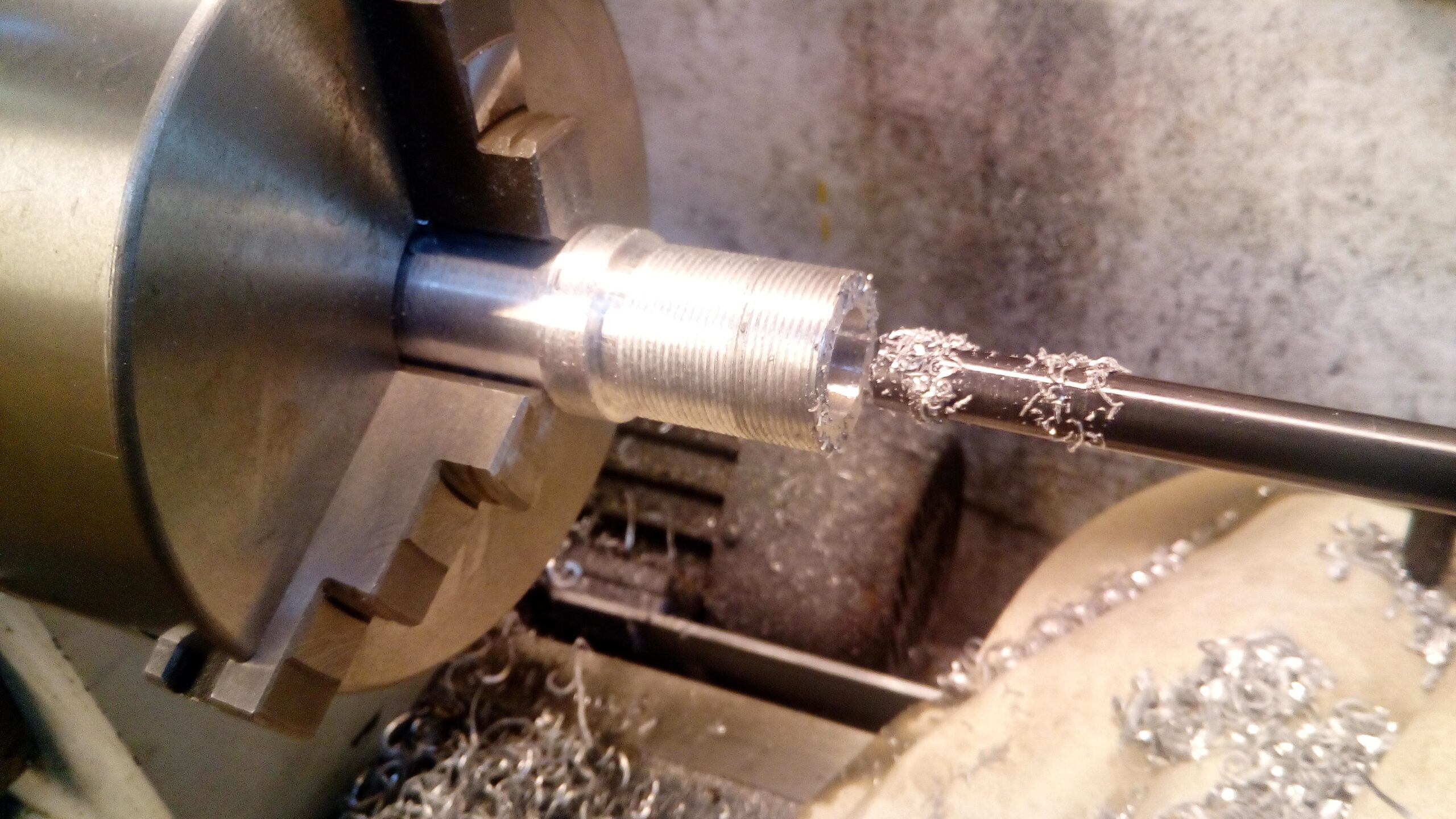
One production shop says it turns quick-disconnect bodies and other liquid-cooling fittings in grades including 303 and 316 stainless steel. The operations for a given body still come from its drawing. Turning the outside, drilling and boring the center, grooving, and cutting a thread or lead-in are likely operations, inferred from the shape of these parts. Use them to check tool reach and clamping before you settle the real route.
On an assumed body, the route could run like this: turn the outside, drill and bore the center and finish the sealing faces you can reach in one clamping, then turn the part around, or pass it to a sub-spindle, to finish the back.
Keep the quick disconnect bore and sealing faces on one datum
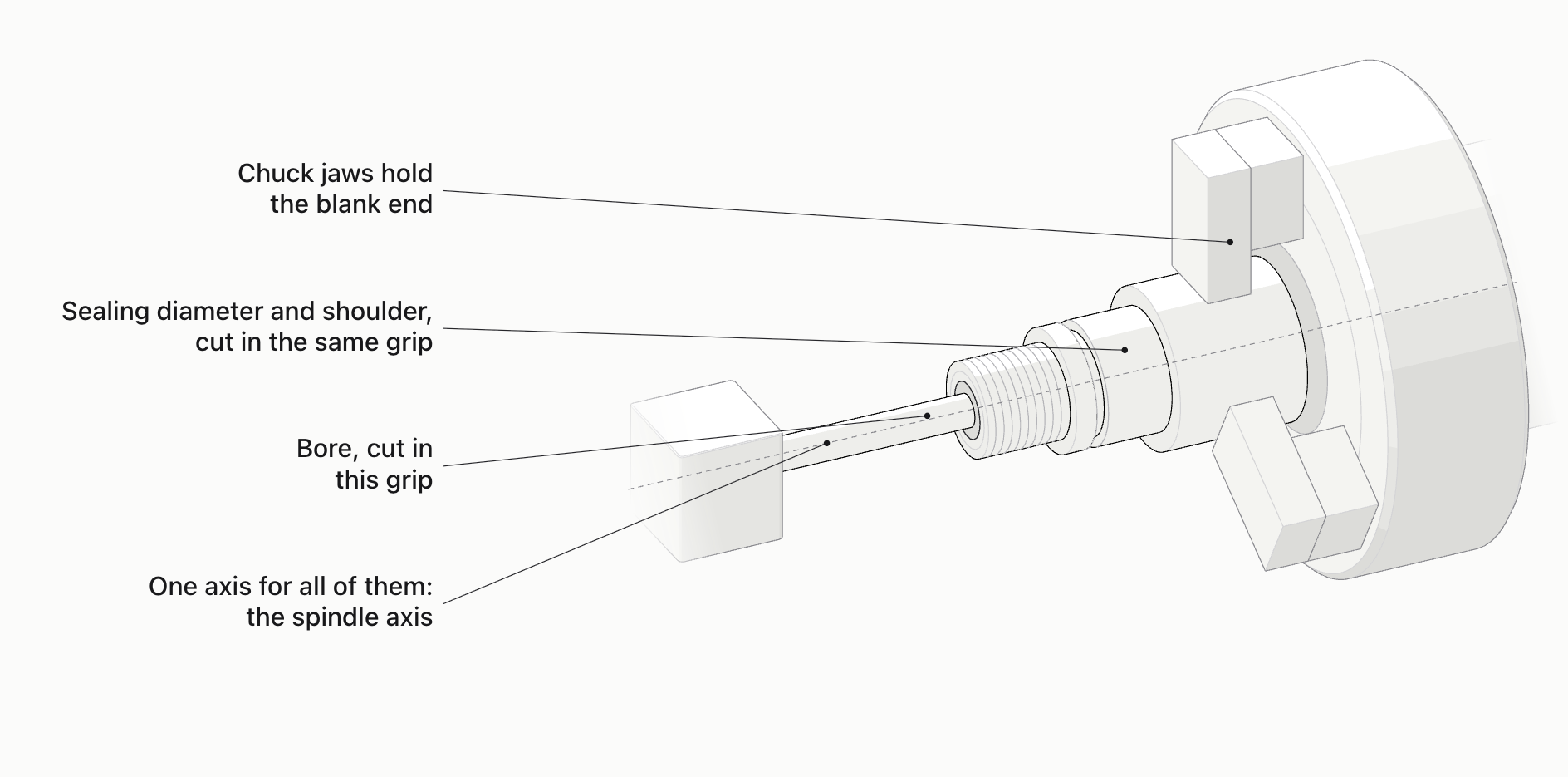
Where the drawing ties a bore, a shoulder and a sealing diameter to one axis, finish them in one grip if you can reach them all. A second grip adds its own centering and seating error, which can show up as runout between features that are each on size.
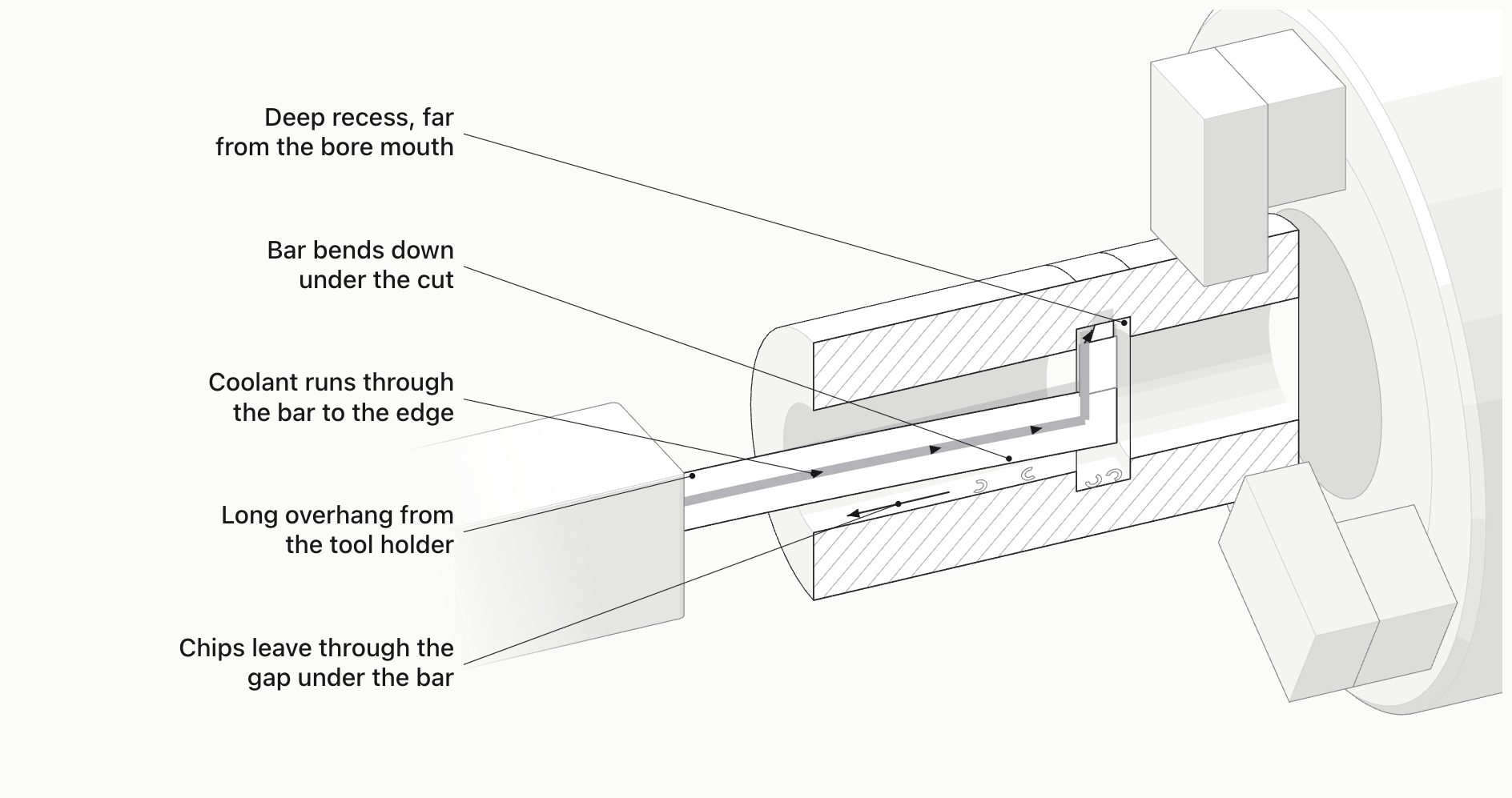
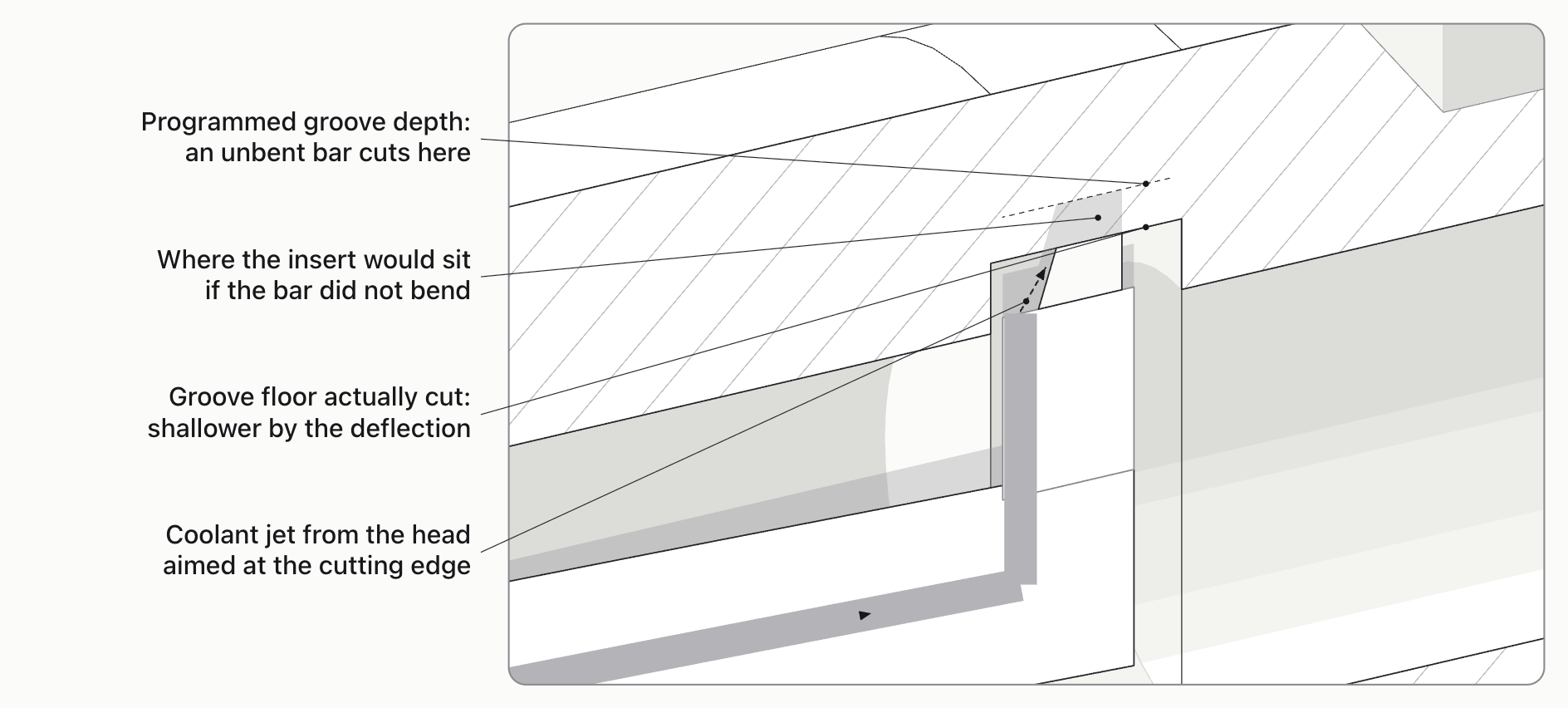
For a deep recess, check the boring bar's reach, its center height and where the chips can get out. A long overhang lets the bar deflect under the cut and changes the groove surface.
| Feature on the drawing | Lathe setup to check | What to check on the trial parts |
|---|---|---|
| Bore and sealing diameter share a datum | Finish both in one grip where the tools reach | Indicate one feature from the specified datum |
| Rear face or thread needs work | Re-grip in soft jaws, or hand over to a sub-spindle | Check rear size and runout after either second grip |
| Side hole or wrench flat | Live tooling, a Y axis if the geometry needs it, or a separate mill | Check position from the turned datum |
Decide how to hold the part for the back
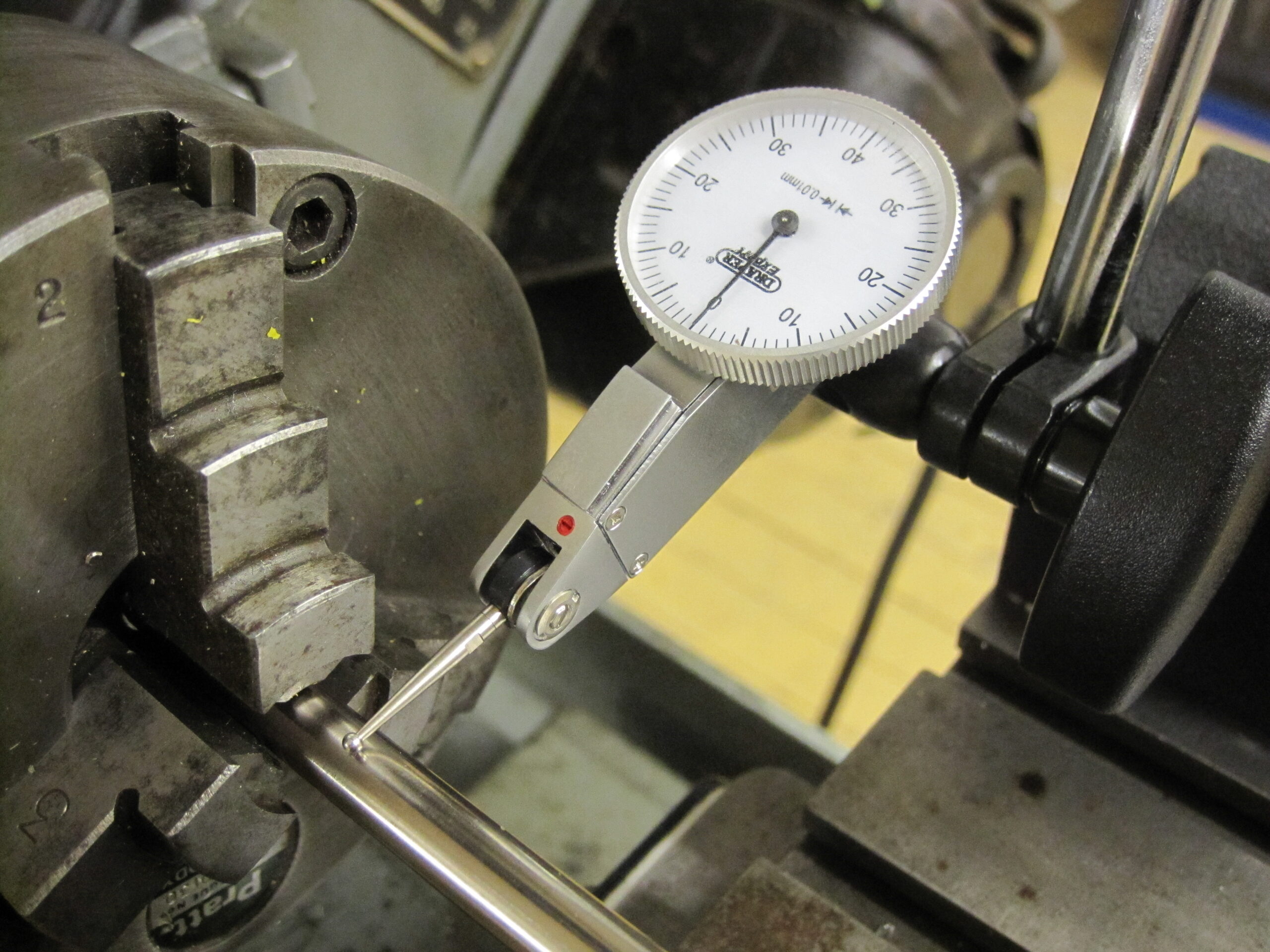
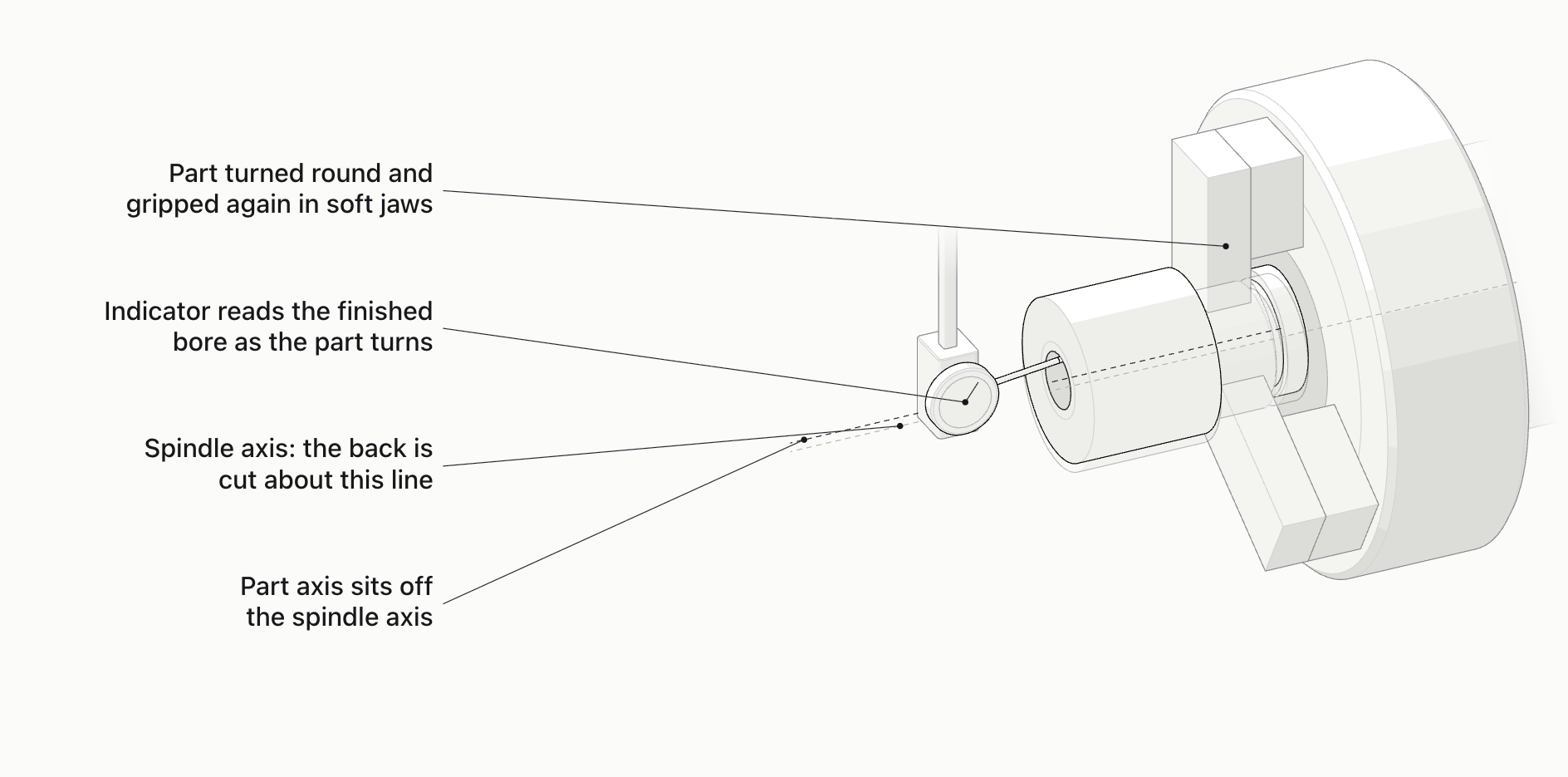
For a short run or a simple back face, the part can be re-gripped in soft jaws or a dedicated fixture, seated against a known face and indicated again on a finished datum surface the drawing specifies. Repeatability across several parts tells you whether that's good enough. If it stays in tolerance and the extra handling fits your schedule, a standard turret lathe with two operations is enough.
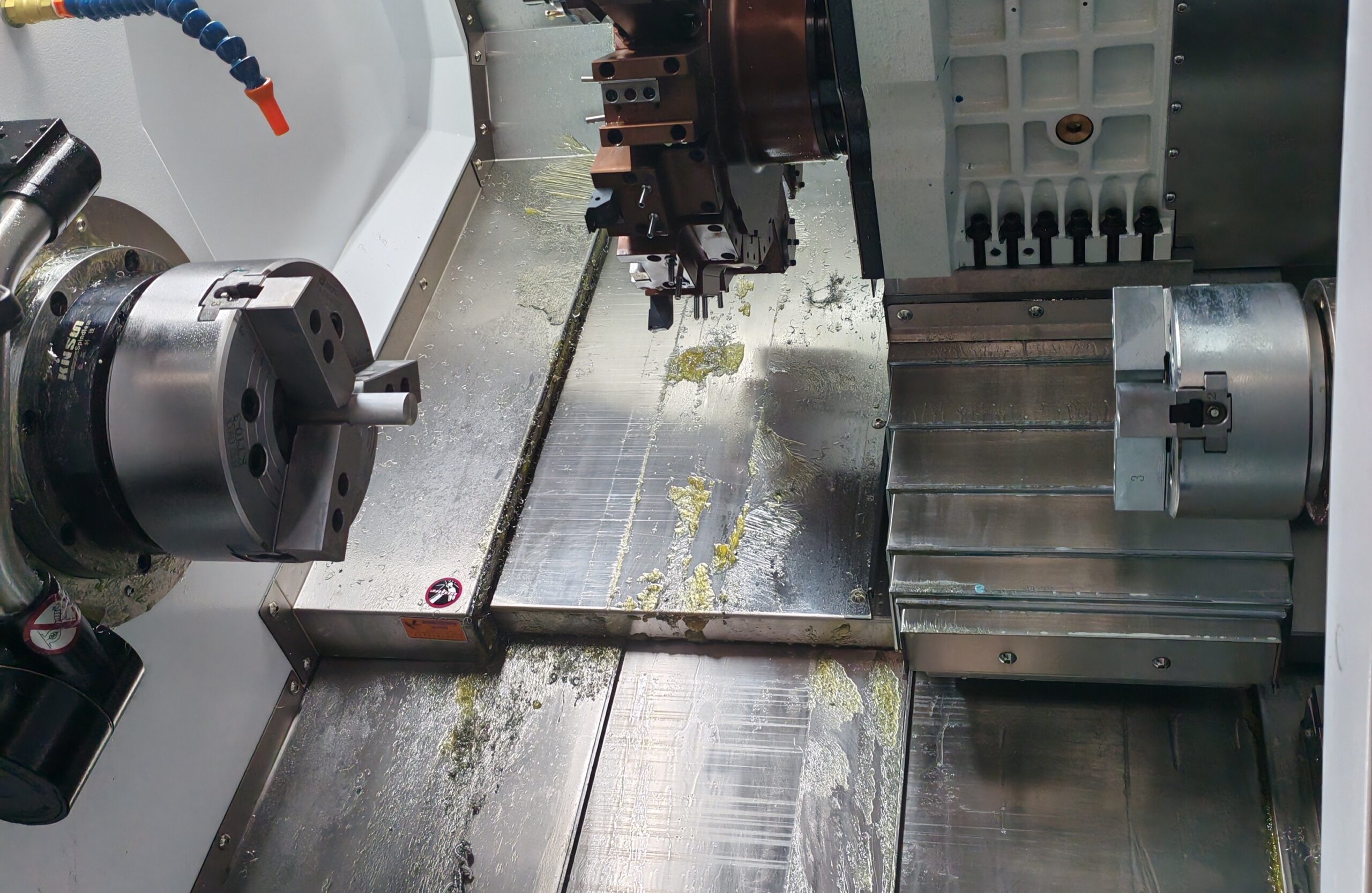
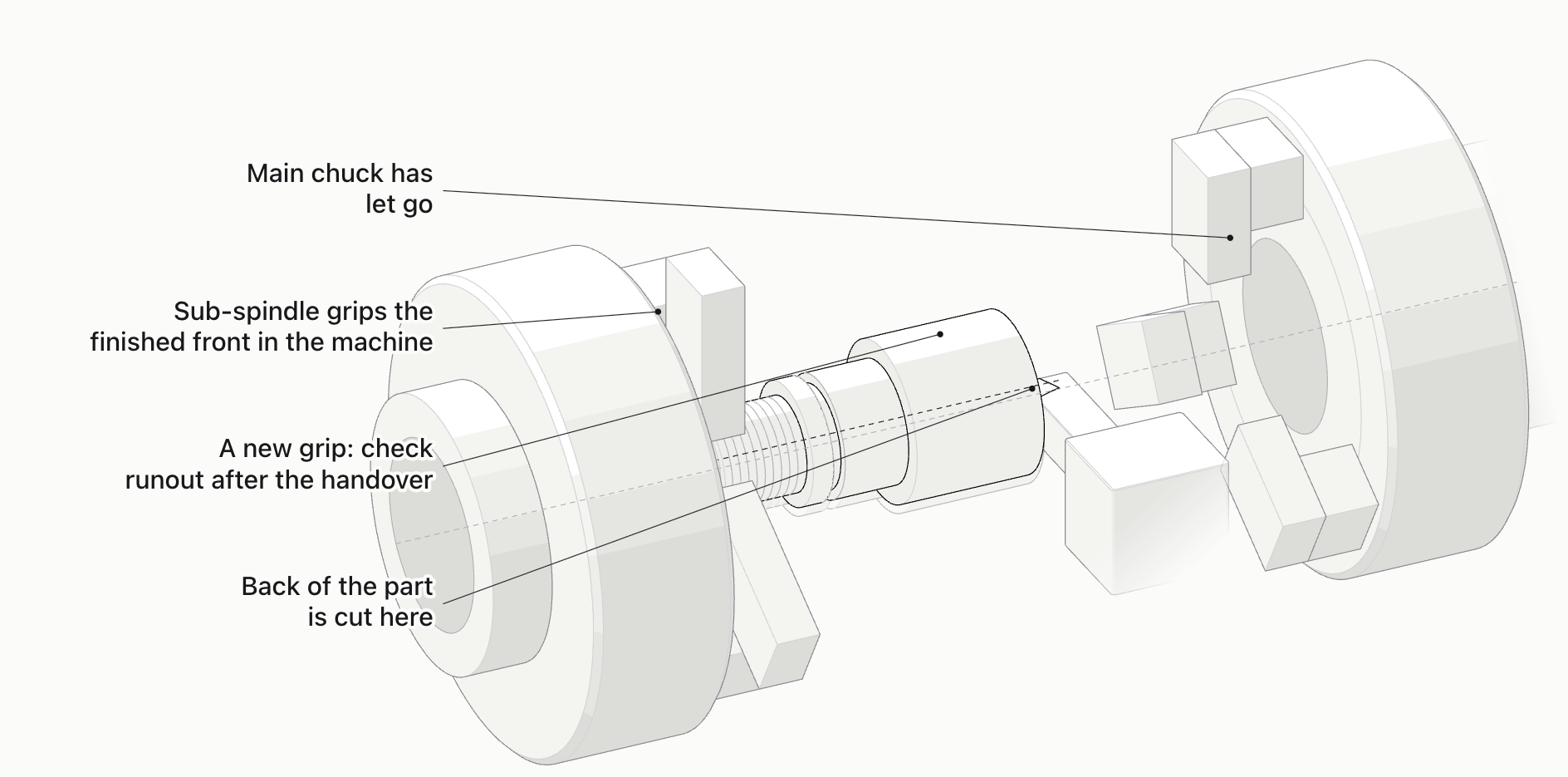
A twin-spindle CNC lathe can hand the part to its sub-spindle inside the machine and finish the back there. That route is worth a trial when the batch is large, there are several features on the back, or the front-to-back runout is tight. Check runout after the handover and look at the surface the sub-spindle grips. Use the same material lot and gauges for both trials, and compare time per good part, including handling and rework.
Swiss-type turning is another route the industry uses, for small, slender parts that need support close to the cut.
Check the sealing features before you judge throughput
In quick disconnect machining, measure parts from the start, middle and end of the trial. Look for burrs at the entrances, marks on the sealing faces and drift as the tool wears. Check that coolant reaches the cut and that chips clear the bore.
After that, the assembled coupling has to pass its own tests: OCP v2.0.0 §§8–10 cover performance, verification and testing across suppliers. Our O-ring groove guide explains why a groove that measures in tolerance and a seal that holds are separate questions.
How we configure a CNC lathe for quick disconnect machining
We build each CNC lathe around the job. When the back of a coupling body has to be finished in the same cycle, we'd look at a twin-spindle machine; when there are side holes or wrench flats, a live-tool turret or a Y axis. The chuck, turret, bar feeder, automatic door, tool setter and chip conveyor are then chosen one by one for your part, your stock and the way it's held.
Each lathe runs for 72 hours, is checked with a laser interferometer and makes a test cut before it ships.
If you're moving from soft jaws to an in-machine handover, bring the blank and finished drawings, the material, batch size and acceptance criteria to a configuration discussion. We'll recommend a configuration, estimate the cycle time and prepare a quote.
FAQ
Can I use the UQD nominal flow size to choose a bar diameter?
No. Use the blank drawing. The nominal flow size describes the connection. Bar diameter comes from the largest diameter you'll turn plus machining allowance, checked against the bar feeder, spindle bore and chuck. The length the chuck needs to grip belongs to the blank length, along with the cut-off and facing allowance.
When is a twin-spindle lathe worth a trial?
When the back of the part takes enough work to justify the handover, or when front-to-back runout is hard to hold with a second fixture. Measure parts after the handover before you commit to the route.
What still needs checking after the turned dimensions pass?
The assembled coupling's sealing and connection performance, under the specification it's built to. A passing size check confirms the machined features. Assembly and cycling tests show how the whole coupling behaves in use.