Precision manufacturing has long struggled with a profitability “forbidden zone.” In sectors like aerospace and medical devices, high-mix, low-volume (HMLV) production is challenging. These intricate parts, often in hard-to-machine alloys, demand small quantities, making mass production impractical. Traditionally, multi-machine models create inefficiencies, requiring many setups and skilled technicians.
However, the CNC turning-milling compound machine transforms this equation. By combining processes into a single “Production Island,” it opens a profitable path for complex parts.
1. The “Inefficiency Trap” of Traditional Sequential Production
To understand why the CNC turning-milling compound machine is revolutionary, we must first analyze the “profit leaks” in traditional sequential manufacturing for high-value parts.
The Nightmare of Multiple Setups
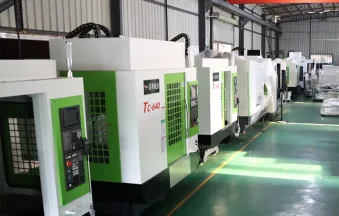
In a traditional shop, a complex part might start on a CNC lathe to form its cylindrical profile, then move to a 3-axis mill for slotting, and finally to a 5-axis center for complex surfacing.
-
Cumulative Error: Every time a part is “unclamped” from one machine and “re-clamped” on another, a tiny amount of positional accuracy is lost. To compensate, technicians must spend hours on “zeroing” and alignment.
-
The Lead-Time Paradox: In a sequential workflow, a part that requires only 2 hours of actual cutting time might take 2 weeks to move through the factory due to queue times and setup changes.
The Burden of Specialized Fixturing
Low-volume parts often require custom jigs. If you are only making 10 units, the cost of designing and machining three different sets of fixtures for three different machines often exceeds the value of the order itself. This is the definition of “uneconomic” production.
2. The “Production Island” Concept: Integration as a Solution
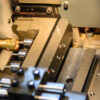
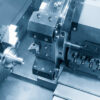
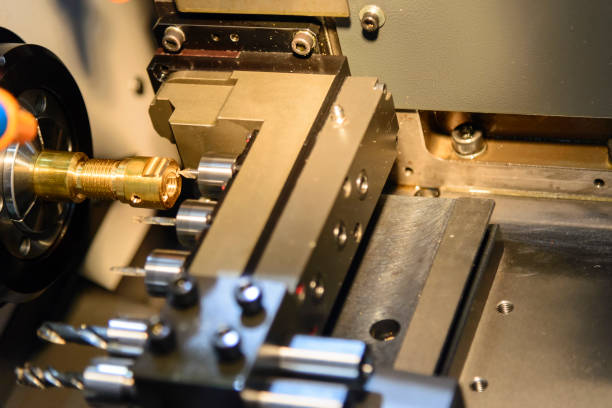
The CNC turning-milling compound machine replaces the linear assembly line with an autonomous “Production Island.” It is a multi-tasking powerhouse where the distinction between “turning” and “milling” disappears.
Total Process Integration
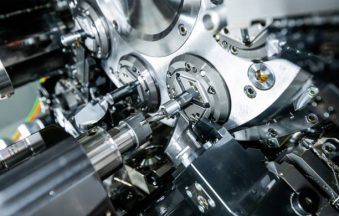
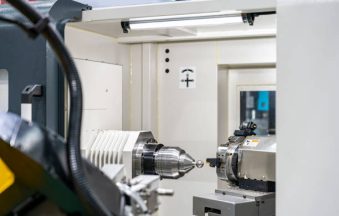
A compound machine features a main spindle (turning), a sub-spindle (for back-working), and a B-axis milling head equipped with an Automatic Tool Changer (ATC).
-
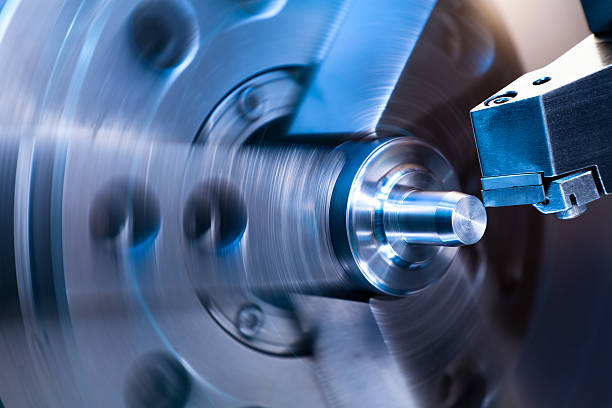
Done-In-One: The part enters as a raw bar or blank and leaves as a finished component. Turning, milling, drilling, tapping, and even gear hobbing are performed in a single continuous cycle.
-
Eliminating Internal Logistics: By removing the need to move parts between departments, the risk of damage, loss, or “work-in-progress” (WIP) stagnation is reduced to zero.
B-Axis Versatility: The Key to Complexity
The B-axis (a swiveling milling spindle) allows for 5-axis simultaneous or positional machining. This means that a complex aerospace valve or a dental implant with organic curves can be machined from any angle without specialized angle-head attachments.
3. Economic Salvation for High-Value, Small-Batch Orders
For the manufacturer, the CNC turning-milling compound machine is a tool for “Economic Agility.” It makes the “Impossible Batch” profitable.
-
Drastic Reduction in Set-Up Costs: Since the part stays in the same chuck(s) for the entire process, the “Setup-to-Run” ratio is flipped. What used to take five setups now takes one. This makes a batch of 5 units nearly as efficient to produce as a batch of 500.
-
Reduced Labor Dependency: In a traditional shop, you might need a lathe operator, a mill operator, and a setup specialist. A compound center requires only one high-level programmer/operator, allowing businesses to thrive despite the global shortage of skilled machinists.
-
Space Efficiency: One CNC turning-milling compound machine often replaces the footprint of three traditional machines. For high-rent industrial zones, this maximizes “Revenue per Square Meter.”
4. Case Studies: Where the “Dawn of Profitability” Breaks
Aerospace: Special Alloy Manifolds
Aerospace parts often use Inconel or Titanium. These materials are expensive, and mistakes are costly. The compound machine’s ability to perform heavy turning and high-speed milling in one setup ensures that the critical relationship between the bore and the mounting holes is “perfect by design,” eliminating scrap rates that previously ate into profits.
Medical: Orthopedic Implants
Bone screws and joint replacements require a mix of high-precision turning (the thread) and complex milling (the head and attachment points). A turn-mill center can use its sub-spindle to grab the screw, allowing for the back-end to be finished automatically, delivering a burr-free part ready for sterilization.
5. Future-Proofing the Machine Shop: The Path to “Autonomous” Manufacturing
The CNC turning-milling compound machine is also the perfect platform for automation. Because the machine handles the entire process, it is much easier to integrate with a simple bar feeder or a small cobot (collaborative robot) for “lights-out” manufacturing.
Even for the smallest batch, once the program is verified, the machine can run unattended. This “unattended time” is the ultimate profit multiplier, allowing the shop to earn money while the staff focuses on the next complex creative challenge.
6. Conclusion: Turning “Industrial Art” into a Sustainable Business
High-value, complex parts should be the crown jewels of a machine shop, not its financial burden. The “uneconomic” nature of small-batch manufacturing was a limitation of the machinery, not the ambition of the maker.
With the CNC turning-milling compound machine, we have found the bridge. We combine the capabilities of an entire machine shop into one precise unit. This breakthrough empowers manufacturers to tackle the toughest designs with ease. Now, “Industrial Artworks” represent more than technical skill—they drive profitability. This technology forms the backbone of modern, profitable enterprises.