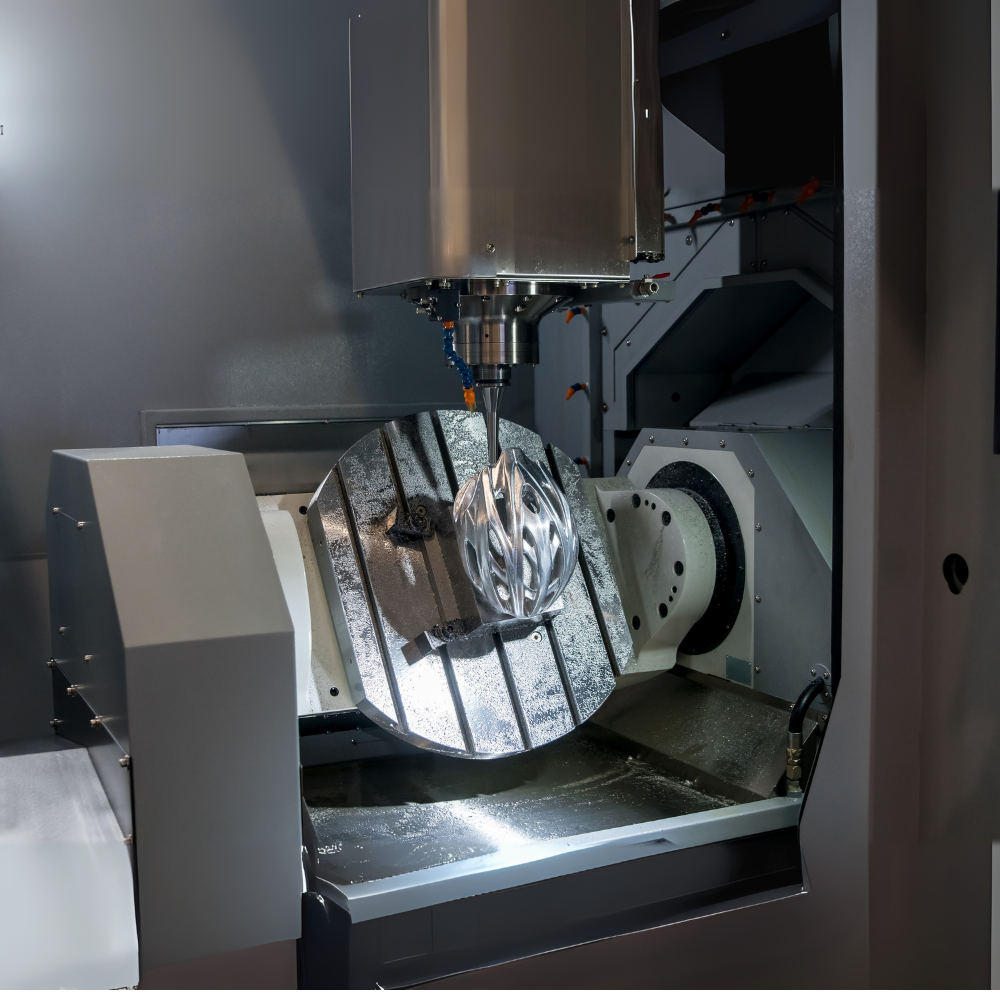
Buying a 5-axis CNC machining center is a process decision, not just a specification comparison. Two machines can appear similar on a quotation while offering very different access to the part, tool length capability, workholding options, automation potential, control features, and acceptance support.
The best starting point is not a list of machine brands or spindle speeds. It is a clear description of the parts you want to produce and the operations you want to combine.
1. What Parts Will the Machine Produce?
Provide representative drawings, 3D files, materials, finished dimensions, weight, and annual volumes. Identify the features that currently require multiple setups, special fixtures, long tools, or manual intervention.
2. Do You Need 3+2 Positioning or Simultaneous 5-Axis Machining?
Some parts benefit from indexing to multiple angles and machining each face in a fixed position. Others require coordinated motion across multiple axes to create complex surfaces. Clarifying this early affects the machine architecture, control capability, CAM requirements, and operator training plan.
3. What Workpiece Envelope and Weight Must Be Supported?
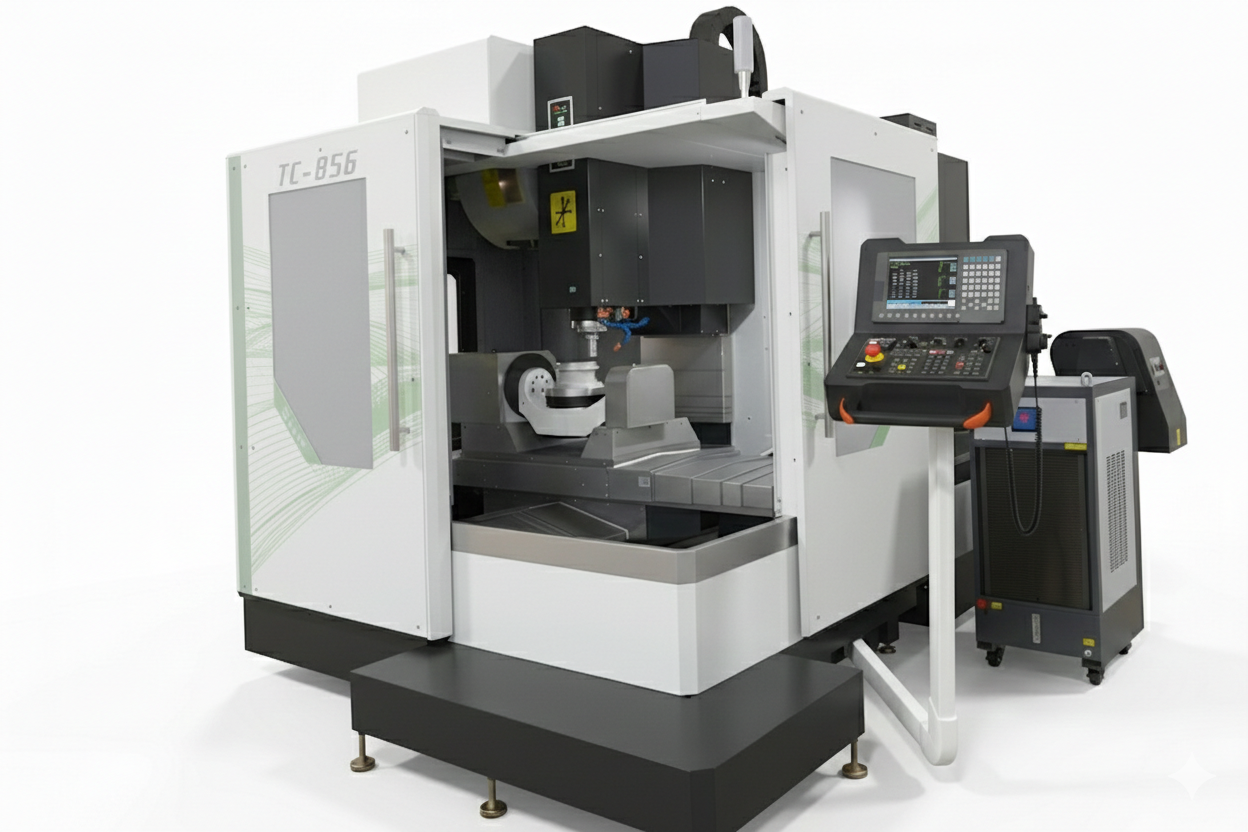
Consider the part, fixture, clamping hardware, and loading method together. A nominal table size is not enough. You also need to understand accessible machining space, rotary-axis clearance, tool approach, and allowable load for the full setup.
4. Which Machine Architecture Fits the Part?
Different 5-axis architectures offer different strengths in accessibility, rigidity, part size, and automation layout. Instead of asking which design is universally better, ask which design gives the tool the right approach to your critical features while leaving sufficient room for fixtures and chip evacuation.
5. What Materials and Cutting Operations Are Required?
List the materials, stock allowance, cutter types, deep cavities, finishing requirements, and expected cycle times. This informs the spindle, coolant, toolholding, and structural requirements that should be considered.
6. How Many Tools Are Needed?
Count tools for roughing, finishing, drilling, tapping, probing, backup tools, and any specialty cutters. Tool capacity alone is not the full answer; tool length, diameter, holder type, and changeover approach also matter.
7. What Accuracy and Inspection Method Apply?
Define critical tolerances, surface requirements, datum strategy, and how parts will be inspected. Ask the supplier how acceptance will be structured for a representative part or test piece. Do not rely on a single general accuracy statement without linking it to the process.
8. What Workholding Is Needed?
Five-axis capability can be limited by poor fixture access. Review whether the workholding allows the spindle to reach the required features without unnecessary re-clamping. Include hydraulic, pneumatic, zero-point, or custom-fixture needs in the quotation discussion.
9. Which Control, CAM, and Programming Resources Will Be Used?
Confirm compatibility with your preferred control system and CAM workflow. Consider post-processor availability, collision avoidance, simulation, probing cycles, training needs, and who will support first-part programming.
10. Is Automation Planned Now or Later?
If the machine may later be paired with pallet handling, robot loading, or material storage, include that plan in the layout review. Retrofitting can be possible, but early planning avoids unnecessary constraints.
11. What Should Be Included in Factory Acceptance?
Define the test conditions before purchase. This may include a representative material, part geometry, cutting demonstration, measurement method, documentation, and agreed acceptance criteria. A clear acceptance plan protects both buyer and supplier.
12. What Support Is Required After Installation?
Ask about installation scope, commissioning, training, remote support, spare parts, service response process, manuals, and maintenance recommendations. The right machine should be supported by a realistic implementation plan.
Compare Quotes on the Same Basis
Use one requirement sheet for every supplier. Mark which items are included, optional, excluded, or still open. The comparison should cover the full solution: machine, control, tooling, workholding, probing, chip and coolant management, automation interface, acceptance, training, delivery, and support.
Prepare a Better 5-Axis RFQ
Before requesting quotes, send the supplier your representative part information, material, volume, target tolerances, process goals, existing CAM environment, available floor space, electrical requirements, and target timeline. The clearer the input, the more useful the proposal will be.
CHANSIN can review part drawings and project requirements to help identify the machine category, configuration questions, and information needed before a final 5-axis proposal is compared.
Frequently Asked Questions
What is the first thing to define before buying a 5-axis machine?
Define the representative parts, materials, critical features, target volume, and process goals before comparing machine specifications.
Do all 5-axis machines suit the same parts?
No. Machine architecture, workpiece access, fixture clearance, axis arrangement, spindle configuration, and automation needs can change which option fits a part family.
What should be included in a five-axis factory acceptance plan?
Define the test material, representative geometry, cutting scope, measurement method, documentation, and mutually agreed acceptance criteria before purchase.
Explore the CHANSIN 5-axis machining center range or contact CHANSIN with your part requirements.