A shop owner shopping for a bigger mill put it better than most spec sheets do. There were plenty of 40-taper and 50-taper machines on the market. His question: will the rest of the machine actually use the bigger taper, or will I end up running it like a 40-taper anyway?
That’s the right question. A BT50 taper only pays off when the spindle, the head, the column and the guideways behind it are built for heavy cuts. On a machine that isn’t, you get the downsides of BT50 (slower spindle, heavier tools, pricier holders) without the stiffness you paid for.
Here’s the short version. Choose BT40 if most of your work is aluminum and small to mid-size steel parts, and you care about spindle speed and cycle time. Choose BT50 if heavy roughing in steel or cast iron, big face mills or long boring bars are everyday work, and buy it on a machine built around it.
BT40 and BT50 side by side
| BT40 | BT50 | |
|---|---|---|
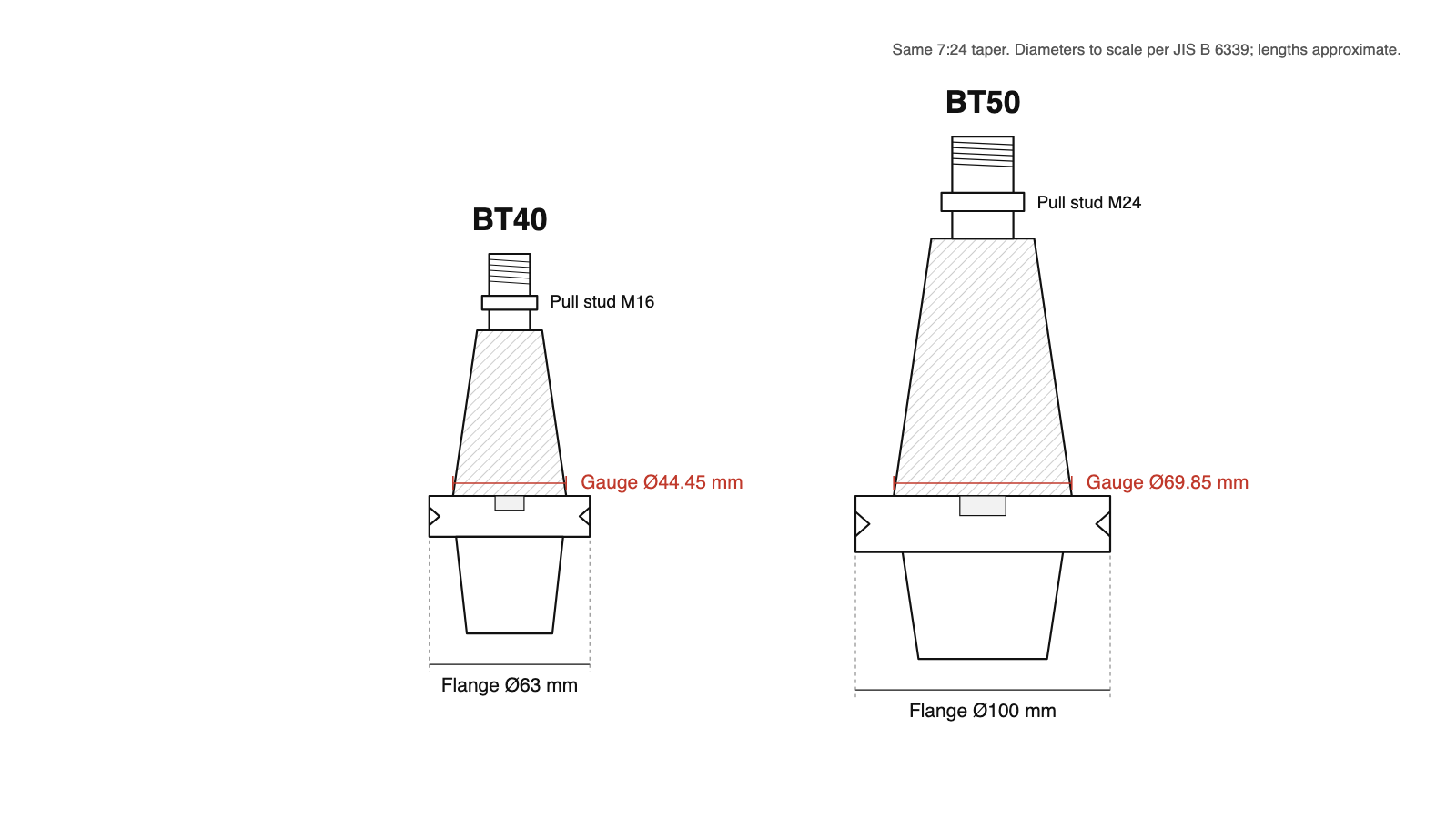
| Gauge diameter | 44.45 mm | 69.85 mm |
| Flange diameter | 63 mm | 100 mm |
| Pull stud thread | M16 | M24 |
| Taper | 7:24 | 7:24 |
| Spindle speed on our machines | 8,000 to 12,000 rpm | 6,000 to 8,000 rpm |
| Spindle motor on our machines | 7.5 to 11 kW | 15 to 18.5 kW |
| Best at | Aluminum, small tools, high speed, frequent tool changes | Heavy roughing, big cutters, long reach, steel and cast iron |
| Tooling | Lighter, cheaper, huge choice | Heavier, more expensive per holder |
Both are defined by the Japanese standard JIS B 6339 (often still called MAS 403); HAIMER’s BT holder page lists the standard, and the dimensions above follow Tool Holder Exchange’s BT reference. The speed and power rows are our own catalog figures.
What the bigger taper actually buys you
Look at the drawing at the top. BT50 doesn’t just have a bigger number. The taper is wider, the flange is bigger and the pull stud is a heavier thread. That means more contact area between holder and spindle, and a connection that resists bending when the cutter is pushed sideways.
Side load is where it shows. A 100 mm face mill taking a full-width pass in steel, or a boring bar hanging well out of the holder, puts a bending load right at the taper. That’s the work BT50 is built for. A 6 mm end mill in aluminum puts almost none, and there a bigger taper buys you nothing.
What BT40 gives you back
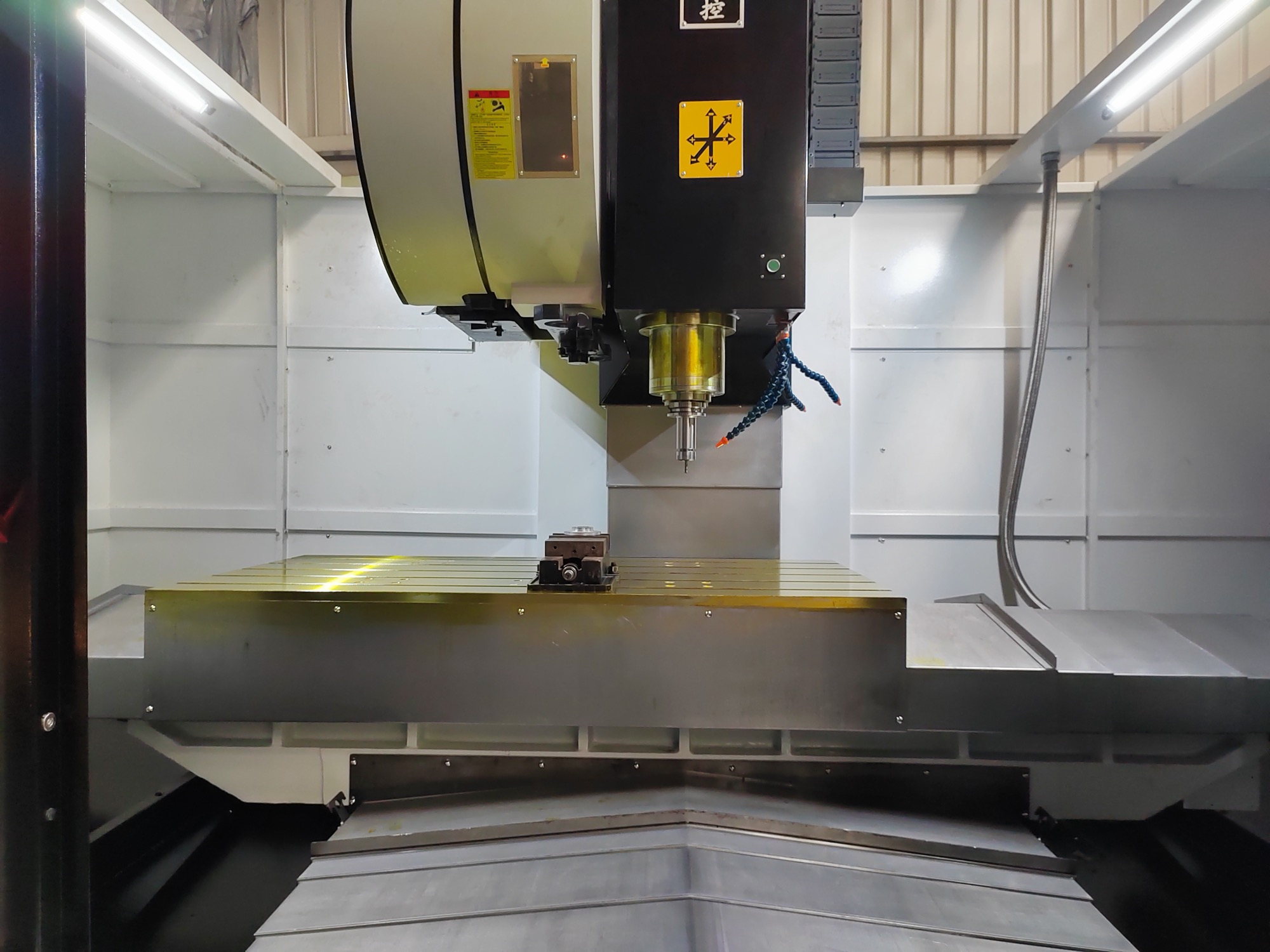
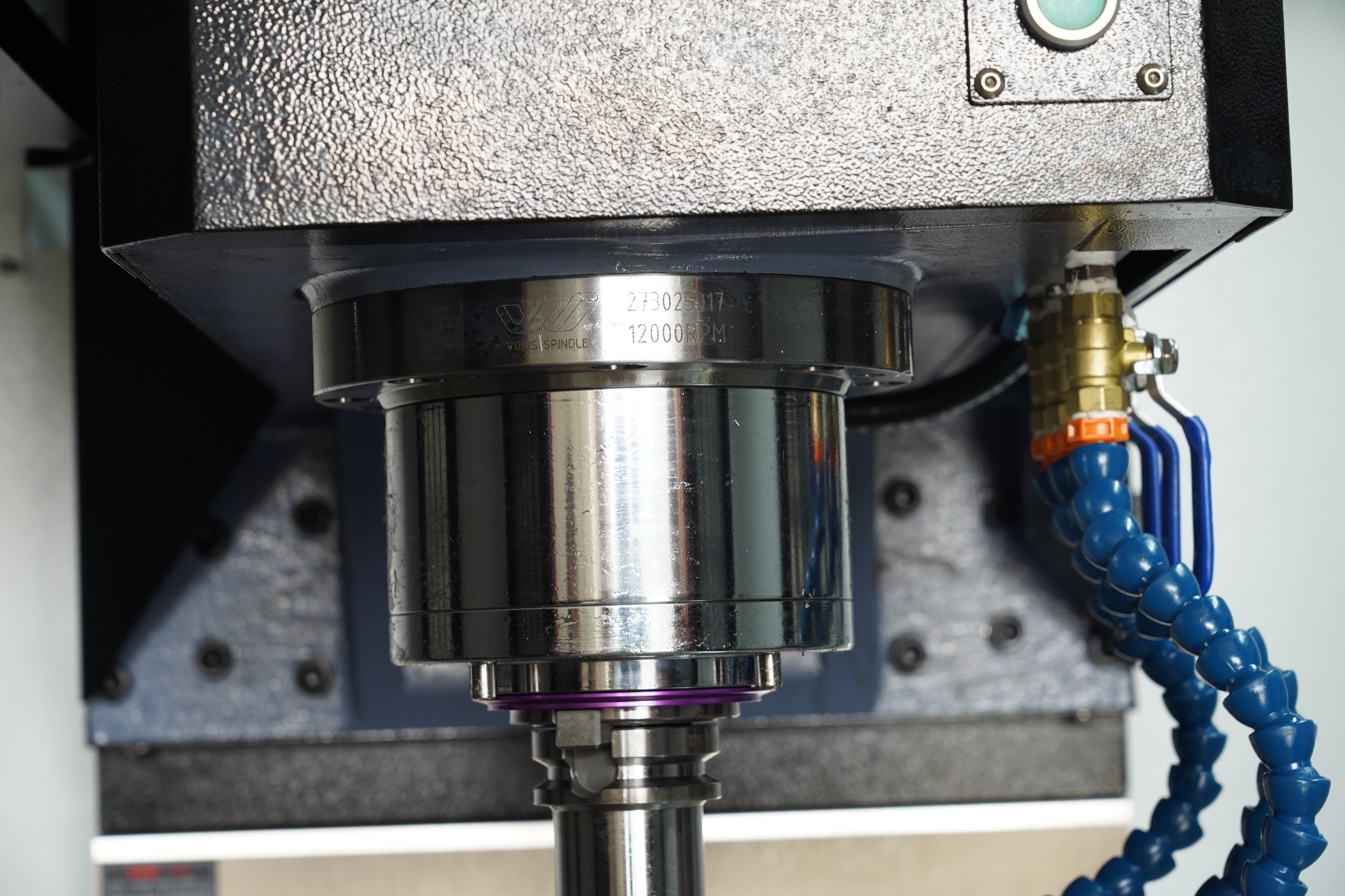
Speed, mostly. A smaller, lighter holder lets the spindle run faster and the tool changer move quicker. HAIMER describes the BT interface as primarily suited to spindle speeds up to 12,000 rpm, and that’s roughly where our BT40 machines top out. Our BT50 spindles run 6,000 to 8,000 rpm.
On our BT40 machines you also pick the spindle to suit the work: 8,000, 10,000 or 12,000 rpm. Spindles from leading international makers are available as options.
That matters more than it sounds. Small drills, small end mills and finishing passes in aluminum need surface speed, and surface speed on a small tool means rpm. Run a 6 mm cutter on a 6,000 rpm spindle and it’s working well below the speed it was designed for.
Tooling cost is the other half. BT50 holders are bigger and heavier, and they cost more each. If you already own a rack of BT40 holders, collets and boring heads, switching to BT50 means buying all of it again.
The taper is one link in a chain
Back to the shop owner’s question. Cutting force goes from the tool into the holder, through the spindle and head, down the column, across the guideways and into the base. The weakest link sets the limit.
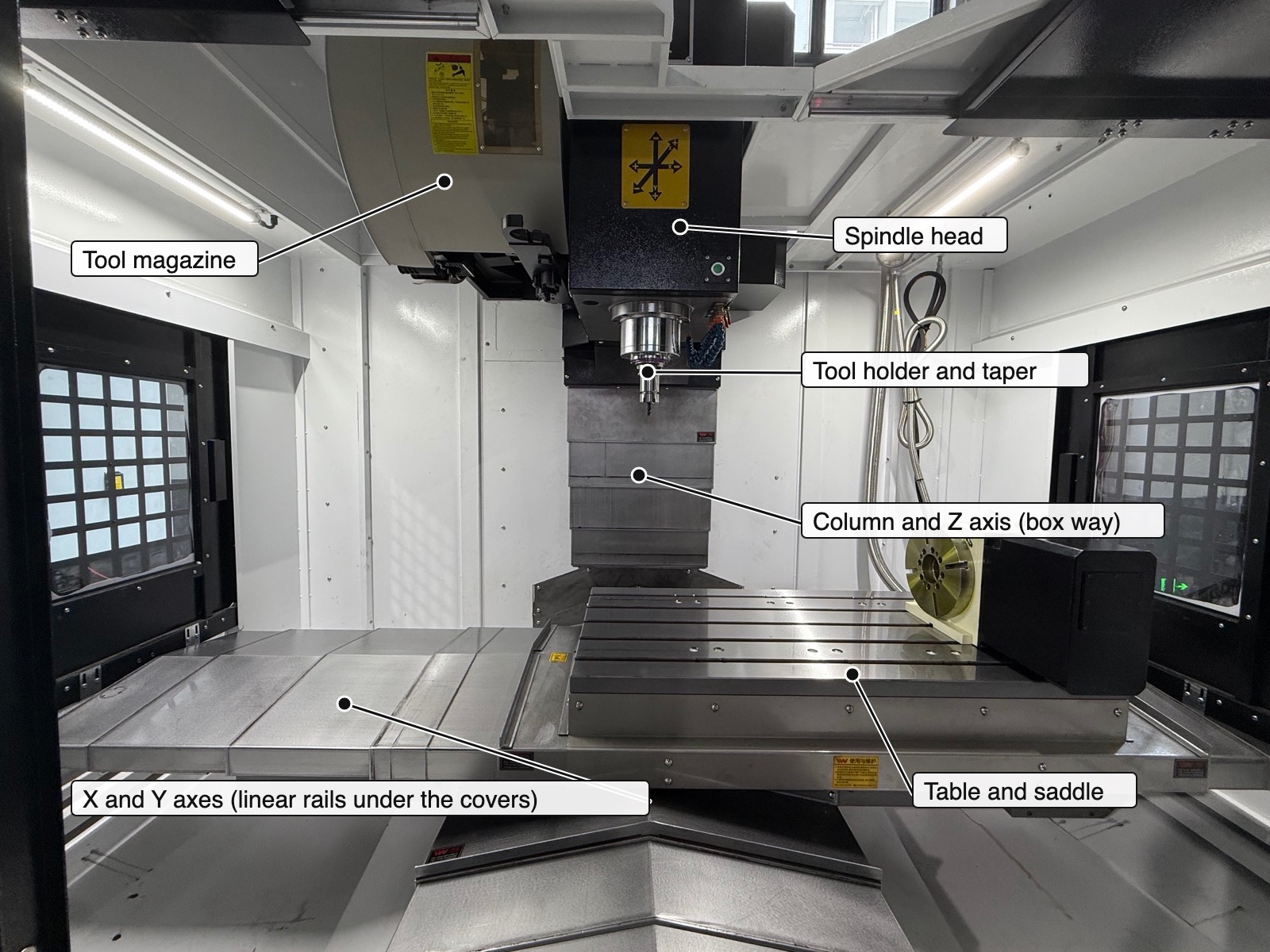
That’s why a BT50 version of a machine is usually a different machine. On our L1270 and L1380, which we build in both BT40 and BT50 versions, the BT50 version isn’t just a new spindle: it gets four Y-axis rails instead of two, plus its own motor, tool magazine, spindle and bed.
The larger L-series models, from the L1580 up, are BT50 only, with 15 to 18.5 kW spindles. There, the whole machine was sized for the bigger taper from the start.
The guideways matter too. Our L series runs linear rails on X and Y with a box way on Z for heavy cutting, while the V series uses linear rails on all three axes for speed. If you’re weighing that trade-off as well, our guide to linear guides vs box ways covers it in detail.
Choose BT40 if…
- Most of your parts are aluminum, or small to mid-size steel parts
- You run a lot of small drills, taps and end mills that need rpm
- Cycle time and tool-change time matter more than maximum metal removal
- You already own BT40 tooling you want to keep using
Choose BT50 if…
- Heavy roughing in steel or cast iron is daily work, not an occasional job
- You run big face mills, large indexable cutters or long boring bars
- Your parts are large and heavy, and the machine will be big anyway
- The machine is built for BT50 throughout, not just fitted with a bigger spindle
One caveat: these are patterns, not rules. Plenty of steel parts are cut every day on 40-taper machines; the limit is how big and how far out the cutter is, more than the material. Your parts and cutters decide.
Where our machines fit
- V series: all BT40, 7.5 to 11 kW, 10,000 rpm belt-driven or 12,000 rpm direct-drive spindles, linear rails on all axes. Built for aluminum and lighter cutting.
- L series: BT40 on the smaller models; BT40 or BT50 on the L1270 and L1380; BT50 from the L1580 up. Linear rails on X and Y, box way on Z, for steel and heavier cutting.
- Horizontal and gantry machining centers: our smaller HMCs run BT40 and the larger ones BT50; every gantry machining center we build runs BT50.
Still deciding? Upload your part drawing and tell us the material and batch size. We’ll look at the cutters and cutting loads your parts need, recommend the series and taper that fit, estimate the cycle time, and send you a quote.
FAQ
What does the 40 in BT40 mean? It’s the taper size. A 40-size taper has a 44.45 mm (1.75 in) gauge diameter and a 50-size taper 69.85 mm (2.75 in). The letters in front, BT or CAT, tell you which flange and pull-stud standard it follows.
Is BT40 the same as CAT40? No, and it’s the taper question our engineers hear most. Both use the same 7:24 taper and gauge diameter, but the flanges differ and BT uses metric pull studs while CAT uses inch.
They will not cross-fit. Check which one your existing holders are before you order a machine.
Can I put a BT40 holder in a BT50 spindle? Not directly. The sizes are different, and reducing adapters add length and lose stiffness, which defeats the point of BT50.
Sources
- HAIMER, Tool holders JIS B 6339 (MAS 403) BT30/BT40/BT50
- Tool Holder Exchange, BT tool holders: BT30, BT40 & BT50 specs
- Tool Holder Exchange, CAT40 vs BT40 vs HSK