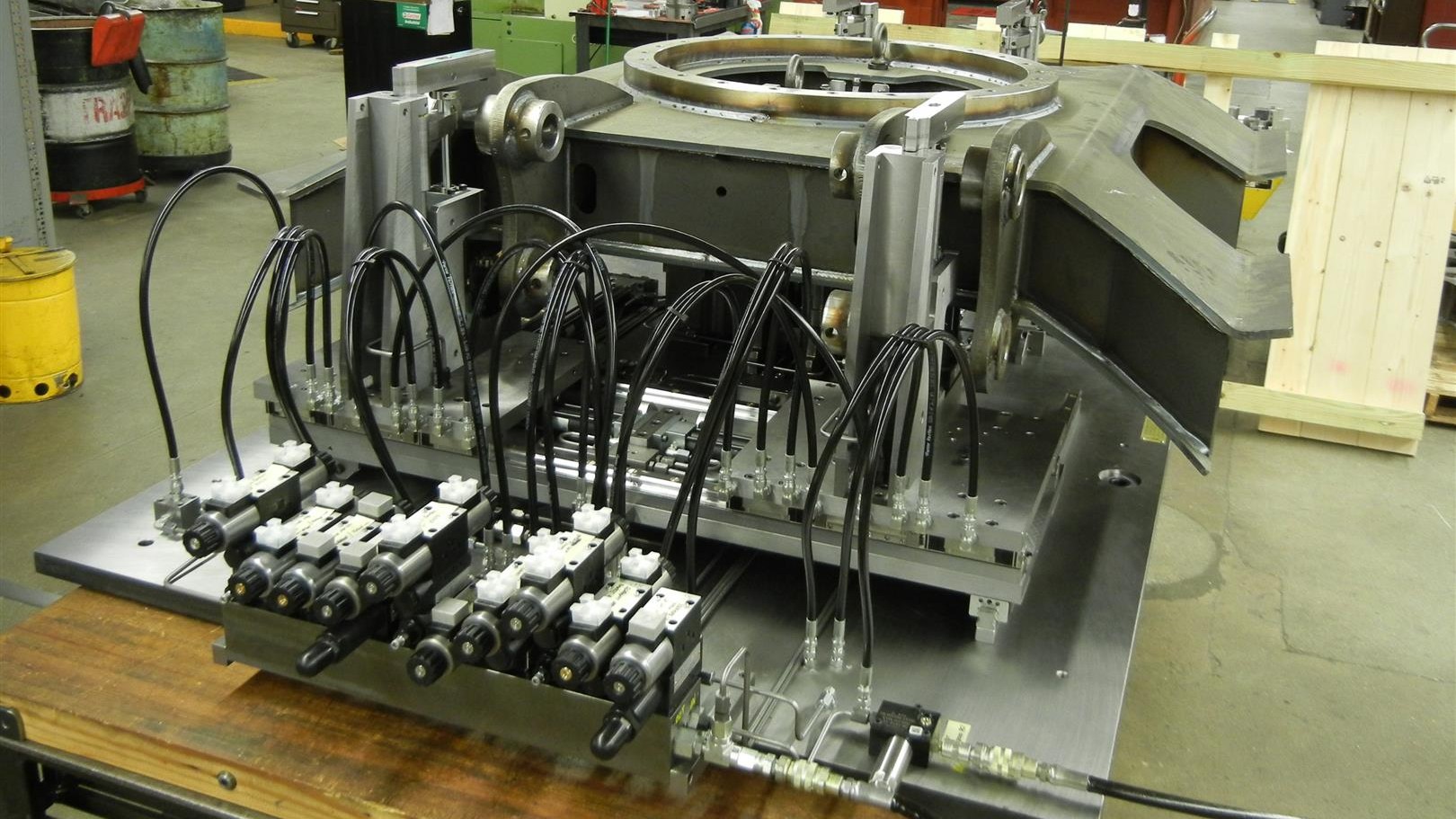
Say a fitting on a hydraulic workholding fixture starts to leak two hours into a night shift. Clamping pressure falls, no one is at the machine, and cutting carries on because the control isn't watching that pressure. By morning, a row of parts have moved in the fixture.
To run a fixture like this unattended, the machine side has to provide a clean route for the oil, pressure that holds for as long as the part is being cut, and a pressure signal the control uses.
This applies to horizontal machining centers with pallets or tombstones, and to gantries clamping large parts on the table. Oil can stay at the fixture during the cut in two ways: the supply stays connected through a rotary union, or it disconnects and the fixture circuit holds the pressure. The choice depends on the machine and the fixture, and it belongs to whoever designs the fixture and the cell.
| What the fixture needs | What the machine has to provide |
|---|---|
| Oil at clamping pressure | A power unit on the machine, or room and wiring for one on the fixture |
| Oil through a rotating table or pallet change | A rotary union or pallet coupling |
| Proof that pressure is there | A pressure signal wired into cycle start |
Where the oil comes from
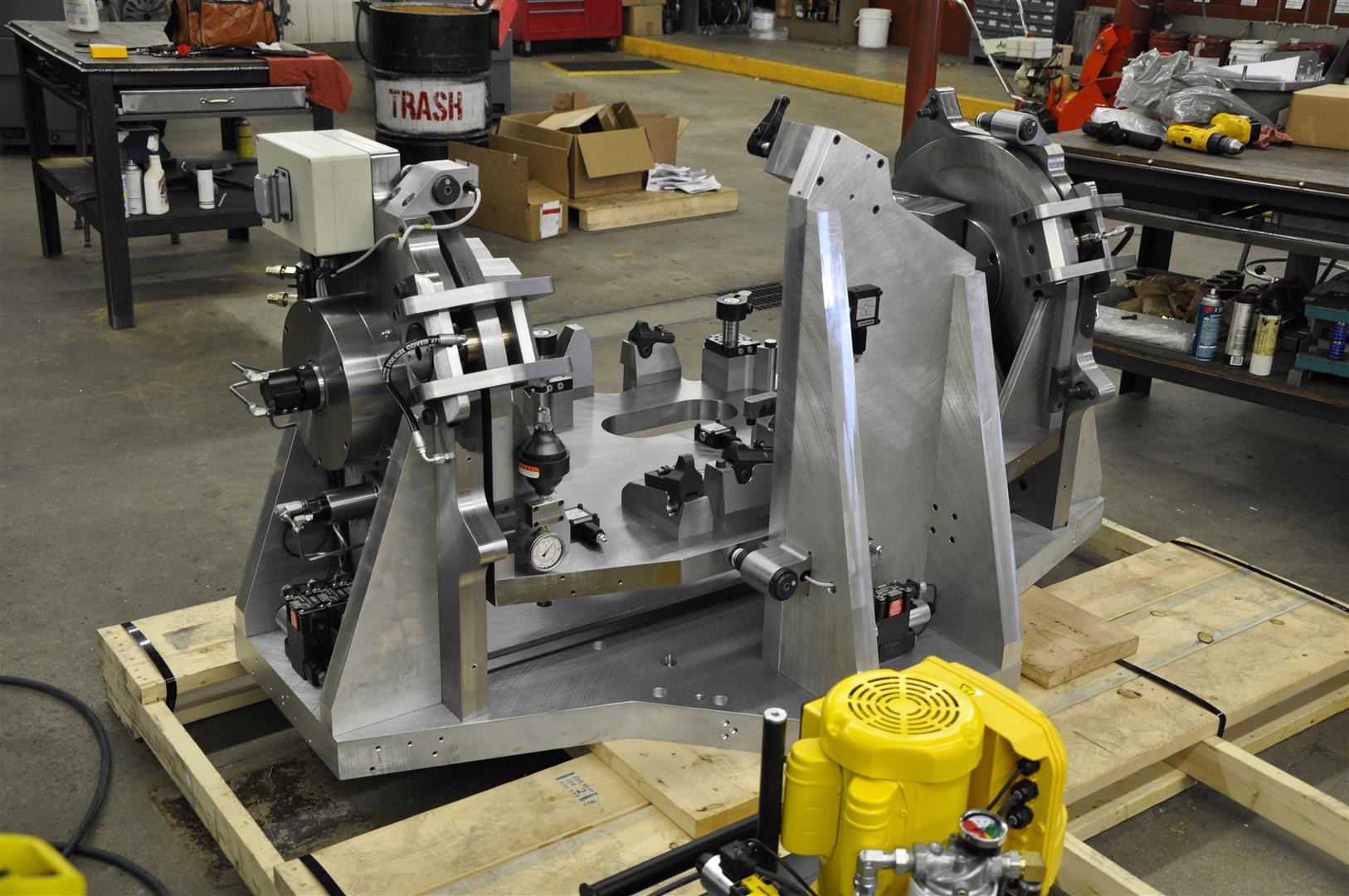
Hydraulic workholding usually gets its oil in one of two ways: from a power unit on the machine, through the table, or from a separate unit standing next to the fixture. A power unit on the machine keeps the fixture simpler and lets the control see and switch the supply. A separate unit can suit a large fixture that's set up once and stays put.
Inside the fixture, the order of clamping often matters: push the part against its locators first, then clamp. Roemheld's sequence valves do this with pressure. The first cylinder pushes the part against a stop, pressure rises to the valve's setting, and only then does the valve open to the clamps. In Roemheld's example with single-acting cylinders, mounting the valve on the fixture means only one pressure line has to run from the power unit; circuits with double-acting cylinders need their own return lines.
Getting oil through a rotating table or a pallet change
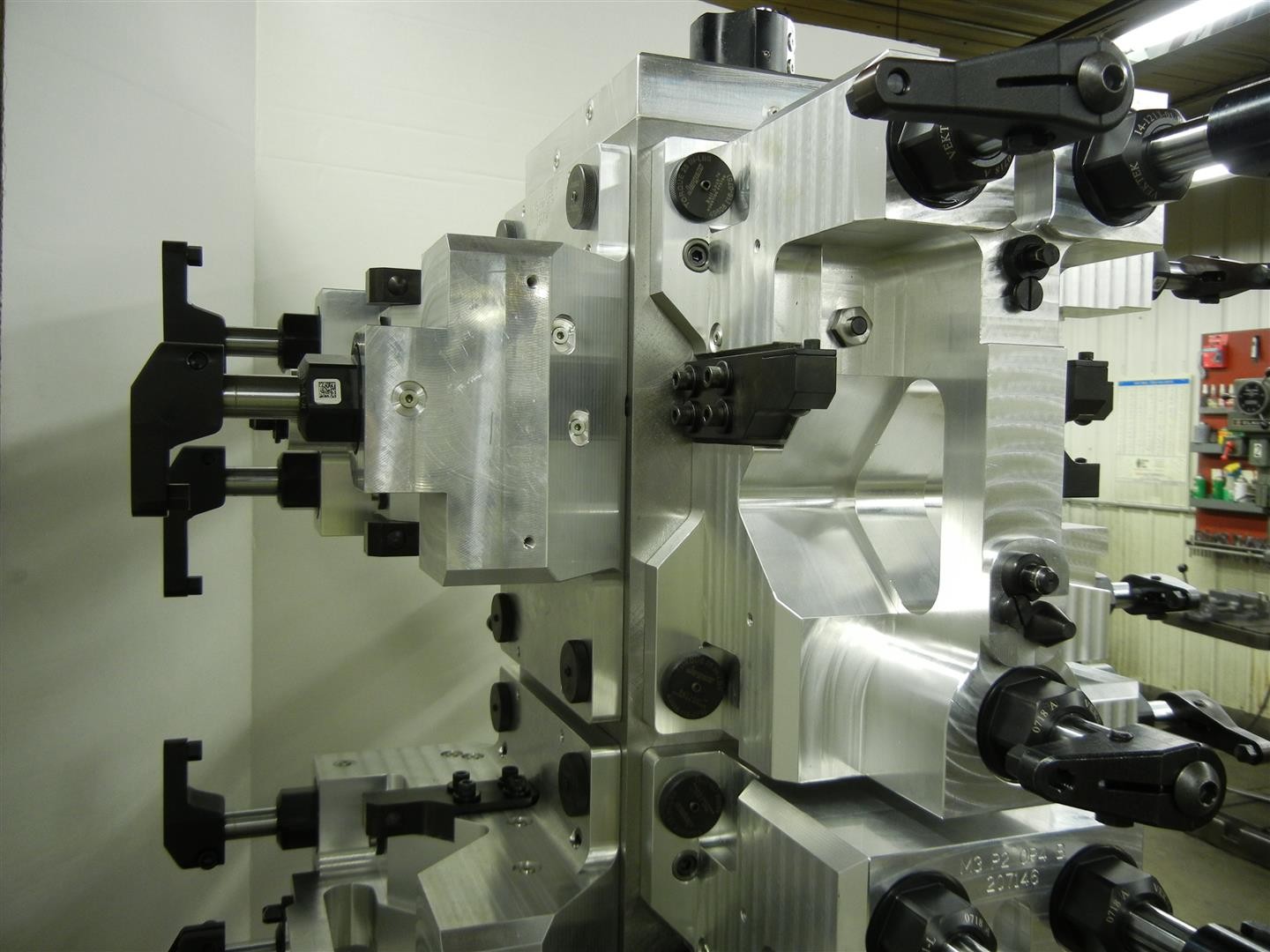
On a horizontal machining center, the fixture turns with the rotary table, and on machines with a pallet changer it also leaves the work area at every pallet change. Rotary unions carry the oil through the rotation. Couplings, which Roemheld describes as the parts that separate and connect hydraulic lines, handle the pallet change in several forms, from quick-disconnect pairs to automatic coupling systems that close as the pallet docks.
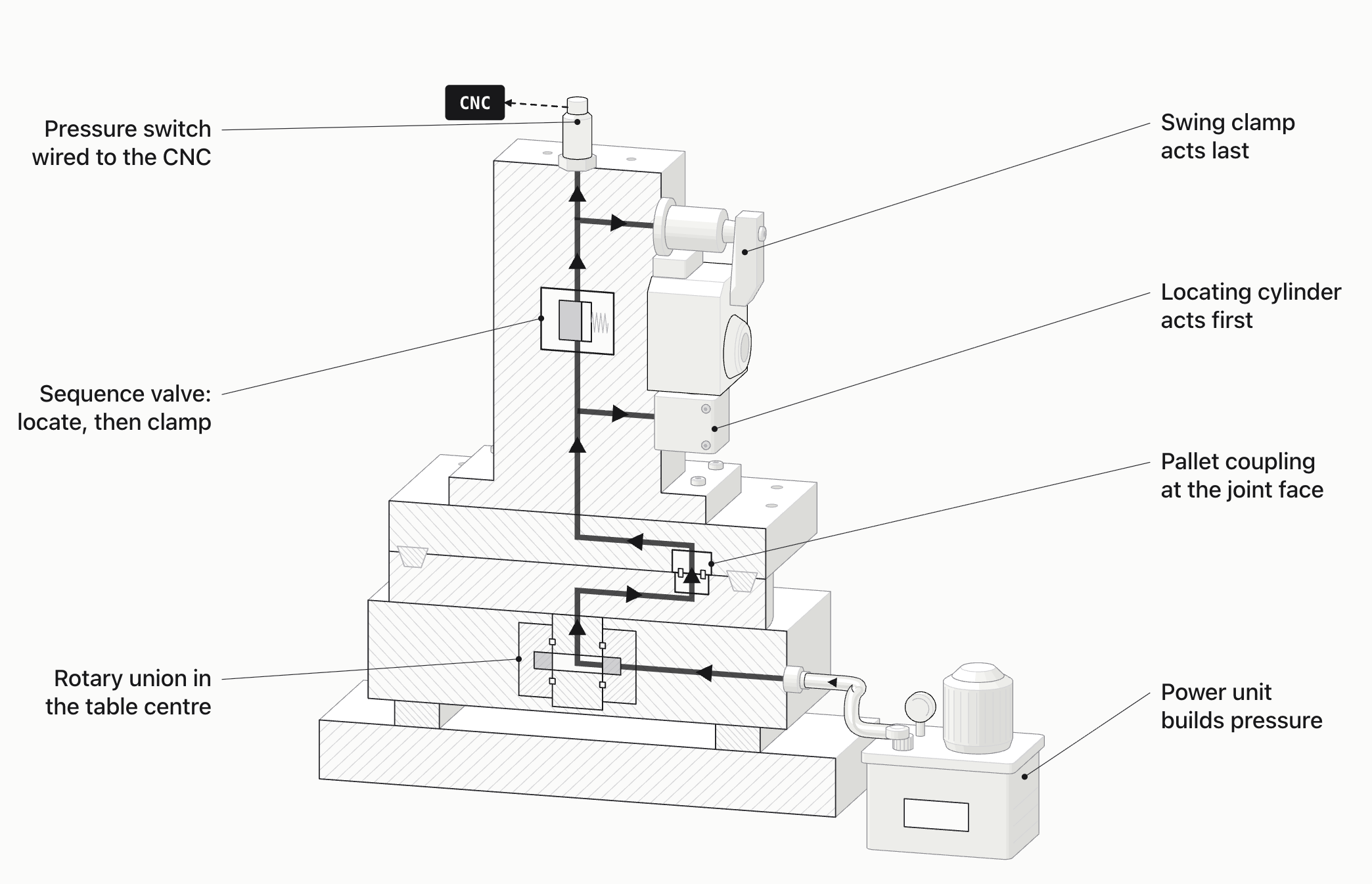
Each union and coupling is a place where oil can leak or dirt can get in. On a tombstone carrying several clamps per face, the number of lines adds up quickly, so keep the circuit as simple as the part allows.
Holding pressure when the supply is disconnected
If the design disconnects the supply during machining, the fixture circuit has to hold pressure on its own. A patent from Aioi Seiki shows two versions of this on one pallet system. The pallet's workpiece clamps are fed through a shut-off valve at the pallet's hydraulic inlet.
The clamps that hold the pallet itself down on the machine keep their pressure through a check valve and a spring-type accumulator once the hose is detached, and a pressure detector trips a limit switch on the table if that pressure falls. A disconnected work fixture uses the same parts: a check valve traps the oil, an accumulator makes up small losses and a switch reports a drop.
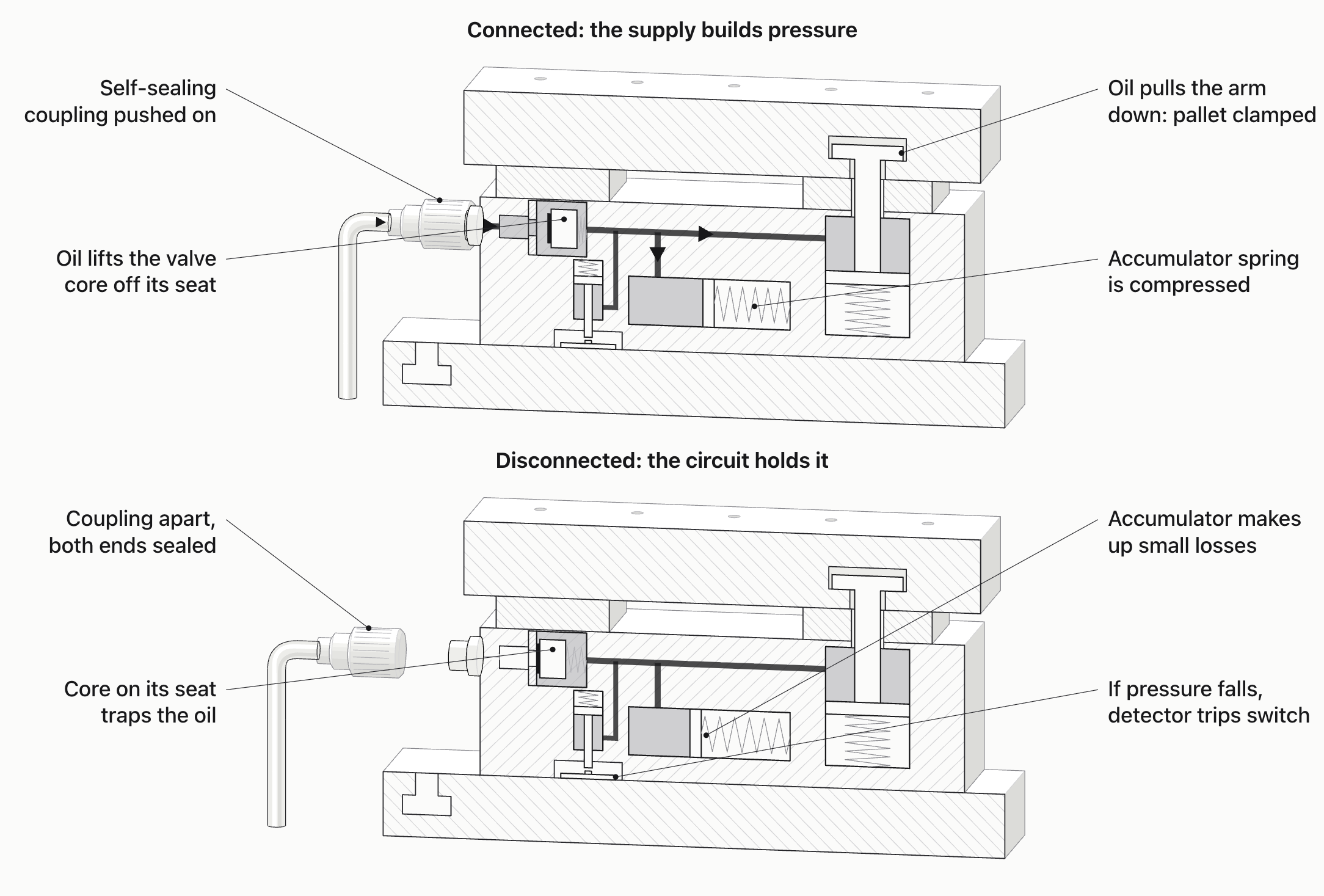
How long the pressure holds depends on the accumulator size, internal leakage and temperature, so ask the fixture maker for that figure.
Wiring the pressure signal into cycle start
Put the pressure switch where it reads the pressure inside the fixture circuit, set its threshold for the clamping pressure the fixture needs, and have the machine refuse to start a cycle without it. The machine builder and fixture builder agree on the rest as part of the cell design, including what the machine does if pressure drops mid-cut and how it recovers.
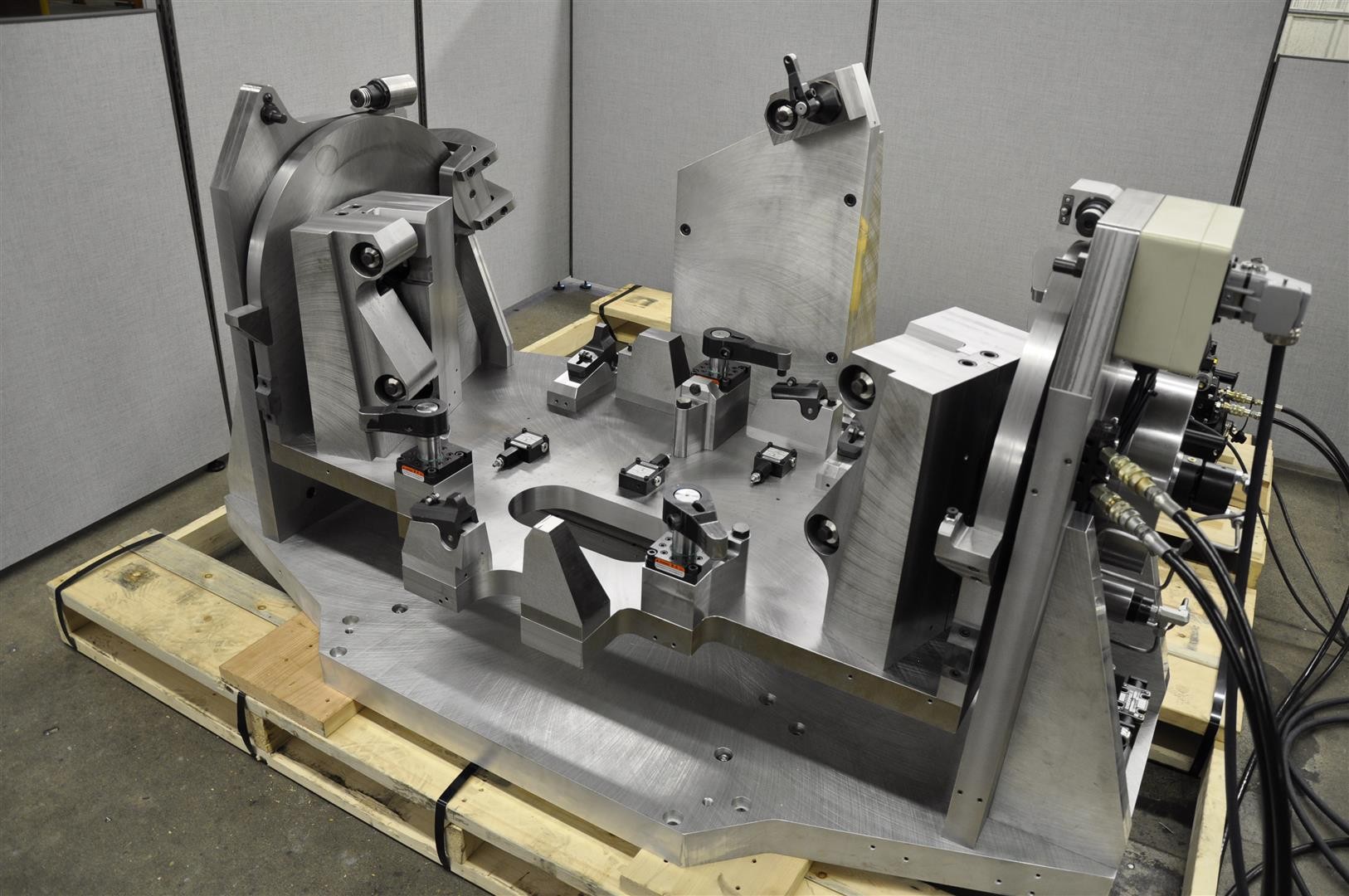
The signal only shows that oil pressure at the measuring point is above its setting. Whether each clamp is applying its force and whether the part is seated correctly need their own checks, which we covered in verifying robot-loaded part seating. A pressure switch in the cycle-start logic also isn't a safety function: the integrator designs the cell's safety circuits separately, to the relevant standards.
When hydraulic workholding isn't worth it
For a single shift with an operator at the machine, small batches and frequent job changes, manual vises or a mechanical quick-change system are often cheaper and simpler. Hydraulic workholding pays when the same part runs in volume, the clamping force has to be the same every time, and the machine runs with nobody watching. Zero-point systems are for fast fixture changeover and can be used together with hydraulic clamping. Our article on zero-point workholding payback works through those numbers.
Preparing a Chansin machine for hydraulic fixtures
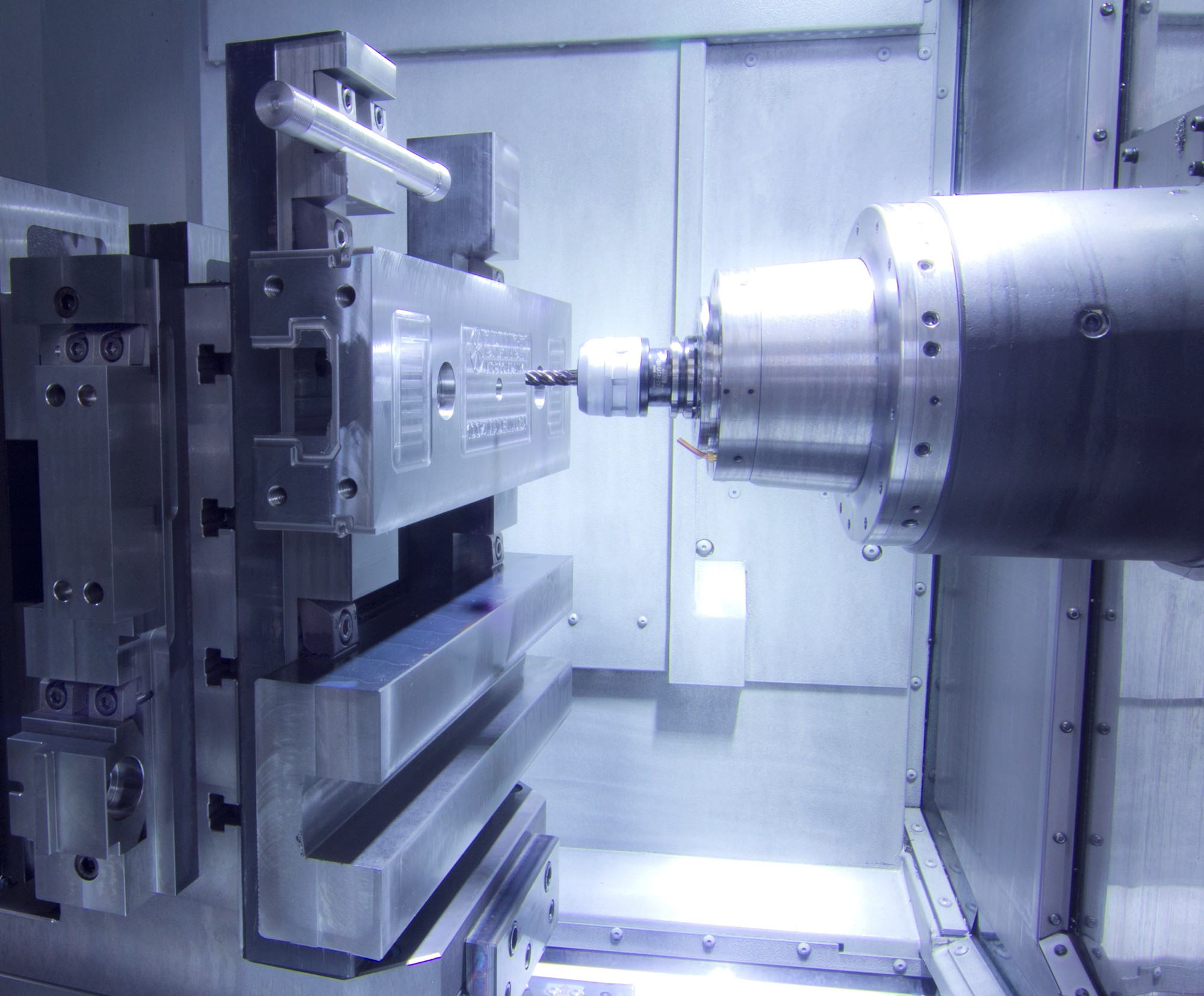
Our horizontal machining centers and gantries can be prepared with a hydraulic workholding interface. On the CS-LW series, the fixture can sit on a CNC indexer with 1° steps or a rotary table with 0.001° indexing, and then the oil has to get through the table. We'll go through the ports, pressure and signals with you and your fixture builder when we recommend a configuration.
If you're planning an unattended cell, send us the part, the fixture concept and the shift pattern through our product inquiry page. Bring your integrator into the discussion too, so the interface suits the whole cell.
FAQ
Does a hydraulic fixture need a power unit on the machine?
No. Many fixtures are fed from a power unit on the machine through the table, and some large fixtures run from a separate power unit next to them. Either way, the control needs to see the clamping pressure.
What keeps clamping pressure after the pallet disconnects?
A check valve traps the oil in the fixture circuit, and an accumulator makes up for small leaks and volume changes. A pressure switch then reports if the pressure falls below its setting. How long a given fixture holds depends on its design, so ask the fixture maker.
Sources and Method
- Roemheld — Couplings to separate and connect hydraulic lines.
- Roemheld — Sequence valves for power workholding (via Carr Lane Roemheld).
- US Patent 4,583,631 — Apparatus for positioning and clamping work clamp pallet for machine tools (Aioi Seiki, 1986).
- Specialty Manufacturing — Workholding fixtures.
The night-shift leak is an illustrative scenario.