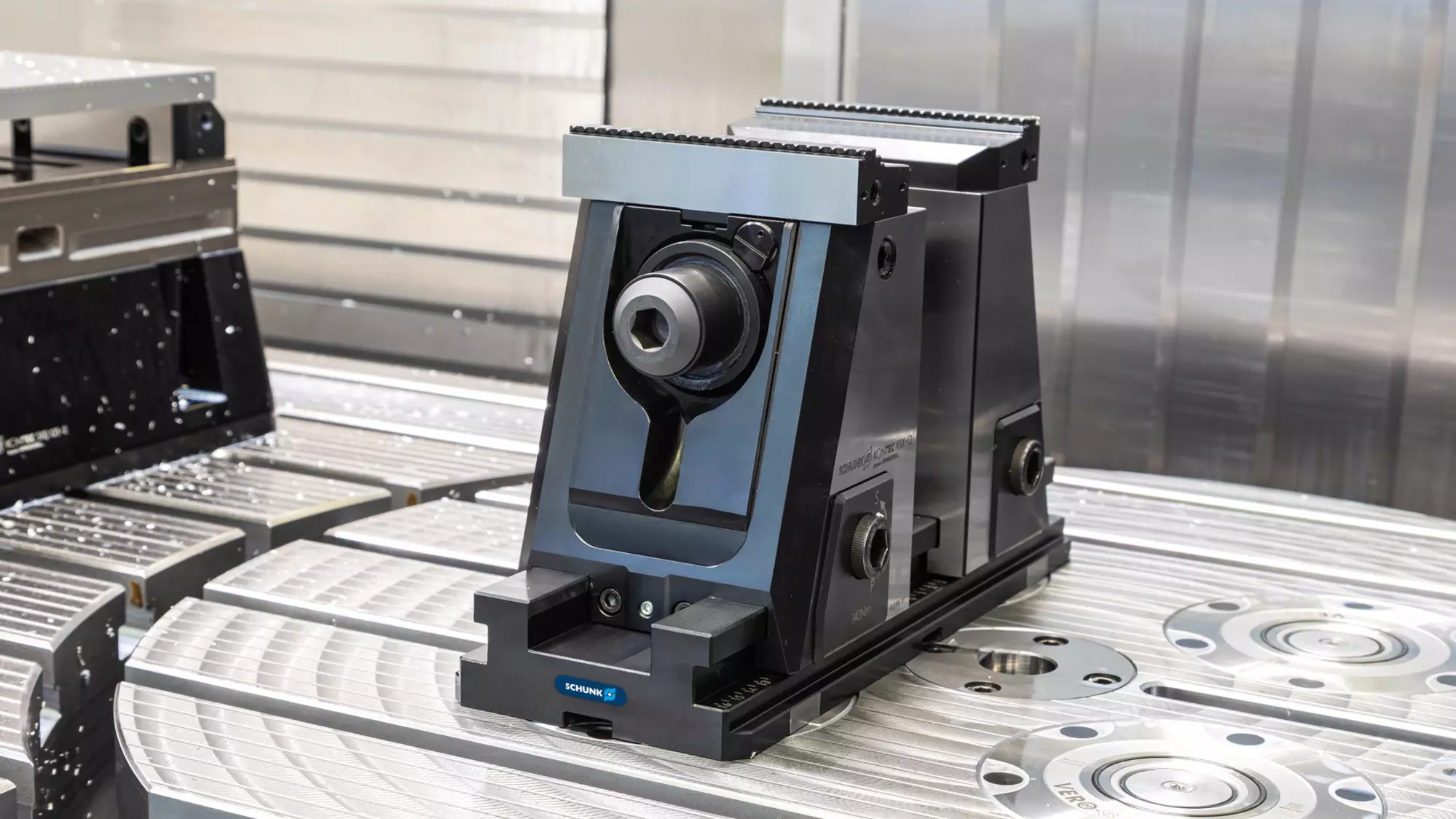
In the supplier's demo, one fixture comes off and the next one locks in within a minute. Back in your shop, someone still spends twelve minutes at the bench loading the next part, cleaning the receiver and checking the setup. A payback sheet that only counts the shorter machine stop leaves that labor out, and the return looks better than it is.
Zero-point workholding pays back when the machine hours it frees turn into work you can sell, and the labor it saves turns into money you actually stop spending. Price those two separately, take off the running costs, and divide the investment by what's left.
A payback formula you can fill in
Annual net benefit B = N × [(t0 − t1) ÷ 60 × u × v + (l0 − l1) ÷ 60 × w] − O. Simple payback in months = 12 × C ÷ B, when B is positive.
| Input | What it means | Where to get it |
|---|---|---|
| N | Changeovers per year that can use the system | Your setup log |
| t0, t1 | Machine-stop minutes per changeover, before and after | Timed setups at the machine |
| u | Share of freed machine hours you can fill with paid work, or use to cut outsourcing or overtime | Your order book and machine load |
| v | Contribution per filled hour after its variable costs, excluding setup labor | Your job costing |
| l0, l1 | Total setup labor minutes, including bench work, cleaning and checks | Timed setups, on and off the machine |
| w | Money a freed labor hour actually saves | Zero if wages and overtime don't change |
| C, O | Complete investment, and added yearly running cost | Supplier quotation and your maintenance plan |
Two of these inputs are easy to get wrong. Don't use a full machine-hour rate for v: that rate includes depreciation and overhead you pay either way. And if nobody's wages or overtime change, w is zero, however many labor minutes the system saves. Our machine hourly-rate guide explains what goes into a full rate; use it for pricing work, not for counting the cash this project saves.
A worked example: 20 months on these inputs
Here's an illustrative case; the dollar figures are example inputs, not a quotation or a measured result. The complete installation costs USD15,000, and 600 changeovers a year can use it. Machine-stop time drops from 30 to 8 minutes, so 600 × 22 ÷ 60 = 220 machine hours come free each year.
Suppose you can fill half of them at USD60 of contribution per hour: 220 × 0.5 × 60 = USD6,600. Each setup now needs 12 minutes at the bench, so total labor falls from 30 to 20 minutes and frees 100 hours a year. At USD30 per hour, and only if that saving is real money, that's USD3,000.
Take off USD600 a year for maintenance and consumables: B = 6,600 + 3,000 − 600 = USD9,000. Payback is 12 × 15,000 ÷ 9,000 = 20 months. That's simple payback, without financing, tax or discounting.
| Freed time that earns a return | Annual net benefit | Simple payback |
|---|---|---|
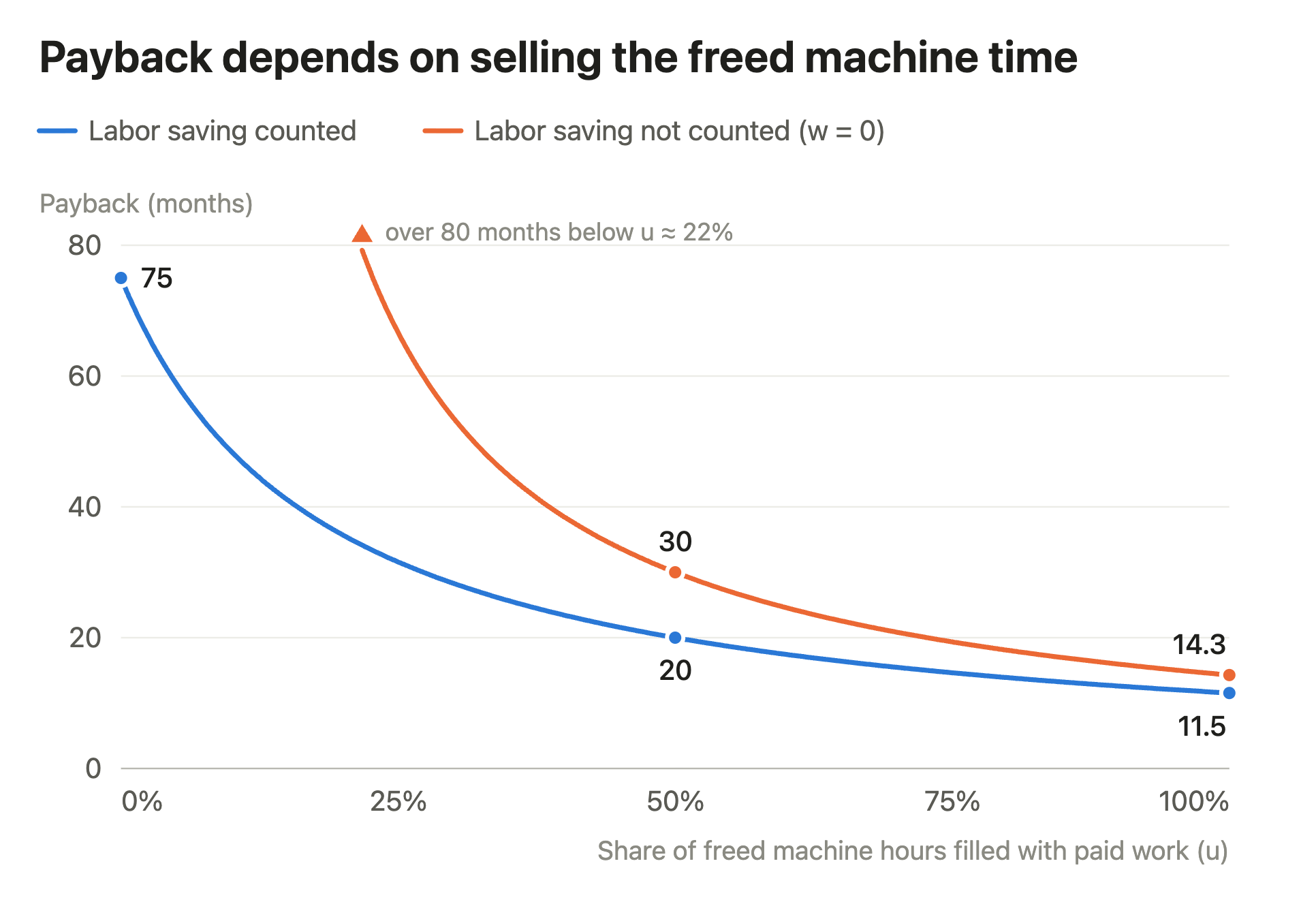
| Half the machine hours, plus the labor saving | USD9,000 | 20 months |
| Labor saving only | USD2,400 | 75 months |
| Neither | −USD600 | Never pays back |
Watch the middle row. If the machine already has spare capacity and you can't sell the freed hours, payback stretches past six years, even with the labor saving counted.
Bench preparation needs a second fixture
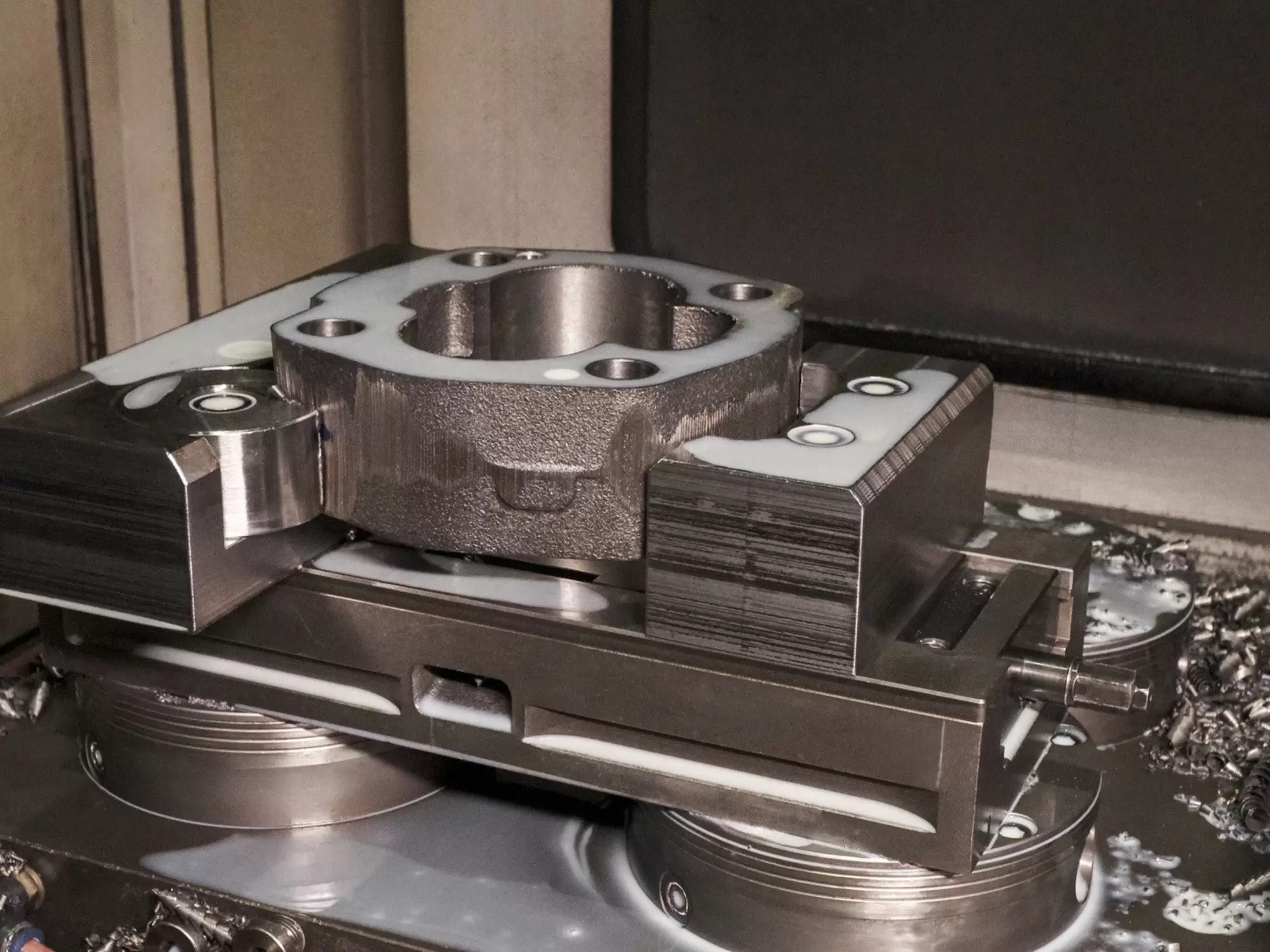
A bench station lets you load the next part while the spindle is cutting. That only works if you own a second fixture or pallet, have somewhere to keep it, and can bring its setup data to the machine. With a single vise, it has to come out of the machine before anyone can load it, and most of the overlap disappears.
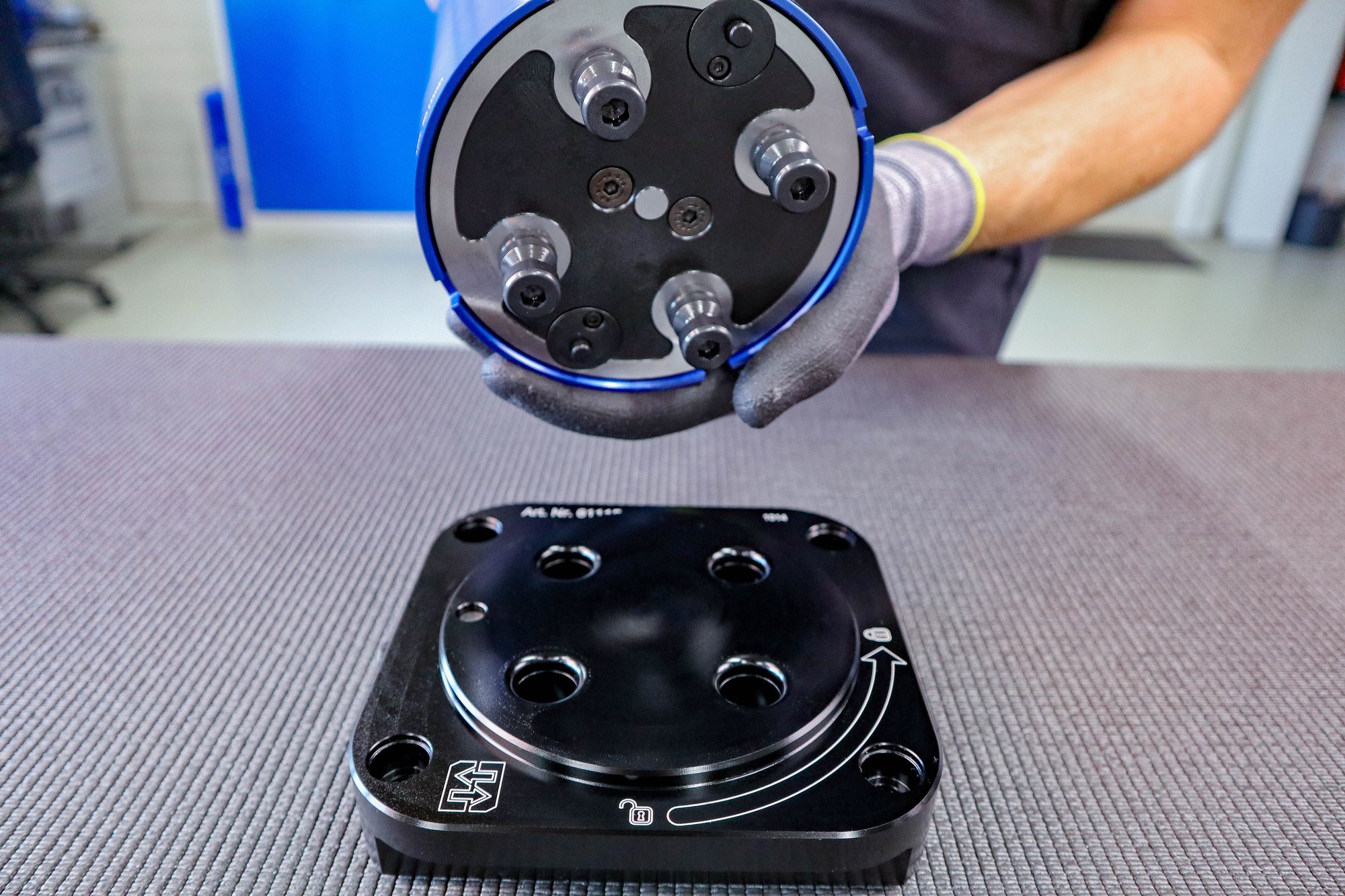
Supplier calculators help, but read their inputs first. LANG's calculator assumes its own changeover time and yearly use, and ZeroClamp's savings example rests on stated shift patterns. Put your own stop times and labor minutes in before you compare quotations.
Costs beyond the clamping modules
Count the base, adapter plates and enough fixtures to keep the bench busy, plus installation, presetting equipment and training, in C. Cleaning, inspection and maintenance go in O. Leave out any scrap-reduction benefit until you've measured one.
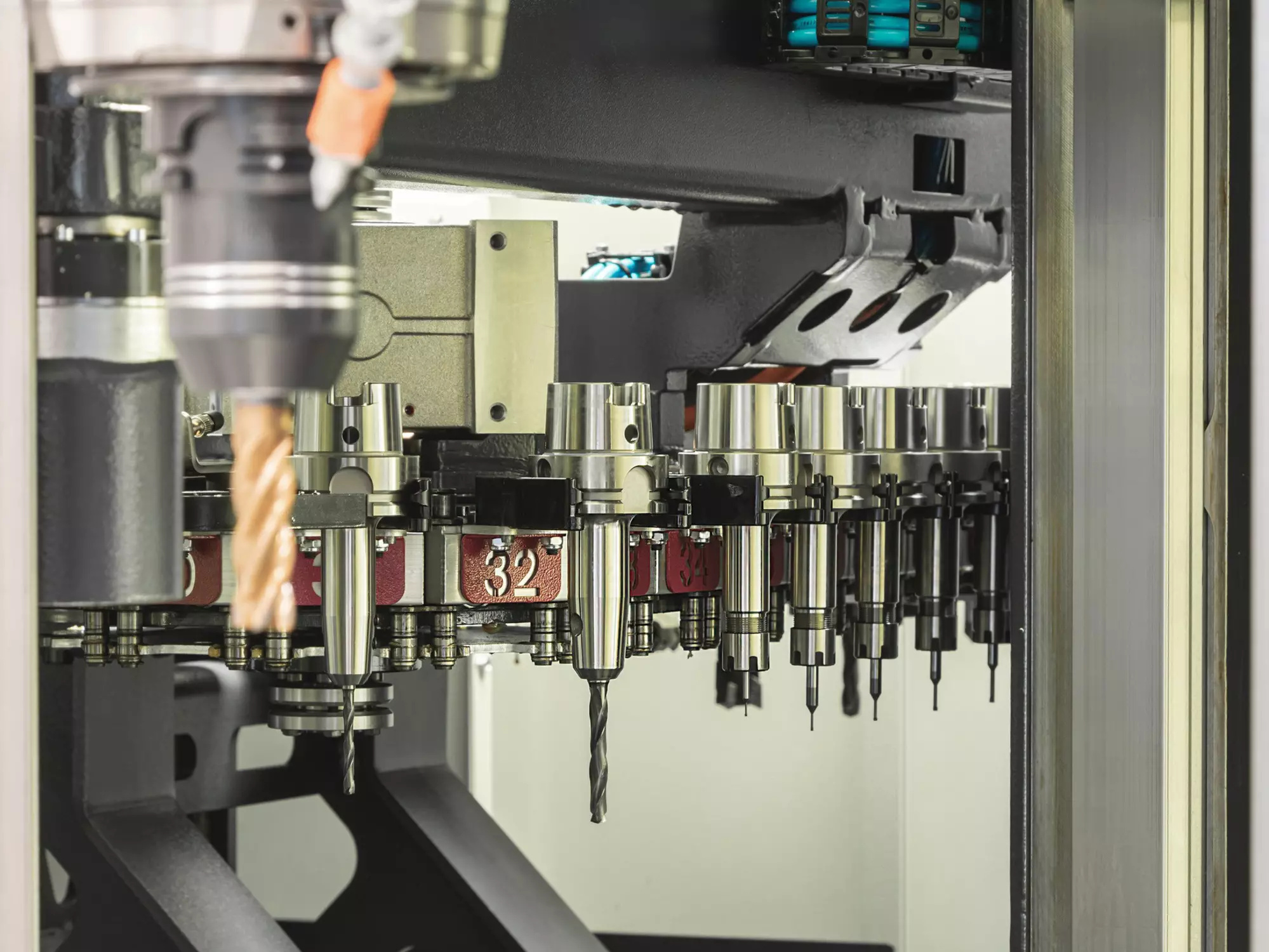
A fast fixture change doesn't load the next job's tools. The magazine still needs the right holders, measured and assigned, and the program has to be ready. If tool preparation is what keeps the spindle waiting, a zero-point system won't shorten that wait.
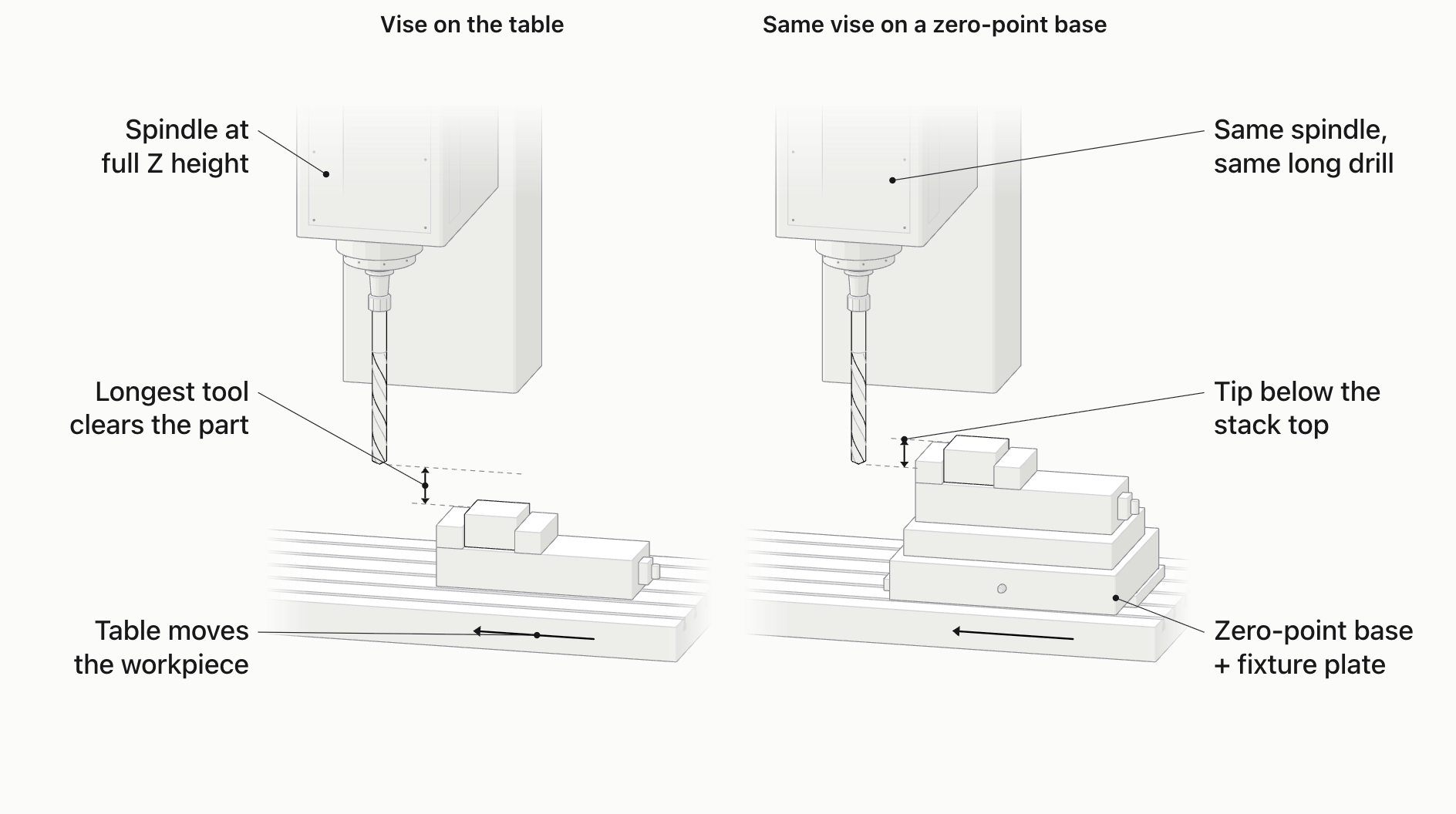
Height is the other hidden cost. A zero-point base and fixture raise the part, which eats into the space under the spindle. At full Z height, your longest tool and holder still have to clear the top of the stack, and the tool changer needs room above the part as well. Jobs that use long drills or long-reach end mills are the first to run out of space.
Spend the money where the freed hours have work waiting
Repeat jobs on compatible fixtures, and a machine that's already your bottleneck, make these numbers work. A lightly loaded VMC with few repeat fixtures gives the system little to do. If cleaning, re-indicating or first-piece checks eat the time you saved at the machine, keep the setup method you have and spend the money elsewhere.
Check the stack before choosing the machine size
For a Chansin CS-V855 in our VMC range, we'd lay the proposed stack against its 1,000 × 550 mm table, 800/550/550 mm XYZ travels and 120–670 mm spindle-nose-to-table distance, then check that your longest tool and holder still clear the top of the stack, with room for tool changes. That tells you whether the machine size and the fixture stack fit together before you buy either.
Send your part drawings, fixture layout and a short log of current changeovers through our product inquiry page. We'll compare machine configurations, estimate cycle time and quote, so you have real numbers to put into the formula above.
Sources and Method
- LANG Technik — Quick-Point: a supplier calculation with its own setup assumptions.
- ZeroClamp — Zero-point clamping: changeover steps and calculation assumptions.
- SCHUNK — Vitronic application: changing workholding needs in prototype production.
The formula and worked example are our own simple-payback model, and every input in the example is illustrative. Model dimensions are Chansin CNC product data.
Feature photo: SCHUNK.